
Before Memmo my notes were scattered across PDFs. Now a workspace pulls everything into one place — I see exactly what's still left to study.
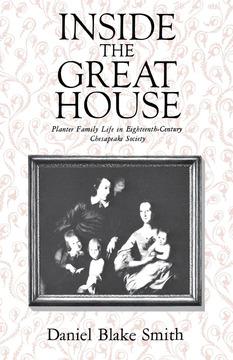
Inside the Great House explores the nature of family life and kinship in planter households of the Chesapeake during the eighteenth century—a pivotal era in the history of the American family. Drawing on a wide assortment of personal documents—among them wills, inventories, diaries, family letters, memoirs, and autobiographies—as well as on the insights of such disciplines as psychology, demography, and anthropology, Daniel Blake Smith examines family values and behavior in a plantation society. Focusing on the emotional texture of the household, he probes deeply into personal values and relationships within the family and the surrounding circle of kin. Childrearing practices, male-female relationships, attitudes toward courtship and marriage, father-son ties, the character and influence of kinship, familial responses to illness and death, and the importance of inheritance—all receive extended treatment. A striking pattern of change emerges from this mosaic of life in the colonial South. What had once been a patriarchal, authoritarian, and emotionally restrained family environment altered profoundly during the latter half of the eighteenth century. The personal documents cited by Smith clearly point to the development after 1750 of a more intimate, child-centered family life characterized by close emotional bonds and by growing autonomy—especially for sons—in matters of marriage and career choice. Well-to-do planter families inculcated in their children a strong measure of selfconfidence and independence, as well as an abiding affection for their family society. Smith shows that Americans in the North as well as in the South were developing an altered view of the family and the world beyond it—a perspective which emphasized a warm and autonomous existence. This fascinating study will convince its readers that the history of the American family is intimately connected with the dramatic changes in the lives of these planter families of the eighteenth-century Chesapeake.
Before Memmo my notes were scattered across PDFs. Now a workspace pulls everything into one place — I see exactly what's still left to study.
Memmo's summaries are gold before exams. I don't have to re-read 800 pages two weeks before — just the important parts.
The AI chat has saved me the night before an exam more than once. I just keep asking until I get it — no waiting on a study group to reply.
The quizzes hit exactly what I need to know. Memmo tracks what I get stuck on — so I only practice what's worth it.
Flashcards with spaced repetition are magic. Memmo knows when I'm about to forget something and brings it back.
The AI podcasts are my favorite. I listen on my way to school and get a recap without sitting at a computer.

Handbok i kvalitativa metoder
281 kr

Hållbar utveckling: en introduktion för ingenjörer och andra problemlösare
334 kr

Brymans Samhällsvetenskapliga metoder
390 kr

Projektledning
491 kr

Den orättvisa hälsan: om socioekonomiska skillnader i hälsa och livslängd
326 kr

Organizational Leadership
429 kr

Vetenskapsteori för nybörjare
196 kr

På väg mot läraryrket
172 kr

Det sociala livet i skolan: Socialpsykologiska perspektiv
253 kr

Betygsättningens didaktik
151 kr

Personality
402 kr

Studying Leadership
404 kr

Managing Innovation
477 kr

Introduktion till samhällsvetenskaplig metod
347 kr

The Psychology of Sex and Gender
698 kr

Evidens och kunskap för socialt arbete
207 kr

Introduction to Leadership
605 kr