
Before Memmo my notes were scattered across PDFs. Now a workspace pulls everything into one place — I see exactly what's still left to study.
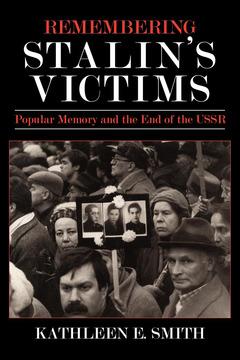
In Remembering Stalin's Victims, Kathleen E. Smith examines how government reformers' repudiation of Stalin's repressions both in the 1950s and in the 1980s created new political crises. Drawing on interviews, she tells the stories of citizens and officials in conflict over the past. She also addresses the underlying question of how societies emerging from rep1;essive regimes reconcile themselves to their memories. Soviet leaders twice attempted to liberalize communist rule and both times their initiatives hinged on criticism of Stalin. During the years of the Khrushchev "thaw" and again during Gorbachev's glasnost, anti-Stalinism proved a unique catalyst for democratic mobilization. Under Gorbachev, dissatisfaction with half truths about past atrocities united citizens from all walks of life in the Memorial Society, an independent mass movement that eventually challenged the very notion of reform communism. Smith investigates why citizens risked confrontation with the Communist Party in order to promote recognition of the victims of Stalinism and recompense for their survivors. Efforts to acknowledge the bitter legacy of totalitarian rule, while originally supporting a stable statesociety reform coalition, ultimately provoked "radical" demands for openness about the past, official accountability, and institutional guarantees of human rights, Smith explains. The battle over the Soviet past, she suggests, not only illuminates the dynamic between elite and mass political actors during liberalization, but also reveals the scars that totalitarian rule has left on Russian society and the long-term obstacles to reform it has created.
Before Memmo my notes were scattered across PDFs. Now a workspace pulls everything into one place — I see exactly what's still left to study.
Memmo's summaries are gold before exams. I don't have to re-read 800 pages two weeks before — just the important parts.
The AI chat has saved me the night before an exam more than once. I just keep asking until I get it — no waiting on a study group to reply.
The quizzes hit exactly what I need to know. Memmo tracks what I get stuck on — so I only practice what's worth it.
Flashcards with spaced repetition are magic. Memmo knows when I'm about to forget something and brings it back.
The AI podcasts are my favorite. I listen on my way to school and get a recap without sitting at a computer.

Handbok i kvalitativa metoder
281 kr

Hållbar utveckling: en introduktion för ingenjörer och andra problemlösare
334 kr

Brymans Samhällsvetenskapliga metoder
390 kr

Projektledning
491 kr

Den orättvisa hälsan: om socioekonomiska skillnader i hälsa och livslängd
326 kr

Vetenskapsteori för nybörjare
196 kr

Organizational Leadership
429 kr

På väg mot läraryrket
172 kr

Det sociala livet i skolan: Socialpsykologiska perspektiv
253 kr

Betygsättningens didaktik
151 kr

Personality
402 kr

Studying Leadership
404 kr

Managing Innovation
477 kr

Introduktion till samhällsvetenskaplig metod
347 kr

The Psychology of Sex and Gender
698 kr

Evidens och kunskap för socialt arbete
207 kr

Introduction to Leadership
605 kr