
Before Memmo my notes were scattered across PDFs. Now a workspace pulls everything into one place — I see exactly what's still left to study.
"Under the aegis of time Suzanne Guerlac displaces matter, intuition, memory, and vitalism of the early twentieth century into the wake of poststructuralism and the dilemmas of nature and culture here and now. This book is a landmark for anyone working in the currents of philosophy, science, and literature. The force and vision of the work will enthuse and inspire every one of its readers."
―Tom Conley, Harvard University
"In recent years, we have grown accustomed to philosophical language that is intensely self-conscious and rhetorically thick, often tragic in tone. It is enlivening to read Bergson, who exerts so little rhetorical pressure while exacting such a substantial effort of thought.... Bergson's texts teach the reader to let go of entrenched intellectual habits and to begin to think differently—to think in time.... Too much and too little have been said about Bergson. Too much, because of the various appropriations of his thought. Too little, because the work itself has not been carefully studied in recent decades."—from Thinking in Time
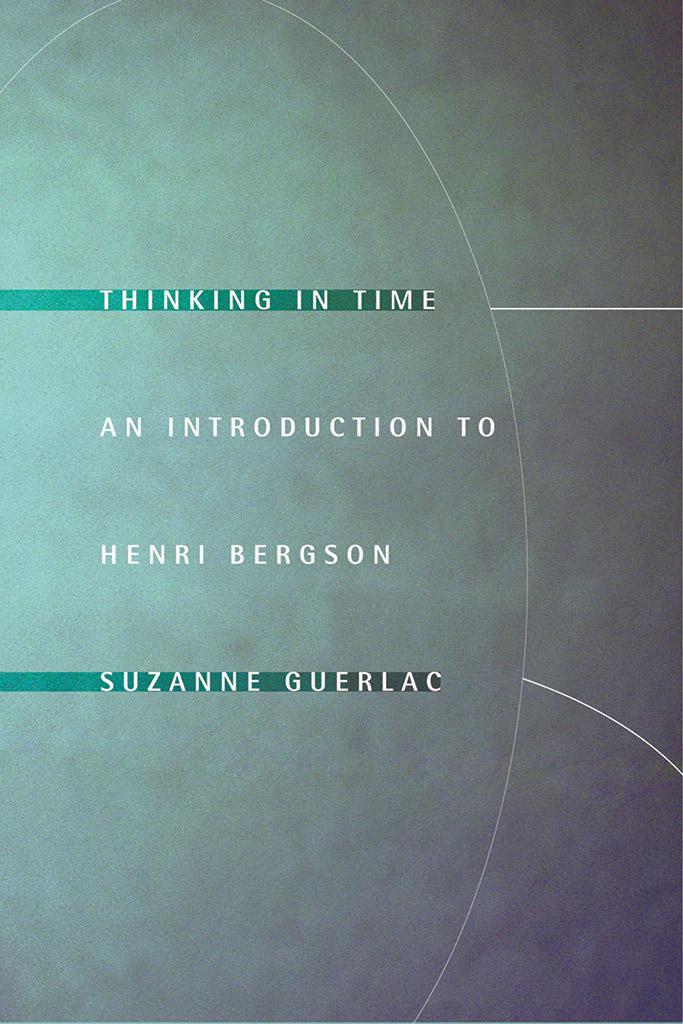
Henri Bergson (1859–1941), whose philosophical works emphasized motion, time, and change, won the Nobel Prize for Literature in 1927. His work remains influential, particularly in the realms of philosophy, cultural studies, and new media studies. In Thinking in Time, Suzanne Guerlac provides readers with the conceptual and contextual tools necessary for informed appreciation of Bergson's work.
Guerlac's straightforward philosophical expositions of two Bergson texts, Time and Free Will (1888) and Matter and Memory (1896), focus on the notions of duration and memory—concepts that are central to the philosopher's work. Thinking in Time makes plain that it is well worth learning how to read Bergson effectively: his era and our own share important concerns. Bergson's insistence on the opposition between the automatic and the voluntary and his engagement with the notions of "the living," affect, and embodiment are especially germane to discussions of electronic culture.
Before Memmo my notes were scattered across PDFs. Now a workspace pulls everything into one place — I see exactly what's still left to study.
Memmo's summaries are gold before exams. I don't have to re-read 800 pages two weeks before — just the important parts.
The AI chat has saved me the night before an exam more than once. I just keep asking until I get it — no waiting on a study group to reply.
The quizzes hit exactly what I need to know. Memmo tracks what I get stuck on — so I only practice what's worth it.
Flashcards with spaced repetition are magic. Memmo knows when I'm about to forget something and brings it back.
The AI podcasts are my favorite. I listen on my way to school and get a recap without sitting at a computer.

Handbok i kvalitativa metoder
281 kr

Hållbar utveckling: en introduktion för ingenjörer och andra problemlösare
334 kr

Brymans Samhällsvetenskapliga metoder
390 kr

Projektledning
491 kr

Den orättvisa hälsan: om socioekonomiska skillnader i hälsa och livslängd
326 kr

Organizational Leadership
429 kr

Vetenskapsteori för nybörjare
196 kr

På väg mot läraryrket
172 kr

Det sociala livet i skolan: Socialpsykologiska perspektiv
253 kr

Betygsättningens didaktik
151 kr

Personality
402 kr

Studying Leadership
404 kr

Managing Innovation
477 kr

Introduktion till samhällsvetenskaplig metod
347 kr

The Psychology of Sex and Gender
698 kr

Evidens och kunskap för socialt arbete
207 kr

Introduction to Leadership
605 kr