
Before Memmo my notes were scattered across PDFs. Now a workspace pulls everything into one place — I see exactly what's still left to study.
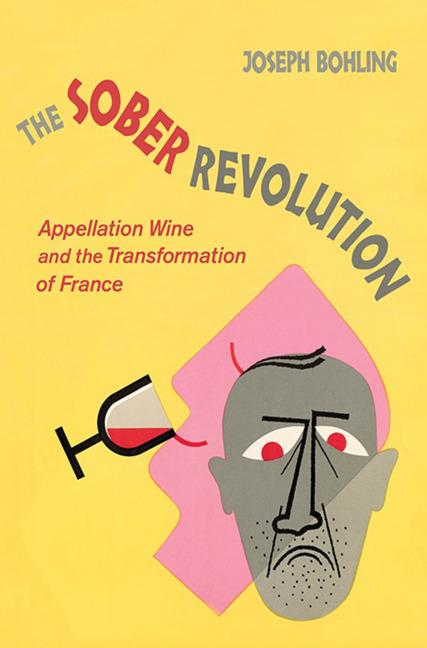
Burgundy, Bordeaux, Champagne. The names of these and other French regions bring to mind time-honored winemaking practices. Yet the link between wine and place, in French known as terroir, was not a given. In The Sober Revolution, Joseph Bohling inverts our understanding of French wine history by revealing a modern connection between wine and place, one with profound ties to such diverse and sometimes unlikely issues as alcoholism, drunk driving, regional tourism, Algeria's independence from French rule, and integration into the European Economic Community.
In the 1930s, cheap, mass-produced wines from the Languedoc region of southern France and French Algeria dominated French markets. Artisanal wine producers, worried about the impact of these "inferior" products on the reputation of their wines, created a system of regional appellation labeling to reform the industry in their favor by linking quality to the place of origin. At the same time, the loss of Algeria, once the world's largest wine exporter, forced the industry to rethink wine production. Over several decades, appellation producers were joined by technocrats, public health activists, tourism boosters, and other dynamic economic actors who blamed cheap industrial wine for hindering efforts to modernize France.
Today, scholars, food activists, and wine enthusiasts see the appellation system as a counterweight to globalization and industrial food. But, as The Sober Revolution reveals, French efforts to localize wine and integrate into global markets were not antagonistic but instead mutually dependent. The time-honored winemaking practices that we associate with a pastoral vision of traditional France were in fact a strategy deployed by the wine industry to meet the challenges and opportunities of the post-1945 international economy. France's luxury wine producers were more market savvy than we realize.
Before Memmo my notes were scattered across PDFs. Now a workspace pulls everything into one place — I see exactly what's still left to study.
Memmo's summaries are gold before exams. I don't have to re-read 800 pages two weeks before — just the important parts.
The AI chat has saved me the night before an exam more than once. I just keep asking until I get it — no waiting on a study group to reply.
The quizzes hit exactly what I need to know. Memmo tracks what I get stuck on — so I only practice what's worth it.
Flashcards with spaced repetition are magic. Memmo knows when I'm about to forget something and brings it back.
The AI podcasts are my favorite. I listen on my way to school and get a recap without sitting at a computer.

Handbok i kvalitativa metoder
281 kr

Hållbar utveckling: en introduktion för ingenjörer och andra problemlösare
334 kr

Brymans Samhällsvetenskapliga metoder
390 kr

Projektledning
491 kr

Den orättvisa hälsan: om socioekonomiska skillnader i hälsa och livslängd
326 kr

Vetenskapsteori för nybörjare
196 kr

Organizational Leadership
429 kr

På väg mot läraryrket
172 kr

Det sociala livet i skolan: Socialpsykologiska perspektiv
253 kr

Betygsättningens didaktik
151 kr

Personality
402 kr

Studying Leadership
404 kr

Managing Innovation
477 kr

Introduktion till samhällsvetenskaplig metod
347 kr

The Psychology of Sex and Gender
698 kr

Evidens och kunskap för socialt arbete
207 kr

Introduction to Leadership
605 kr