
Before Memmo my notes were scattered across PDFs. Now a workspace pulls everything into one place — I see exactly what's still left to study.
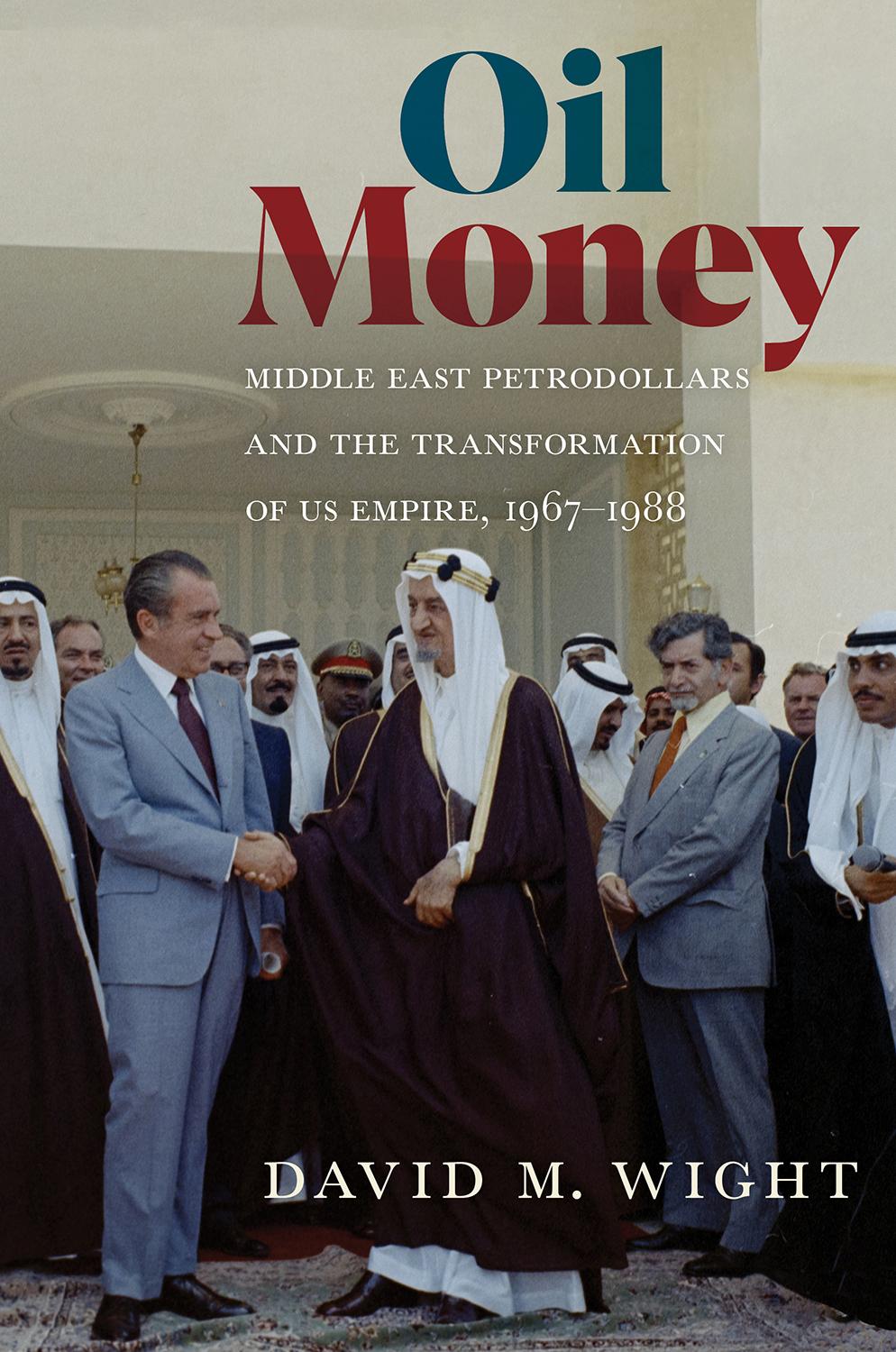
In Oil Money, David M. Wight offers a new framework for understanding the course of Middle East–US relations during the 1970s and 1980s: the transformation of the US global empire by Middle East petrodollars. During these two decades, American, Arab, and Iranian elites reconstituted the primary role of the Middle East within the global system of US power from a supplier of cheap crude oil to a source of abundant petrodollars, the revenues earned from the export of oil.
In the 1970s, the United States and allied monarchies, including the House of Pahlavi in Iran and the House of Saud in Saudi Arabia, utilized petrodollars to undertake myriad joint initiatives for mutual economic and geopolitical benefit. These petrodollar projects were often unprecedented in scope and included multibillion-dollar development projects, arms sales, purchases of US Treasury securities, and funds for the mujahedin in Afghanistan. Although petrodollar ties often augmented the power of the United States and its Middle East allies, Wight argues they also fostered economic disruptions and state-sponsored violence that drove many Americans, Arabs, and Iranians to resist Middle East–US interdependence, most dramatically during the Iranian Revolution of 1979.
Deftly integrating diplomatic, transnational, economic, and cultural analysis, Wight utilizes extensive declassified records from the Nixon, Ford, Carter, and Reagan administrations, the IMF, the World Bank, Saddam Hussein's regime, and private collections to make plain the political economy of US power. Oil Money is an expansive yet judicious investigation of the wide-ranging and contradictory effects of petrodollars on Middle East–US relations and the geopolitics of globalization.
Before Memmo my notes were scattered across PDFs. Now a workspace pulls everything into one place — I see exactly what's still left to study.
Memmo's summaries are gold before exams. I don't have to re-read 800 pages two weeks before — just the important parts.
The AI chat has saved me the night before an exam more than once. I just keep asking until I get it — no waiting on a study group to reply.
The quizzes hit exactly what I need to know. Memmo tracks what I get stuck on — so I only practice what's worth it.
Flashcards with spaced repetition are magic. Memmo knows when I'm about to forget something and brings it back.
The AI podcasts are my favorite. I listen on my way to school and get a recap without sitting at a computer.

Handbok i kvalitativa metoder
281 kr

Hållbar utveckling: en introduktion för ingenjörer och andra problemlösare
334 kr

Brymans Samhällsvetenskapliga metoder
390 kr

Projektledning
491 kr

Den orättvisa hälsan: om socioekonomiska skillnader i hälsa och livslängd
326 kr

Organizational Leadership
429 kr

Vetenskapsteori för nybörjare
196 kr

På väg mot läraryrket
172 kr

Det sociala livet i skolan: Socialpsykologiska perspektiv
253 kr

Betygsättningens didaktik
151 kr

Personality
402 kr

Studying Leadership
404 kr

Managing Innovation
477 kr

Introduktion till samhällsvetenskaplig metod
347 kr

The Psychology of Sex and Gender
698 kr

Evidens och kunskap för socialt arbete
207 kr

Introduction to Leadership
605 kr