
Before Memmo my notes were scattered across PDFs. Now a workspace pulls everything into one place — I see exactly what's still left to study.
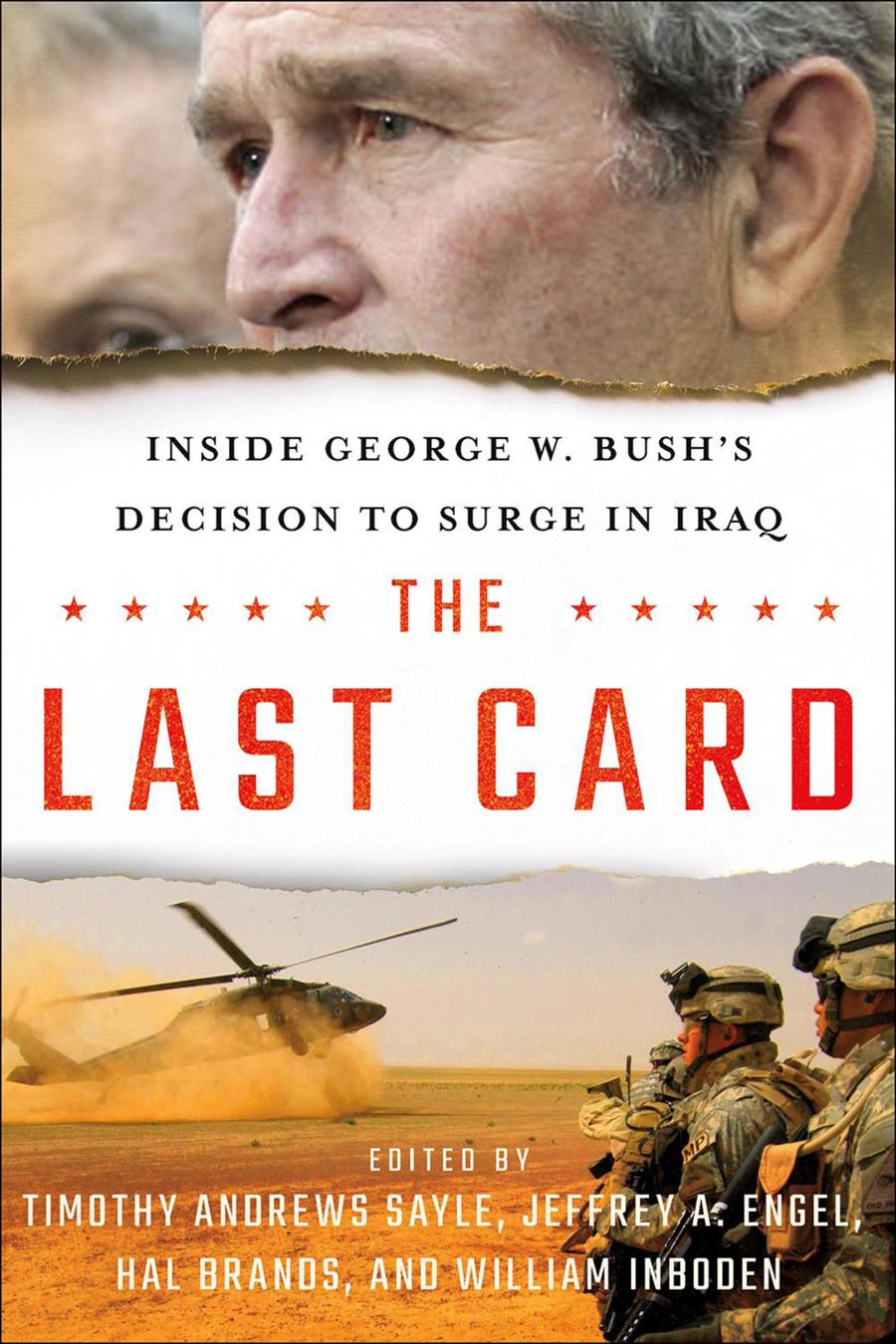
This is the real story of how George W. Bush came to double-down on Iraq in the highest stakes gamble of his entire presidency. Drawing on extensive interviews with nearly thirty senior officials, including President Bush himself, The Last Card offers an unprecedented look into the process by which Bush overruled much of the military leadership and many of his trusted advisors, and authorized the deployment of roughly 30,000 additional troops to the warzone in a bid to save Iraq from collapse in 2007.
The adoption of a new counterinsurgency strategy and surge of new troops into Iraq altered the American posture in the Middle East for a decade to come. In The Last Card we have access to the deliberations among the decision-makers on Bush's national security team as they embarked on that course. In their own words, President George W. Bush, Vice President Dick Cheney, National Security Advisor Stephen Hadley, Secretary of State Condoleezza Rice, White House Chief of Staff Joshua Bolten, Secretary of Defense Robert Gates, and others, recount the debates and disputes that informed the process as President Bush weighed the historical lessons of Vietnam against the perceived strategic imperatives in the Middle East. For a president who had earlier vowed never to dictate military strategy to generals, the deliberations in the Oval Office and Situation Room in 2006 constituted a trying and fateful moment.
Even a president at war is bound by rules of consensus and limited by the risk of constitutional crisis. What is to be achieved in the warzone must also be possible in Washington, D.C. Bush risked losing public esteem and courted political ruin by refusing to disengage from the costly war in Iraq. The Last Card is a portrait of leadership—firm and daring if flawed—in the Bush White House.
The personal perspectives from men and women who served at the White House, Foggy Bottom, the Pentagon, and in Baghdad, are complemented by critical assessments written by leading scholars in the field of international security. Taken together, the candid interviews and probing essays are a first draft of the history of the surge and new chapter in the history of the American presidency.
Before Memmo my notes were scattered across PDFs. Now a workspace pulls everything into one place — I see exactly what's still left to study.
Memmo's summaries are gold before exams. I don't have to re-read 800 pages two weeks before — just the important parts.
The AI chat has saved me the night before an exam more than once. I just keep asking until I get it — no waiting on a study group to reply.
The quizzes hit exactly what I need to know. Memmo tracks what I get stuck on — so I only practice what's worth it.
Flashcards with spaced repetition are magic. Memmo knows when I'm about to forget something and brings it back.
The AI podcasts are my favorite. I listen on my way to school and get a recap without sitting at a computer.

Handbok i kvalitativa metoder
281 kr

Hållbar utveckling: en introduktion för ingenjörer och andra problemlösare
334 kr

Brymans Samhällsvetenskapliga metoder
390 kr

Projektledning
491 kr

Den orättvisa hälsan: om socioekonomiska skillnader i hälsa och livslängd
326 kr

Vetenskapsteori för nybörjare
196 kr

Organizational Leadership
429 kr

På väg mot läraryrket
172 kr

Det sociala livet i skolan: Socialpsykologiska perspektiv
253 kr

Betygsättningens didaktik
151 kr

Personality
402 kr

Studying Leadership
404 kr

Managing Innovation
477 kr

Introduktion till samhällsvetenskaplig metod
347 kr

The Psychology of Sex and Gender
698 kr

Evidens och kunskap för socialt arbete
207 kr

Introduction to Leadership
605 kr