
Before Memmo my notes were scattered across PDFs. Now a workspace pulls everything into one place — I see exactly what's still left to study.
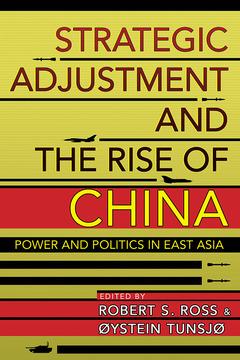
Strategic Adjustment and the Rise of China demonstrates how structural and domestic variables influence how East Asian states adjust their strategy in light of the rise of China, including how China manages its own emerging role as a regional great power. The contributors note that the shifting regional balance of power has fueled escalating tensions in East Asia and suggest that adjustment challenges are exacerbated by the politics of policymaking. International and domestic pressures on policymaking are reflected in maritime territorial disputes and in the broader range of regional security issues created by the rise of China.Adjusting to power shifts and managing a new regional order in the face of inevitable domestic pressure, including nationalism, is a challenging process. Both the United States and China have had to adjust to China's expanded capabilities. China has sought an expanded influence in maritime East Asia; the United States has responded by consolidating its alliances and expanding its naval presence in East Asia. The region's smaller countries have also adjusted to the rise of China. They have sought greater cooperation with China, even as they try to sustain cooperation with the United States. As China continues to rise and challenge the regional security order, the contributors consider whether the region is destined to experience increased conflict and confrontation.ContributorsIan Bowers, Norwegian Defence University College and Norwegian Institute for Defence Studies
Daniel W. Drezner, Tufts University, Brookings Institution, and Washington Post
Taylor M. Fravel, Massachusetts Institute of Technology
Bjørn Elias Mikalsen Grønning, Norwegian Defence University College and Norwegian Institute for Defence Studies
Chung-in Moon, Yonsei University and Chairman, Presidential Committee on Northeast Asia Cooperation Initiative, Republic of Korea
James Reilly, University of Sydney
Robert S. Ross, Boston College and Harvard University
Randall L. Schweller, The Ohio State University
ystein Tunsjø, Norwegian Defence University College and the Norwegian Institute for Defence Studies
Wang Dong, Peking University
Before Memmo my notes were scattered across PDFs. Now a workspace pulls everything into one place — I see exactly what's still left to study.
Memmo's summaries are gold before exams. I don't have to re-read 800 pages two weeks before — just the important parts.
The AI chat has saved me the night before an exam more than once. I just keep asking until I get it — no waiting on a study group to reply.
The quizzes hit exactly what I need to know. Memmo tracks what I get stuck on — so I only practice what's worth it.
Flashcards with spaced repetition are magic. Memmo knows when I'm about to forget something and brings it back.
The AI podcasts are my favorite. I listen on my way to school and get a recap without sitting at a computer.

Handbok i kvalitativa metoder
281 kr

Hållbar utveckling: en introduktion för ingenjörer och andra problemlösare
334 kr

Brymans Samhällsvetenskapliga metoder
390 kr

Projektledning
491 kr

Den orättvisa hälsan: om socioekonomiska skillnader i hälsa och livslängd
326 kr

Vetenskapsteori för nybörjare
196 kr

Organizational Leadership
429 kr

På väg mot läraryrket
172 kr

Det sociala livet i skolan: Socialpsykologiska perspektiv
253 kr

Betygsättningens didaktik
151 kr

Personality
402 kr

Studying Leadership
404 kr

Managing Innovation
477 kr

Introduktion till samhällsvetenskaplig metod
347 kr

The Psychology of Sex and Gender
698 kr

Evidens och kunskap för socialt arbete
207 kr

Introduction to Leadership
605 kr