
Before Memmo my notes were scattered across PDFs. Now a workspace pulls everything into one place — I see exactly what's still left to study.
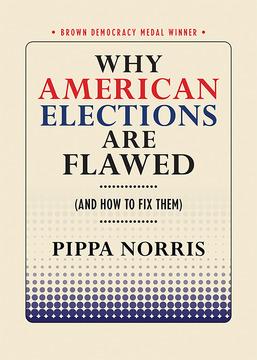
The flaws in the American electoral process have become more apparent over many years. The contemporary tipping point in public awareness occurred during the 2000 election count, but several major structural weaknesses exacerbated doubts in the 2016 campaign, worsening party divisions and further corroding public trust in the electoral process.
It is impossible to fix a problem without understanding its nature. To gather independent evidence about the quality of elections around the world, the Electoral Integrity Project (EIP), an independent project with a research team based at Harvard and Sydney universities, was established in 2012. According to expert estimates developed by EIP, the 2012 and 2014 elections in the United States were the worst among all Western democracies. Without reform, these problems risk damaging the legitimacy of American elections—further weakening public confidence in the major political parties, Congress, and the US government, depressing voter turnout, and exacerbating the risks of contentious outcomes fought through court appeals and public protests.
Why American Elections Are Flawed (and How to Fix Them) describes several major challenges observed during the 2016 US elections, including deepening party polarization over basic electoral procedures, the serious risks of hacking and altering official records, the consequences of deregulating campaign spending, and the lack of federal standards and professional practices in electoral management. Pippa Norris outlines the core concept and measure of electoral integrity, the key yardstick used by the EIP to evaluate free and fair elections. She compares cross-national and state-level evidence from expert and mass surveys to diagnose problems in American elections. She shows how these challenges could be addressed through several practical steps designed to improve American electoral procedures and practices. If implemented, the reforms recommended by the EIP will advance free and fair elections at home and abroad.
Before Memmo my notes were scattered across PDFs. Now a workspace pulls everything into one place — I see exactly what's still left to study.
Memmo's summaries are gold before exams. I don't have to re-read 800 pages two weeks before — just the important parts.
The AI chat has saved me the night before an exam more than once. I just keep asking until I get it — no waiting on a study group to reply.
The quizzes hit exactly what I need to know. Memmo tracks what I get stuck on — so I only practice what's worth it.
Flashcards with spaced repetition are magic. Memmo knows when I'm about to forget something and brings it back.
The AI podcasts are my favorite. I listen on my way to school and get a recap without sitting at a computer.

Handbok i kvalitativa metoder
281 kr

Hållbar utveckling: en introduktion för ingenjörer och andra problemlösare
334 kr

Brymans Samhällsvetenskapliga metoder
390 kr

Projektledning
491 kr

Den orättvisa hälsan: om socioekonomiska skillnader i hälsa och livslängd
326 kr

Vetenskapsteori för nybörjare
196 kr

Organizational Leadership
429 kr

På väg mot läraryrket
172 kr

Det sociala livet i skolan: Socialpsykologiska perspektiv
253 kr

Betygsättningens didaktik
151 kr

Personality
402 kr

Studying Leadership
404 kr

Managing Innovation
477 kr

Introduktion till samhällsvetenskaplig metod
347 kr

The Psychology of Sex and Gender
698 kr

Evidens och kunskap för socialt arbete
207 kr

Introduction to Leadership
605 kr