
Before Memmo my notes were scattered across PDFs. Now a workspace pulls everything into one place — I see exactly what's still left to study.
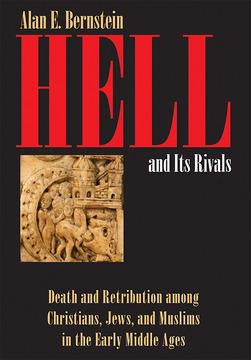
The idea of punishment after death—whereby the souls of the wicked are consigned to Hell (Gehenna, Gehinnom, or Jahannam)—emerged out of beliefs found across the Mediterranean, from ancient Egypt to Zoroastrian Persia, and became fundamental to the Abrahamic religions. Once Hell achieved doctrinal expression in the New Testament, the Talmud, and the Qur'an, thinkers began to question Hell's eternity, and to consider possible alternatives—hell's rivals. Some imagined outright escape, others periodic but temporary relief within the torments. One option, including Purgatory and, in the Eastern Orthodox tradition, the Middle State, was to consider the punishments to be temporary and purifying. Despite these moral and theological hesitations, the idea of Hell has remained a historical and theological force until the present.In Hell and Its Rivals, Alan E. Bernstein examines an array of sources from within and beyond the three Abrahamic faiths—including theology, chronicles, legal charters, edifying tales, and narratives of near-death experiences—to analyze the origins and evolution of belief in Hell. Key social institutions, including slavery, capital punishment, and monarchy, also affected the afterlife beliefs of Jews, Christians, and Muslims. Reflection on hell encouraged a stigmatization of "the other" that in turn emphasized the differences between these religions. Yet, despite these rivalries, each community proclaimed eternal punishment and answered related challenges to it in similar terms. For all that divided them, they agreed on the need for—and fact of—Hell.
Before Memmo my notes were scattered across PDFs. Now a workspace pulls everything into one place — I see exactly what's still left to study.
Memmo's summaries are gold before exams. I don't have to re-read 800 pages two weeks before — just the important parts.
The AI chat has saved me the night before an exam more than once. I just keep asking until I get it — no waiting on a study group to reply.
The quizzes hit exactly what I need to know. Memmo tracks what I get stuck on — so I only practice what's worth it.
Flashcards with spaced repetition are magic. Memmo knows when I'm about to forget something and brings it back.
The AI podcasts are my favorite. I listen on my way to school and get a recap without sitting at a computer.

Handbok i kvalitativa metoder
281 kr

Hållbar utveckling: en introduktion för ingenjörer och andra problemlösare
334 kr

Brymans Samhällsvetenskapliga metoder
390 kr

Projektledning
491 kr

Den orättvisa hälsan: om socioekonomiska skillnader i hälsa och livslängd
326 kr

Organizational Leadership
429 kr

Vetenskapsteori för nybörjare
196 kr

På väg mot läraryrket
172 kr

Det sociala livet i skolan: Socialpsykologiska perspektiv
253 kr

Betygsättningens didaktik
151 kr

Personality
402 kr

Studying Leadership
404 kr

Managing Innovation
477 kr

Introduktion till samhällsvetenskaplig metod
347 kr

The Psychology of Sex and Gender
698 kr

Evidens och kunskap för socialt arbete
207 kr

Introduction to Leadership
605 kr