
Before Memmo my notes were scattered across PDFs. Now a workspace pulls everything into one place — I see exactly what's still left to study.
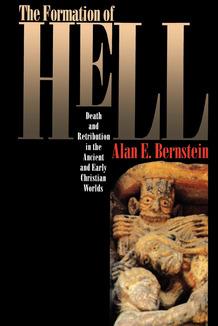
What becomes of the wicked? Hell—exile from God, subjection to fire, worms, and darkness—for centuries the idea has shaped the dread of malefactors, the solace of victims, and the deterrence of believers. Although we may associate the notion of hell with Christian beliefs, its gradual emergence depended on conflicting notions that pervaded the Mediterranean world more than a millennium before the birth of Christ. Asking just why and how belief in hell arose, Alan E. Bernstein takes us back to those times and offers us a comparative view of the philosophy, poetry, folklore, myth, and theology of that formative age.
Bernstein draws on sources from ancient Egypt, Mesopotamia, Greece, Rome, and Israel, as well as early Christian writings through Augustine, in order to reconstruct the story of the prophets, priests, poets, and charismatic leaders who fashioned concepts of hell from an array of perspectives on death and justice. The author traces hell's formation through close readings of works including the epics of Homer and Vergil, the satires of Lucian, the dialogues of Plato and Plutarch, the legends of Enoch, the confessions of the Psalms, the prophecies of Isaiah, Ezechiel, and Daniel, and the parables of Jesus. Reenacting lively debates about the nature of hell among the common people and the elites of diverse religious traditions, he provides new insight into the social implications and the psychological consequences of different visions of the afterlife.
This superb account of a central image in Western culture will captivate readers interested in history, mythology, literature, psychology, philosophy, and religion.
Before Memmo my notes were scattered across PDFs. Now a workspace pulls everything into one place — I see exactly what's still left to study.
Memmo's summaries are gold before exams. I don't have to re-read 800 pages two weeks before — just the important parts.
The AI chat has saved me the night before an exam more than once. I just keep asking until I get it — no waiting on a study group to reply.
The quizzes hit exactly what I need to know. Memmo tracks what I get stuck on — so I only practice what's worth it.
Flashcards with spaced repetition are magic. Memmo knows when I'm about to forget something and brings it back.
The AI podcasts are my favorite. I listen on my way to school and get a recap without sitting at a computer.

Handbok i kvalitativa metoder
281 kr

Hållbar utveckling: en introduktion för ingenjörer och andra problemlösare
334 kr

Brymans Samhällsvetenskapliga metoder
390 kr

Projektledning
491 kr

Den orättvisa hälsan: om socioekonomiska skillnader i hälsa och livslängd
326 kr

Organizational Leadership
429 kr

Vetenskapsteori för nybörjare
196 kr

På väg mot läraryrket
172 kr

Det sociala livet i skolan: Socialpsykologiska perspektiv
253 kr

Betygsättningens didaktik
151 kr

Personality
402 kr

Studying Leadership
404 kr

Managing Innovation
477 kr

Introduktion till samhällsvetenskaplig metod
347 kr

The Psychology of Sex and Gender
698 kr

Evidens och kunskap för socialt arbete
207 kr

Introduction to Leadership
605 kr