
Before Memmo my notes were scattered across PDFs. Now a workspace pulls everything into one place — I see exactly what's still left to study.
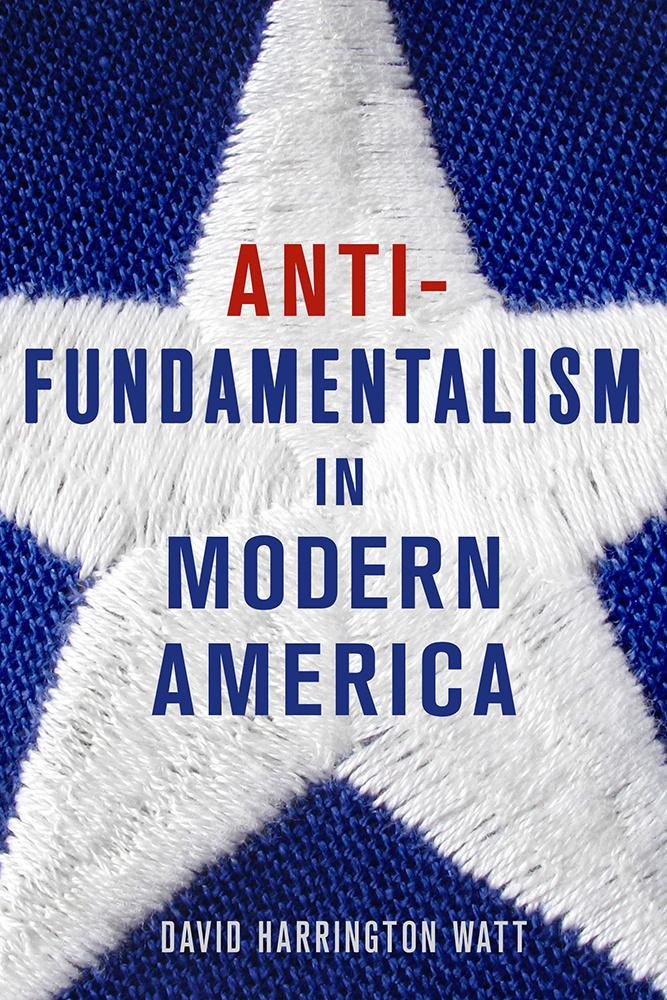
David Harrington Watt's Antifundamentalism in Modern America gives us a pathbreaking account of the role that the fear of fundamentalism has played—and continues to play—in American culture. Fundamentalism has never been a neutral category of analysis, and Watt scrutinizes the various political purposes that the concept has been made to serve. In 1920, the conservative Baptist writer Curtis Lee Laws coined the word "fundamentalists." Watt examines the antifundamentalist polemics of Harry Emerson Fosdick, Talcott Parsons, Stanley Kramer, and Richard Hofstadter, which convinced many Americans that religious fundamentalists were almost by definition backward, intolerant, and anti-intellectual and that fundamentalism was a dangerous form of religion that had no legitimate place in the modern world. For almost fifty years, the concept of fundamentalism was linked almost exclusively to Protestant Christians. The overthrow of the Shah of Iran and the establishment of an Islamic republic led to a more elastic understanding of the nature of fundamentalism. In the late 1970s and early 1980s, Americans became accustomed to using fundamentalism as a way of talking about Muslims, Jews, Hindus, Sikhs, and Buddhists, as well as Christians. Many Americans came to see Protestant fundamentalism as an expression of a larger phenomenon that was wreaking havoc all over the world. Antifundamentalism in Modern America is the first book to provide an overview of the way that the fear of fundamentalism has shaped U.S. culture, and it will lead readers to rethink their understanding of what fundamentalism is and what it does.
Before Memmo my notes were scattered across PDFs. Now a workspace pulls everything into one place — I see exactly what's still left to study.
Memmo's summaries are gold before exams. I don't have to re-read 800 pages two weeks before — just the important parts.
The AI chat has saved me the night before an exam more than once. I just keep asking until I get it — no waiting on a study group to reply.
The quizzes hit exactly what I need to know. Memmo tracks what I get stuck on — so I only practice what's worth it.
Flashcards with spaced repetition are magic. Memmo knows when I'm about to forget something and brings it back.
The AI podcasts are my favorite. I listen on my way to school and get a recap without sitting at a computer.

Handbok i kvalitativa metoder
281 kr

Hållbar utveckling: en introduktion för ingenjörer och andra problemlösare
334 kr

Brymans Samhällsvetenskapliga metoder
390 kr

Projektledning
491 kr

Den orättvisa hälsan: om socioekonomiska skillnader i hälsa och livslängd
326 kr

Vetenskapsteori för nybörjare
196 kr

Organizational Leadership
429 kr

På väg mot läraryrket
172 kr

Det sociala livet i skolan: Socialpsykologiska perspektiv
253 kr

Betygsättningens didaktik
151 kr

Personality
402 kr

Studying Leadership
404 kr

Managing Innovation
477 kr

Introduktion till samhällsvetenskaplig metod
347 kr

The Psychology of Sex and Gender
698 kr

Evidens och kunskap för socialt arbete
207 kr

Introduction to Leadership
605 kr