
Before Memmo my notes were scattered across PDFs. Now a workspace pulls everything into one place — I see exactly what's still left to study.
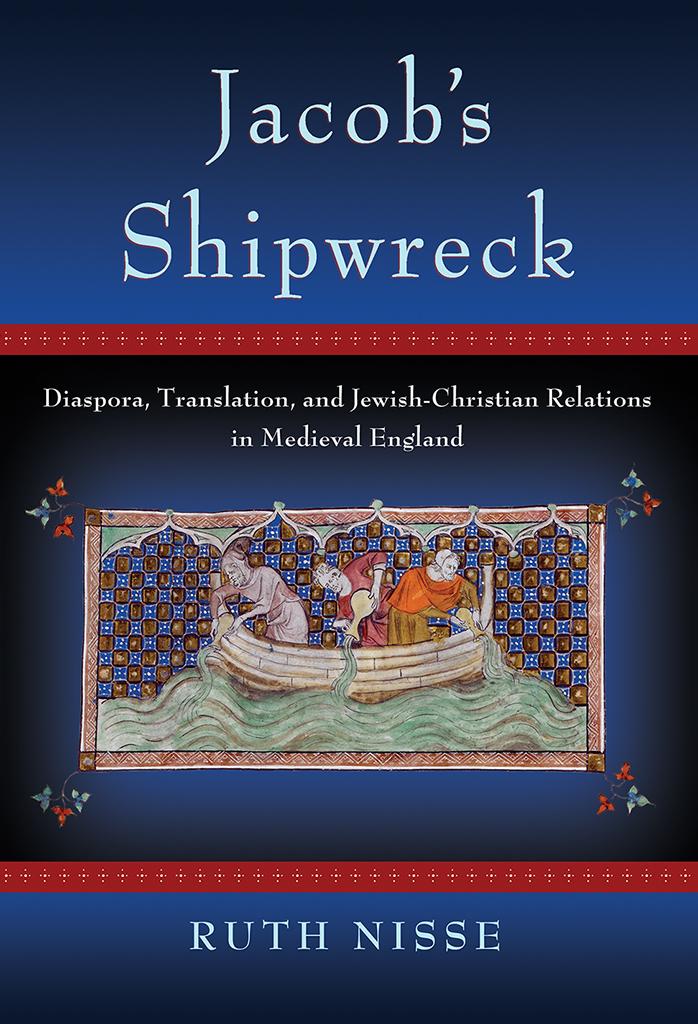
Jewish and Christian authors of the High Middle Ages not infrequently came into dialogue or conflict with each other over traditions drawn from ancient writings outside of the bible. Circulating in Latin and Hebrew adaptations and translations, these included the two independent versions of the Testament of Naphtali in which the patriarch has a vision of the Diaspora, a shipwreck that scatters the twelve tribes. The Christian narrative is linear and ends in salvation; the Jewish narrative is circular and pessimistic. For Ruth Nisse, this is an emblematic text that illuminates relationships between interpretation, translation, and survival.
In Nisse's account, extrabiblical literature encompasses not only the historical works of Flavius Josephus but also, in some of the more ingenious medieval Hebrew imaginative texts, Aesop's fables and the Aeneid. While Christian-Jewish relations in medieval England and Northern France are most often associated with Christian polemics against Judaism and persecutions of Jews in the wake of the Crusades, the period also saw a growing interest in language study and translation in both communities. These noncanonical texts and their afterlives provided Jews and Christians alike with resources of fiction that they used to reconsider boundaries of doctrine and interpretation. Among the works that Nisse takes as exemplary of this intersection are the Book of Yosippon, a tenth-century Hebrew adaptation of Josephus with a wide circulation and influence in the later middle ages, and the second-century romance of Aseneth about the religious conversion of Joseph's Egyptian wife. Yosippon gave Jews a new discourse of martyrdom in its narrative of the fall of Jerusalem, and at the same time it offered access to the classical historical models being used by their Christian contemporaries. Aseneth provided its new audience of medieval monks with a way to reimagine the troubling consequences of unwilling Jewish converts.
Before Memmo my notes were scattered across PDFs. Now a workspace pulls everything into one place — I see exactly what's still left to study.
Memmo's summaries are gold before exams. I don't have to re-read 800 pages two weeks before — just the important parts.
The AI chat has saved me the night before an exam more than once. I just keep asking until I get it — no waiting on a study group to reply.
The quizzes hit exactly what I need to know. Memmo tracks what I get stuck on — so I only practice what's worth it.
Flashcards with spaced repetition are magic. Memmo knows when I'm about to forget something and brings it back.
The AI podcasts are my favorite. I listen on my way to school and get a recap without sitting at a computer.

Handbok i kvalitativa metoder
281 kr

Hållbar utveckling: en introduktion för ingenjörer och andra problemlösare
334 kr

Brymans Samhällsvetenskapliga metoder
390 kr

Projektledning
491 kr

Den orättvisa hälsan: om socioekonomiska skillnader i hälsa och livslängd
326 kr

Vetenskapsteori för nybörjare
196 kr

Organizational Leadership
429 kr

På väg mot läraryrket
172 kr

Det sociala livet i skolan: Socialpsykologiska perspektiv
253 kr

Betygsättningens didaktik
151 kr

Personality
402 kr

Studying Leadership
404 kr

Managing Innovation
477 kr

Introduktion till samhällsvetenskaplig metod
347 kr

The Psychology of Sex and Gender
698 kr

Evidens och kunskap för socialt arbete
207 kr

Introduction to Leadership
605 kr