
Before Memmo my notes were scattered across PDFs. Now a workspace pulls everything into one place — I see exactly what's still left to study.
The author draws on a dazzling variety of archival and printed sources.... The Dutch Moment is a signal contribution to the field.―Renaissance Quarterly
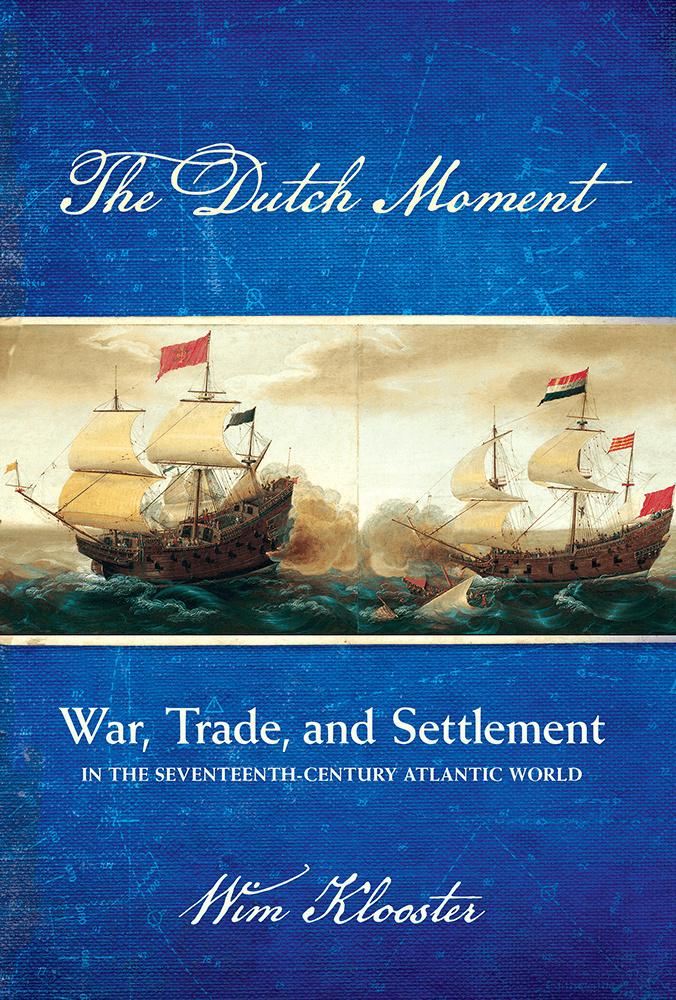
In The Dutch Moment, Wim Klooster shows how the Dutch built and eventually lost an Atlantic empire that stretched from the homeland in the United Provinces to the Hudson River and from Brazil and the Caribbean to the African Gold Coast. The fleets and armies that fought for the Dutch in the decades-long war against Spain included numerous foreigners, largely drawn from countries in northwestern Europe. Likewise, many settlers of Dutch colonies were born in other parts of Europe or the New World. The Dutch would not have been able to achieve military victories without the native alliances they carefully cultivated. Indeed, the Dutch Atlantic was quintessentially interimperial, multinational, and multiracial. At the same time, it was an empire entirely designed to benefit the United Provinces.The pivotal colony in the Dutch Atlantic was Brazil, half of which was conquered by the Dutch West India Company. Its brief lifespan notwithstanding, Dutch Brazil (1630–1654) had a lasting impact on the Atlantic world. The scope of Dutch warfare in Brazil is hard to overestimate—this was the largest interimperial conflict of the seventeenth-century Atlantic. Brazil launched the Dutch into the transatlantic slave trade, a business they soon dominated. At the same time, Dutch Brazil paved the way for a Jewish life in freedom in the Americas after the first American synagogues opened their doors in Recife. In the end, the entire colony eventually reverted to Portuguese rule, in part because Dutch soldiers, plagued by perennial poverty, famine, and misery, refused to take up arms. As they did elsewhere, the Dutch lost a crucial colony because of the empire’s systematic neglect of the very soldiers on whom its defenses rested.After the loss of Brazil and, ten years later, New Netherland, the Dutch scaled back their political ambitions in the Atlantic world. Their American colonies barely survived wars with England and France. As the imperial dimension waned, the interimperial dimension gained strength. Dutch commerce with residents of foreign empires thrived in a process of constant adaptation to foreign settlers’ needs and mercantilist obstacles.Before Memmo my notes were scattered across PDFs. Now a workspace pulls everything into one place — I see exactly what's still left to study.
Memmo's summaries are gold before exams. I don't have to re-read 800 pages two weeks before — just the important parts.
The AI chat has saved me the night before an exam more than once. I just keep asking until I get it — no waiting on a study group to reply.
The quizzes hit exactly what I need to know. Memmo tracks what I get stuck on — so I only practice what's worth it.
Flashcards with spaced repetition are magic. Memmo knows when I'm about to forget something and brings it back.
The AI podcasts are my favorite. I listen on my way to school and get a recap without sitting at a computer.

Handbok i kvalitativa metoder
281 kr

Hållbar utveckling: en introduktion för ingenjörer och andra problemlösare
334 kr

Brymans Samhällsvetenskapliga metoder
390 kr

Projektledning
491 kr

Den orättvisa hälsan: om socioekonomiska skillnader i hälsa och livslängd
326 kr

Vetenskapsteori för nybörjare
196 kr

Organizational Leadership
429 kr

På väg mot läraryrket
172 kr

Det sociala livet i skolan: Socialpsykologiska perspektiv
253 kr

Betygsättningens didaktik
151 kr

Personality
402 kr

Studying Leadership
404 kr

Managing Innovation
477 kr

Introduktion till samhällsvetenskaplig metod
347 kr

The Psychology of Sex and Gender
698 kr

Evidens och kunskap för socialt arbete
207 kr

Introduction to Leadership
605 kr