
Before Memmo my notes were scattered across PDFs. Now a workspace pulls everything into one place — I see exactly what's still left to study.
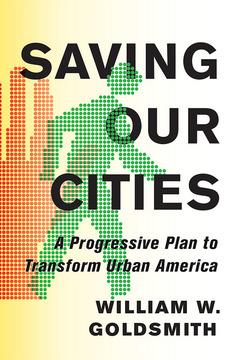
In Saving Our Cities, William W. Goldsmith shows how cities can be places of opportunity rather than places with problems. With strongly revived cities and suburbs, working as places that serve all their residents, metropolitan areas will thrive, thus making the national economy more productive, the environment better protected, the citizenry better educated, and the society more reflective, sensitive, and humane.
Goldsmith argues that America has been in the habit of abusing its cities and their poorest suburbs, which are always the first to be blamed for society's ills and the last to be helped. As federal and state budgets, regulations, and programs line up with the interests of giant corporations and privileged citizens, they impose austerity on cities, shortchange public schools, make it hard to get nutritious food, and inflict the drug war on unlucky neighborhoods.
Frustration with inequality is spreading. Parents and teachers call persistently for improvements in public schooling, and education experiments abound. Nutrition indicators have begun to improve, as rising health costs and epidemic obesity have led to widespread attention to food. The futility of the drug war and the high costs of unwarranted, unprecedented prison growth have become clear. Goldsmith documents a positive development: progressive politicians in many cities and some states are proposing far-reaching improvements, supported by advocacy groups that form powerful voting blocs, ensuring that Congress takes notice. When more cities forcefully demand enlightened federal and state action on these four interrelated problems—inequality, schools, food, and the drug war—positive movement will occur in traditional urban planning as well, so as to meet the needs of most residents for improved housing, better transportation, and enhanced public spaces.
Before Memmo my notes were scattered across PDFs. Now a workspace pulls everything into one place — I see exactly what's still left to study.
Memmo's summaries are gold before exams. I don't have to re-read 800 pages two weeks before — just the important parts.
The AI chat has saved me the night before an exam more than once. I just keep asking until I get it — no waiting on a study group to reply.
The quizzes hit exactly what I need to know. Memmo tracks what I get stuck on — so I only practice what's worth it.
Flashcards with spaced repetition are magic. Memmo knows when I'm about to forget something and brings it back.
The AI podcasts are my favorite. I listen on my way to school and get a recap without sitting at a computer.

Handbok i kvalitativa metoder
281 kr

Hållbar utveckling: en introduktion för ingenjörer och andra problemlösare
334 kr

Brymans Samhällsvetenskapliga metoder
390 kr

Projektledning
491 kr

Den orättvisa hälsan: om socioekonomiska skillnader i hälsa och livslängd
326 kr

Vetenskapsteori för nybörjare
196 kr

Organizational Leadership
429 kr

På väg mot läraryrket
172 kr

Det sociala livet i skolan: Socialpsykologiska perspektiv
253 kr

Betygsättningens didaktik
151 kr

Personality
402 kr

Studying Leadership
404 kr

Managing Innovation
477 kr

Introduktion till samhällsvetenskaplig metod
347 kr

The Psychology of Sex and Gender
698 kr

Evidens och kunskap för socialt arbete
207 kr

Introduction to Leadership
605 kr