
Before Memmo my notes were scattered across PDFs. Now a workspace pulls everything into one place — I see exactly what's still left to study.
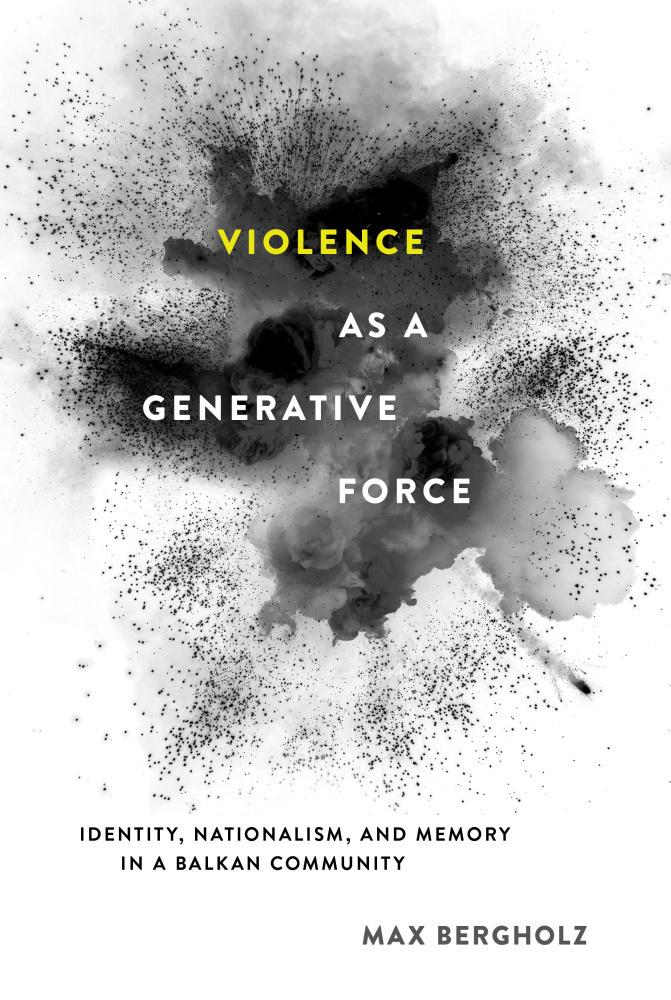
During two terrifying days and nights in early September 1941, the lives of nearly two thousand men, women, and children were taken savagely by their neighbors in Kulen Vakuf, a small rural community straddling today's border between northwest Bosnia and Croatia. This frenzy—in which victims were butchered with farm tools, drowned in rivers, and thrown into deep vertical caves—was the culmination of a chain of local massacres that began earlier in the summer. In Violence as a Generative Force, Max Bergholz tells the story of the sudden and perplexing descent of this once peaceful multiethnic community into extreme violence. This deeply researched microhistory provides provocative insights to questions of global significance: What causes intercommunal violence? How does such violence between neighbors affect their identities and relations?
Contrary to a widely held view that sees nationalism leading to violence, Bergholz reveals how the upheavals wrought by local killing actually created dramatically new perceptions of ethnicity—of oneself, supposed "brothers," and those perceived as "others." As a consequence, the violence forged new communities, new forms and configurations of power, and new practices of nationalism. The history of this community was marked by an unexpected explosion of locally executed violence by the few, which functioned as a generative force in transforming the identities, relations, and lives of the many. The story of this largely unknown Balkan community in 1941 provides a powerful means through which to rethink fundamental assumptions about the interrelationships among ethnicity, nationalism, and violence, both during World War II and more broadly throughout the world.
Before Memmo my notes were scattered across PDFs. Now a workspace pulls everything into one place — I see exactly what's still left to study.
Memmo's summaries are gold before exams. I don't have to re-read 800 pages two weeks before — just the important parts.
The AI chat has saved me the night before an exam more than once. I just keep asking until I get it — no waiting on a study group to reply.
The quizzes hit exactly what I need to know. Memmo tracks what I get stuck on — so I only practice what's worth it.
Flashcards with spaced repetition are magic. Memmo knows when I'm about to forget something and brings it back.
The AI podcasts are my favorite. I listen on my way to school and get a recap without sitting at a computer.

Handbok i kvalitativa metoder
281 kr

Hållbar utveckling: en introduktion för ingenjörer och andra problemlösare
334 kr

Brymans Samhällsvetenskapliga metoder
390 kr

Projektledning
491 kr

Den orättvisa hälsan: om socioekonomiska skillnader i hälsa och livslängd
326 kr

Vetenskapsteori för nybörjare
196 kr

Organizational Leadership
429 kr

På väg mot läraryrket
172 kr

Det sociala livet i skolan: Socialpsykologiska perspektiv
253 kr

Betygsättningens didaktik
151 kr

Personality
402 kr

Studying Leadership
404 kr

Managing Innovation
477 kr

Introduktion till samhällsvetenskaplig metod
347 kr

The Psychology of Sex and Gender
698 kr

Evidens och kunskap för socialt arbete
207 kr

Introduction to Leadership
605 kr