
Before Memmo my notes were scattered across PDFs. Now a workspace pulls everything into one place — I see exactly what's still left to study.
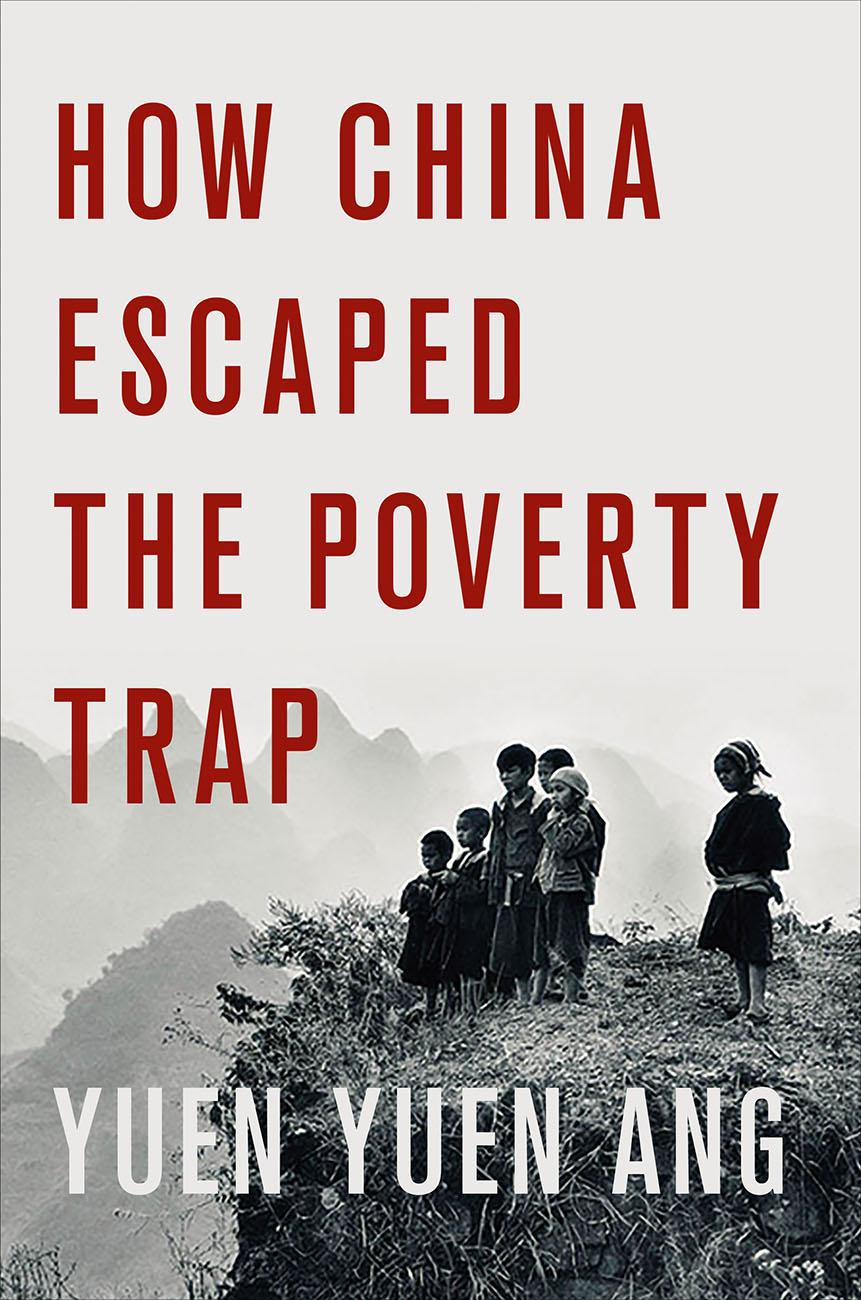
WINNER OF THE 2017 PETER KATZENSTEIN BOOK PRIZE
"BEST OF BOOKS IN 2017" BY FOREIGN AFFAIRS
WINNER OF THE 2018 VIVIAN ZELIZER PRIZE BEST BOOK AWARD IN ECONOMIC SOCIOLOGY
"How China Escaped the Poverty Trap truly offers game-changing ideas for the analysis and implementation of socio-economic development and should have a major impact across many social sciences."
― Zelizer Best Book in Economic Sociology Prize Committee
Acclaimed as "game changing" and "field shifting," How China Escaped the Poverty Trap advances a new paradigm in the political economy of development and sheds new light on China's rise.
How can poor and weak societies escape poverty traps? Political economists have traditionally offered three answers: "stimulate growth first," "build good institutions first," or "some fortunate nations inherited good institutions that led to growth."
Yuen Yuen Ang rejects all three schools of thought and their underlying assumptions: linear causation, a mechanistic worldview, and historical determinism. Instead, she launches a new paradigm grounded in complex adaptive systems, which embraces the reality of interdependence and humanity's capacity to innovate.
Combining this original lens with more than 400 interviews with Chinese bureaucrats and entrepreneurs, Ang systematically reenacts the complex process that turned China from a communist backwater into a global juggernaut in just 35 years. Contrary to popular misconceptions, she shows that what drove China's great transformation was not centralized authoritarian control, but "directed improvisation"—top-down directions from Beijing paired with bottom-up improvisation among local officials.
Her analysis reveals two broad lessons on development. First, transformative change requires an adaptive governing system that empowers ground-level actors to create new solutions for evolving problems. Second, the first step out of the poverty trap is to "use what you have"—harnessing existing resources to kick-start new markets, even if that means defying first-world norms.
Bold and meticulously researched, How China Escaped the Poverty Trap opens up a whole new avenue of thinking for scholars, practitioners, and anyone seeking to build adaptive systems.
Before Memmo my notes were scattered across PDFs. Now a workspace pulls everything into one place — I see exactly what's still left to study.
Memmo's summaries are gold before exams. I don't have to re-read 800 pages two weeks before — just the important parts.
The AI chat has saved me the night before an exam more than once. I just keep asking until I get it — no waiting on a study group to reply.
The quizzes hit exactly what I need to know. Memmo tracks what I get stuck on — so I only practice what's worth it.
Flashcards with spaced repetition are magic. Memmo knows when I'm about to forget something and brings it back.
The AI podcasts are my favorite. I listen on my way to school and get a recap without sitting at a computer.

Handbok i kvalitativa metoder
281 kr

Hållbar utveckling: en introduktion för ingenjörer och andra problemlösare
334 kr

Brymans Samhällsvetenskapliga metoder
390 kr

Projektledning
491 kr

Den orättvisa hälsan: om socioekonomiska skillnader i hälsa och livslängd
326 kr

Vetenskapsteori för nybörjare
196 kr

Organizational Leadership
429 kr

På väg mot läraryrket
172 kr

Det sociala livet i skolan: Socialpsykologiska perspektiv
253 kr

Betygsättningens didaktik
151 kr

Personality
402 kr

Studying Leadership
404 kr

Managing Innovation
477 kr

Introduktion till samhällsvetenskaplig metod
347 kr

The Psychology of Sex and Gender
698 kr

Evidens och kunskap för socialt arbete
207 kr

Introduction to Leadership
605 kr