
Before Memmo my notes were scattered across PDFs. Now a workspace pulls everything into one place — I see exactly what's still left to study.
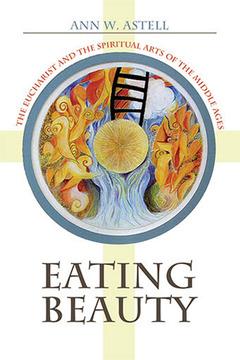
"The enigmatic link between the natural and artistic beauty that is to be contemplated but not eaten, on the one hand, and the eucharistic beauty that is both seen (with the eyes of faith) and eaten, on the other, intrigues me and inspires this book. One cannot ask theo-aesthetic questions about the Eucharist without engaging fundamental questions about the relationship between beauty, art (broadly defined), and eating."—from Eating Beauty
In a remarkable book that is at once learned, startlingly original, and highly personal, Ann W. Astell explores the ambiguity of the phrase "eating beauty." The phrase evokes the destruction of beauty, the devouring mouth of the grave, the mouth of hell. To eat beauty is to destroy it. Yet in the case of the Eucharist the person of faith who eats the Host is transformed into beauty itself, literally incorporated into Christ. In this sense, Astell explains, the Eucharist was "productive of an entire 'way' of life, a virtuous life-form, an artwork, with Christ himself as the principal artist." The Eucharist established for the people of the Middle Ages distinctive schools of sanctity—Cistercian, Franciscan, Dominican, and Ignatian—whose members were united by the eucharistic sacrament that they received.
Reading the lives of the saints not primarily as historical documents but as iconic expressions of original artworks fashioned by the eucharistic Christ, Astell puts the "faceless" Host in a dynamic relationship with these icons. With the advent of each new spirituality, the Christian idea of beauty expanded to include, first, the marred beauty of the saint and, finally, that of the church torn by division—an anti-aesthetic beauty embracing process, suffering, deformity, and disappearance, as well as the radiant lightness of the resurrected body. This astonishing work of intellectual and religious history is illustrated with telling artistic examples ranging from medieval manuscript illuminations to sculptures by Michelangelo and paintings by Salvador Dalí. Astell puts the lives of medieval saints in conversation with modern philosophers as disparate as Simone Weil and G. W. F. Hegel.
Before Memmo my notes were scattered across PDFs. Now a workspace pulls everything into one place — I see exactly what's still left to study.
Memmo's summaries are gold before exams. I don't have to re-read 800 pages two weeks before — just the important parts.
The AI chat has saved me the night before an exam more than once. I just keep asking until I get it — no waiting on a study group to reply.
The quizzes hit exactly what I need to know. Memmo tracks what I get stuck on — so I only practice what's worth it.
Flashcards with spaced repetition are magic. Memmo knows when I'm about to forget something and brings it back.
The AI podcasts are my favorite. I listen on my way to school and get a recap without sitting at a computer.

Handbok i kvalitativa metoder
281 kr

Hållbar utveckling: en introduktion för ingenjörer och andra problemlösare
334 kr

Brymans Samhällsvetenskapliga metoder
390 kr

Projektledning
491 kr

Den orättvisa hälsan: om socioekonomiska skillnader i hälsa och livslängd
326 kr

Vetenskapsteori för nybörjare
196 kr

Organizational Leadership
429 kr

På väg mot läraryrket
172 kr

Det sociala livet i skolan: Socialpsykologiska perspektiv
253 kr

Betygsättningens didaktik
151 kr

Personality
402 kr

Studying Leadership
404 kr

Managing Innovation
477 kr

Introduktion till samhällsvetenskaplig metod
347 kr

The Psychology of Sex and Gender
698 kr

Evidens och kunskap för socialt arbete
207 kr

Introduction to Leadership
605 kr