
Before Memmo my notes were scattered across PDFs. Now a workspace pulls everything into one place — I see exactly what's still left to study.
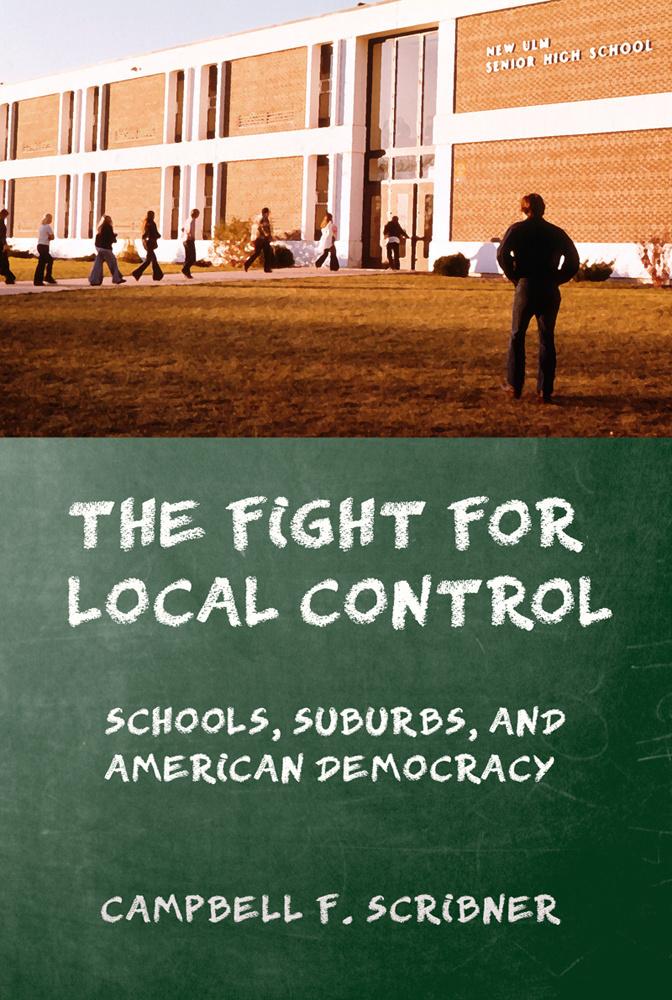
Throughout the twentieth century, local control of school districts was one of the most contentious issues in American politics. As state and federal regulation attempted to standardize public schools, conservatives defended local prerogative as a bulwark of democratic values. Yet their commitment to those values was shifting and selective. In The Fight for Local Control, Campbell F. Scribner demonstrates how, in the decades after World War II, suburban communities appropriated legacies of rural education to assert their political autonomy and in the process radically changed educational law.
Scribner's account unfolds on the metropolitan fringe, where rapid suburbanization overlapped with the consolidation of thousands of small rural schools. Rural residents initially clashed with their new neighbors, but by the 1960s the groups had rallied to resist government oversight. What began as residual opposition to school consolidation would transform into campaigns against race-based busing, unionized teachers, tax equalization, and secular curriculum. In case after case, suburban conservatives carved out new rights for local autonomy, stifling equal educational opportunity.
Yet Scribner also provides insight into why many conservatives have since abandoned localism for policies that stress school choice and federal accountability. In the 1970s, as new battles arose over unions, textbooks, and taxes, districts on the rural-suburban fringe became the first to assert individual choice in the form of school vouchers, religious exemptions, and a marketplace model of education. At the same time, they began to embrace tax limitation and standardized testing, policies that checked educational bureaucracy but bypassed local school boards. The effect, Scribner concludes, has been to reinforce inequalities between districts while weakening participatory government within them, keeping the worst aspects of local control in place while forfeiting its virtues.
Before Memmo my notes were scattered across PDFs. Now a workspace pulls everything into one place — I see exactly what's still left to study.
Memmo's summaries are gold before exams. I don't have to re-read 800 pages two weeks before — just the important parts.
The AI chat has saved me the night before an exam more than once. I just keep asking until I get it — no waiting on a study group to reply.
The quizzes hit exactly what I need to know. Memmo tracks what I get stuck on — so I only practice what's worth it.
Flashcards with spaced repetition are magic. Memmo knows when I'm about to forget something and brings it back.
The AI podcasts are my favorite. I listen on my way to school and get a recap without sitting at a computer.

Handbok i kvalitativa metoder
281 kr

Hållbar utveckling: en introduktion för ingenjörer och andra problemlösare
334 kr

Brymans Samhällsvetenskapliga metoder
390 kr

Projektledning
491 kr

Den orättvisa hälsan: om socioekonomiska skillnader i hälsa och livslängd
326 kr

Organizational Leadership
429 kr

Vetenskapsteori för nybörjare
196 kr

På väg mot läraryrket
172 kr

Det sociala livet i skolan: Socialpsykologiska perspektiv
253 kr

Betygsättningens didaktik
151 kr

Personality
402 kr

Studying Leadership
404 kr

Managing Innovation
477 kr

Introduktion till samhällsvetenskaplig metod
347 kr

The Psychology of Sex and Gender
698 kr

Evidens och kunskap för socialt arbete
207 kr

Introduction to Leadership
605 kr