
Before Memmo my notes were scattered across PDFs. Now a workspace pulls everything into one place — I see exactly what's still left to study.
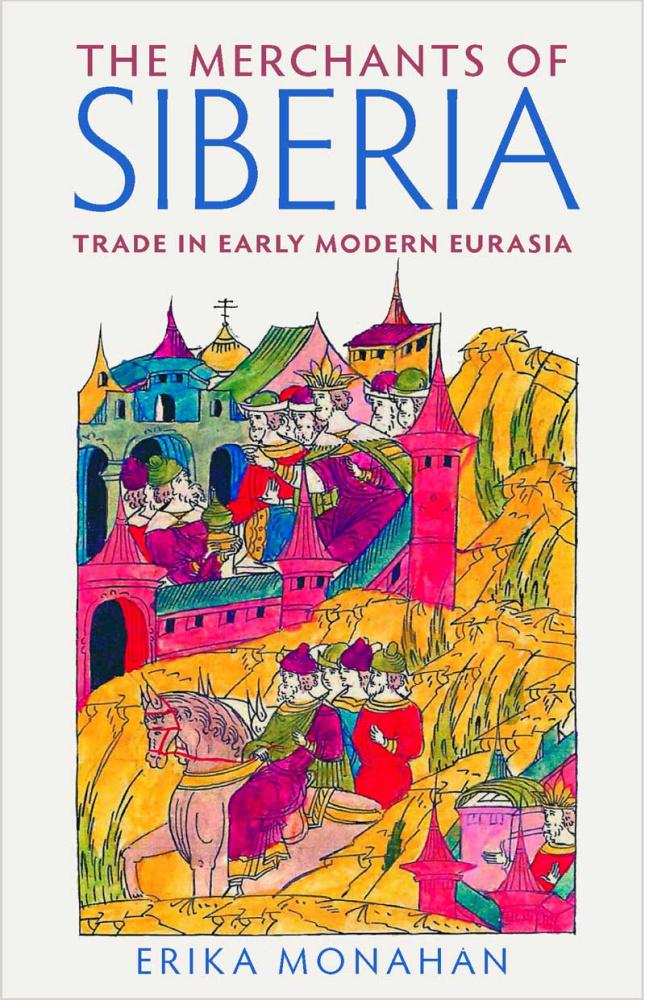
In The Merchants of Siberia, Erika Monahan reconsiders commerce in early modern Russia by reconstructing the trading world of Siberia and the careers of merchants who traded there. She follows the histories of three merchant families from various social ranks who conducted trade in Siberia for well over a century. These include the Filat'evs, who were among Russia's most illustrious merchant elite; the Shababins, Muslim immigrants who mastered local and long-distance trade while balancing private endeavors with service to the Russian state; and the Noritsyns, traders of more modest status who worked sometimes for themselves, sometimes for bigger merchants, and participated in the emerging Russia-China trade.
Monahan demonstrates that trade was a key component of how the Muscovite state sought to assert its authority in the Siberian periphery. The state's recognition of the benefits of commerce meant that Russian state- and empire-building in Siberia were characterized by accommodation; in this diverse borderland, instrumentality trumped ideology and the Orthodox state welcomed Central Asian merchants of Islamic faith.
This reconsideration of Siberian trade invites us to rethink Russia's place in the early modern world. The burgeoning market at Lake Yamysh, an inner-Eurasian trading post along the Irtysh River, illuminates a vibrant seventeenth-century Eurasian caravan trade even as Europe-Asia maritime trade increased. By contextualizing merchants and places of Siberian trade in the increasingly connected economies of the early modern period, Monahan argues that, commercially speaking, Russia was not the "outlier" that most twentieth-century characterizations portrayed.
Before Memmo my notes were scattered across PDFs. Now a workspace pulls everything into one place — I see exactly what's still left to study.
Memmo's summaries are gold before exams. I don't have to re-read 800 pages two weeks before — just the important parts.
The AI chat has saved me the night before an exam more than once. I just keep asking until I get it — no waiting on a study group to reply.
The quizzes hit exactly what I need to know. Memmo tracks what I get stuck on — so I only practice what's worth it.
Flashcards with spaced repetition are magic. Memmo knows when I'm about to forget something and brings it back.
The AI podcasts are my favorite. I listen on my way to school and get a recap without sitting at a computer.

Handbok i kvalitativa metoder
281 kr

Hållbar utveckling: en introduktion för ingenjörer och andra problemlösare
334 kr

Brymans Samhällsvetenskapliga metoder
390 kr

Projektledning
491 kr

Den orättvisa hälsan: om socioekonomiska skillnader i hälsa och livslängd
326 kr

Vetenskapsteori för nybörjare
196 kr

Organizational Leadership
429 kr

På väg mot läraryrket
172 kr

Det sociala livet i skolan: Socialpsykologiska perspektiv
253 kr

Betygsättningens didaktik
151 kr

Personality
402 kr

Studying Leadership
404 kr

Managing Innovation
477 kr

Introduktion till samhällsvetenskaplig metod
347 kr

The Psychology of Sex and Gender
698 kr

Evidens och kunskap för socialt arbete
207 kr

Introduction to Leadership
605 kr