
Before Memmo my notes were scattered across PDFs. Now a workspace pulls everything into one place — I see exactly what's still left to study.
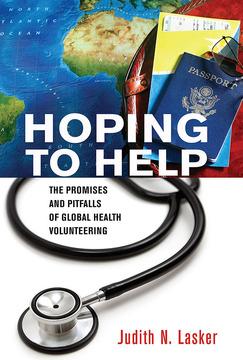
Overseas volunteering has exploded in numbers and interest in the last couple of decades. Every year, hundreds of thousands of people travel from wealthier to poorer countries to participate in short-term volunteer programs focused on health services. Churches, universities, nonprofit service organizations, profit-making "voluntourism" companies, hospitals, and large corporations all sponsor brief missions. Hoping to Help is the first book to offer a comprehensive assessment of global health volunteering, based on research into how it currently operates, its benefits and drawbacks, and how it might be organized to contribute most effectively. Given the enormous human and economic investment in these activities, it is essential to know more about them and to understand the advantages and disadvantages for host communities.
Most people assume that poor communities benefit from the goodwill and skills of the volunteers. Volunteer trips are widely advertised as a means to "give back" and "make a difference." In contrast, some claim that health volunteering is a new form of colonialism, designed to benefit the volunteers more than the host communities. Others focus on unethical practices and potential harm to the presumed "beneficiaries." Judith N. Lasker evaluates these opposing positions and relies on extensive research—interviews with host country staff members, sponsor organization leaders, and volunteers, a national survey of sponsors, and participant observation—to identify best and worst practices. She adds to the debate a focus on the benefits to the sponsoring organizations, benefits that can contribute to practices that are inconsistent with what host country staff identify as most likely to be useful for them and even with what may enhance the experience for volunteers. Hoping to Help illuminates the activities and goals of sponsoring organizations and compares dominant practices to the preferences of host country staff and to nine principles for most effective volunteer trips.
Before Memmo my notes were scattered across PDFs. Now a workspace pulls everything into one place — I see exactly what's still left to study.
Memmo's summaries are gold before exams. I don't have to re-read 800 pages two weeks before — just the important parts.
The AI chat has saved me the night before an exam more than once. I just keep asking until I get it — no waiting on a study group to reply.
The quizzes hit exactly what I need to know. Memmo tracks what I get stuck on — so I only practice what's worth it.
Flashcards with spaced repetition are magic. Memmo knows when I'm about to forget something and brings it back.
The AI podcasts are my favorite. I listen on my way to school and get a recap without sitting at a computer.

Handbok i kvalitativa metoder
281 kr

Hållbar utveckling: en introduktion för ingenjörer och andra problemlösare
334 kr

Brymans Samhällsvetenskapliga metoder
390 kr

Projektledning
491 kr

Den orättvisa hälsan: om socioekonomiska skillnader i hälsa och livslängd
326 kr

Organizational Leadership
429 kr

Vetenskapsteori för nybörjare
196 kr

På väg mot läraryrket
172 kr

Det sociala livet i skolan: Socialpsykologiska perspektiv
253 kr

Betygsättningens didaktik
151 kr

Personality
402 kr

Studying Leadership
404 kr

Managing Innovation
477 kr

Introduktion till samhällsvetenskaplig metod
347 kr

The Psychology of Sex and Gender
698 kr

Evidens och kunskap för socialt arbete
207 kr

Introduction to Leadership
605 kr