
Before Memmo my notes were scattered across PDFs. Now a workspace pulls everything into one place — I see exactly what's still left to study.
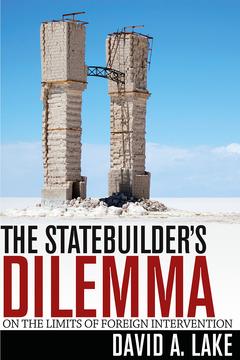
The central task of all statebuilding is to create a state that is regarded as legitimate by the people over whom it exercises authority. This is a necessary condition for stable, effective governance. States sufficiently motivated to bear the costs of building a state in some distant land are likely to have interests in the future policies of that country, and will therefore seek to promote loyal leaders who are sympathetic to their interests and willing to implement their preferred policies. In The Statebuilder's Dilemma, David A. Lake addresses the key tradeoff between legitimacy and loyalty common to all international statebuilding attempts. Except in rare cases where the policy preferences of the statebuilder and the population of the country whose state is to be built coincide, as in the famous success cases of West Germany and Japan after 1945, promoting a leader who will remain loyal to the statebuilder undermines that leader's legitimacy at home.
In Iraq, thrust into a statebuilding role it neither anticipated nor wanted, the United States eventually backed Nouri al-Malaki as the most favorable of a bad lot of alternative leaders. Malaki then used the support of the Bush administration to govern as a Shiite partisan, undermining the statebuilding effort and ultimately leading to the second failure of the Iraqi state in 2014. Ethiopia faced the same tradeoff in Somalia after the rise of a promising but irredentist government in 2006, invading to put its own puppet in power in Mogadishu. But the resulting government has not been able to build significant local support and legitimacy. Lake uses these cases to demonstrate that the greater the interests of the statebuilder in the target country, the more difficult it is to build a legitimate state that can survive on its own.
Before Memmo my notes were scattered across PDFs. Now a workspace pulls everything into one place — I see exactly what's still left to study.
Memmo's summaries are gold before exams. I don't have to re-read 800 pages two weeks before — just the important parts.
The AI chat has saved me the night before an exam more than once. I just keep asking until I get it — no waiting on a study group to reply.
The quizzes hit exactly what I need to know. Memmo tracks what I get stuck on — so I only practice what's worth it.
Flashcards with spaced repetition are magic. Memmo knows when I'm about to forget something and brings it back.
The AI podcasts are my favorite. I listen on my way to school and get a recap without sitting at a computer.

Handbok i kvalitativa metoder
281 kr

Hållbar utveckling: en introduktion för ingenjörer och andra problemlösare
334 kr

Brymans Samhällsvetenskapliga metoder
390 kr

Projektledning
491 kr

Den orättvisa hälsan: om socioekonomiska skillnader i hälsa och livslängd
326 kr

Organizational Leadership
429 kr

Vetenskapsteori för nybörjare
196 kr

På väg mot läraryrket
172 kr

Det sociala livet i skolan: Socialpsykologiska perspektiv
253 kr

Betygsättningens didaktik
151 kr

Personality
402 kr

Studying Leadership
404 kr

Managing Innovation
477 kr

Introduktion till samhällsvetenskaplig metod
347 kr

The Psychology of Sex and Gender
698 kr

Evidens och kunskap för socialt arbete
207 kr

Introduction to Leadership
605 kr