
Before Memmo my notes were scattered across PDFs. Now a workspace pulls everything into one place — I see exactly what's still left to study.
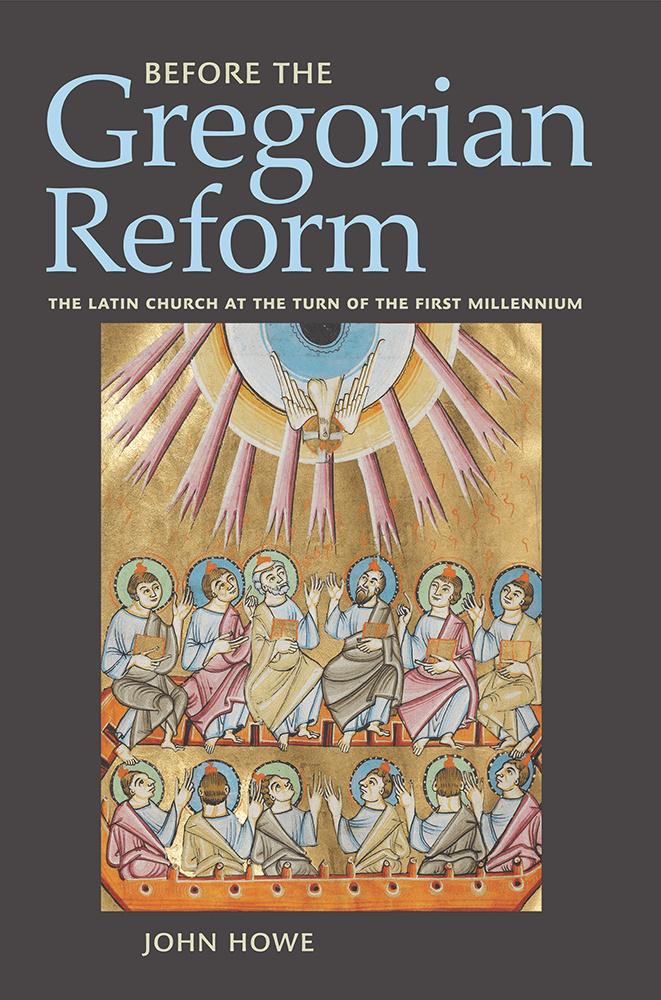
Historians typically single out the hundred-year period from about 1050 to 1150 as the pivotal moment in the history of the Latin Church, for it was then that the Gregorian Reform movement established the ecclesiastical structure that would ensure Rome's dominance throughout the Middle Ages and beyond. In Before the Gregorian Reform John Howe challenges this familiar narrative by examining earlier, "pre-Gregorian" reform efforts within the Church. He finds that they were more extensive and widespread than previously thought and that they actually established a foundation for the subsequent Gregorian Reform movement.
The low point in the history of Christendom came in the late ninth and early tenth centuries—a period when much of Europe was overwhelmed by barbarian raids and widespread civil disorder, which left the Church in a state of disarray. As Howe shows, however, the destruction gave rise to creativity. Aristocrats and churchmen rebuilt churches and constructed new ones, competing against each other so that church building, like castle building, acquired its own momentum. Patrons strove to improve ecclesiastical furnishings, liturgy, and spirituality. Schools were constructed to staff the new churches. Moreover, Howe shows that these reform efforts paralleled broader economic, social, and cultural trends in Western Europe including the revival of long-distance trade, the rise of technology, and the emergence of feudal lordship. The result was that by the mid-eleventh century a wealthy, unified, better-organized, better-educated, more spiritually sensitive Latin Church was assuming a leading place in the broader Christian world.
Before the Gregorian Reform challenges us to rethink the history of the Church and its place in the broader narrative of European history. Compellingly written and generously illustrated, it is a book for all medievalists as well as general readers interested in the Middle Ages and Church history.
Before Memmo my notes were scattered across PDFs. Now a workspace pulls everything into one place — I see exactly what's still left to study.
Memmo's summaries are gold before exams. I don't have to re-read 800 pages two weeks before — just the important parts.
The AI chat has saved me the night before an exam more than once. I just keep asking until I get it — no waiting on a study group to reply.
The quizzes hit exactly what I need to know. Memmo tracks what I get stuck on — so I only practice what's worth it.
Flashcards with spaced repetition are magic. Memmo knows when I'm about to forget something and brings it back.
The AI podcasts are my favorite. I listen on my way to school and get a recap without sitting at a computer.

Handbok i kvalitativa metoder
281 kr

Hållbar utveckling: en introduktion för ingenjörer och andra problemlösare
334 kr

Brymans Samhällsvetenskapliga metoder
390 kr

Projektledning
491 kr

Den orättvisa hälsan: om socioekonomiska skillnader i hälsa och livslängd
326 kr

Organizational Leadership
429 kr

Vetenskapsteori för nybörjare
196 kr

På väg mot läraryrket
172 kr

Det sociala livet i skolan: Socialpsykologiska perspektiv
253 kr

Betygsättningens didaktik
151 kr

Personality
402 kr

Studying Leadership
404 kr

Managing Innovation
477 kr

Introduktion till samhällsvetenskaplig metod
347 kr

The Psychology of Sex and Gender
698 kr

Evidens och kunskap för socialt arbete
207 kr

Introduction to Leadership
605 kr