
Before Memmo my notes were scattered across PDFs. Now a workspace pulls everything into one place — I see exactly what's still left to study.
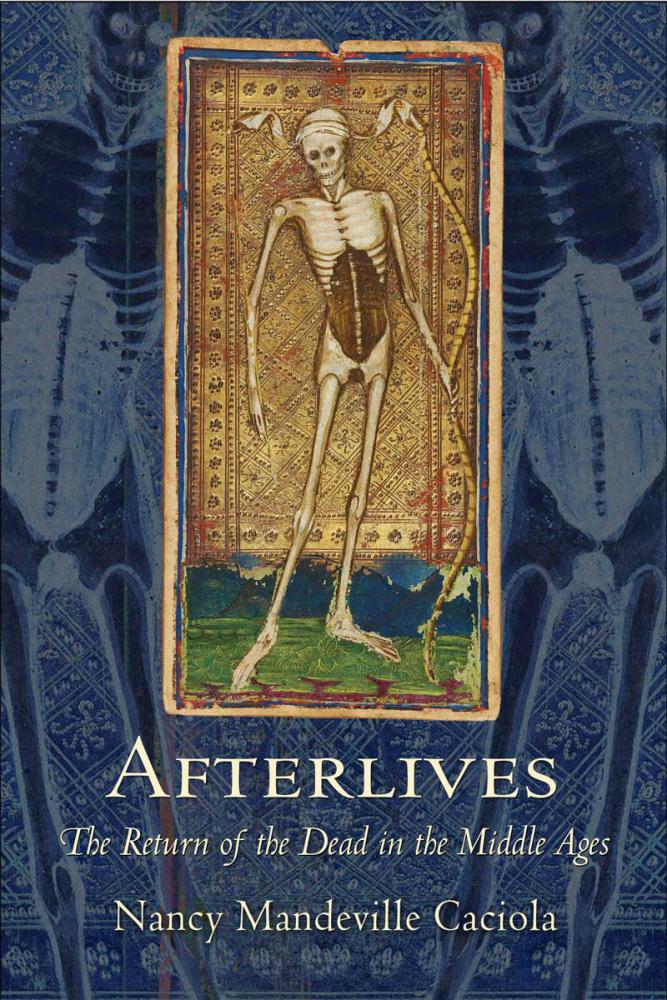
Whatever interpretative standpoint one brings to belief in revenance in the Middle Ages, Afterlives provides a wealth of evidence combined with insightful commentary and discussion. This book is a major contribution to scholarship, and a highly recommended read.â• The Folklore Society
Simultaneously real and unreal, the dead are people, yet they are not. The society of medieval Europe developed a rich set of imaginative traditions about death and the afterlife, using the dead as a point of entry for thinking about the self, regeneration, and loss. These macabre preoccupations are evident in the widespread popularity of stories about the returned dead, who interacted with the living both as disembodied spirits and as living corpses or revenants. In Afterlives, Nancy Mandeville Caciola explores this extraordinary phenomenon of the living's relationship with the dead in Europe during the five hundred years after the year 1000.
Caciola considers both Christian and pagan beliefs, showing how certain traditions survived and evolved over time, and how attitudes both diverged and overlapped through different contexts and social strata. As she shows, the intersection of Christian eschatology with various pagan afterlife imaginings—from the classical paganisms of the Mediterranean to the Germanic, Celtic, Slavic, and Scandinavian paganisms indigenous to northern Europe—brought new cultural values about the dead into the Christian fold as Christianity spread across Europe. Indeed, the Church proved surprisingly open to these influences, absorbing new images of death and afterlife in unpredictable fashion. Over time, however, the persistence of regional cultures and beliefs would be counterbalanced by the effects of an increasingly centralized Church hierarchy. Through it all, one thing remained constant: the deep desire in medieval people to bring together the living and the dead into a single community enduring across the generations.
Before Memmo my notes were scattered across PDFs. Now a workspace pulls everything into one place — I see exactly what's still left to study.
Memmo's summaries are gold before exams. I don't have to re-read 800 pages two weeks before — just the important parts.
The AI chat has saved me the night before an exam more than once. I just keep asking until I get it — no waiting on a study group to reply.
The quizzes hit exactly what I need to know. Memmo tracks what I get stuck on — so I only practice what's worth it.
Flashcards with spaced repetition are magic. Memmo knows when I'm about to forget something and brings it back.
The AI podcasts are my favorite. I listen on my way to school and get a recap without sitting at a computer.

Handbok i kvalitativa metoder
281 kr

Hållbar utveckling: en introduktion för ingenjörer och andra problemlösare
334 kr

Brymans Samhällsvetenskapliga metoder
390 kr

Projektledning
491 kr

Den orättvisa hälsan: om socioekonomiska skillnader i hälsa och livslängd
326 kr

Organizational Leadership
429 kr

Vetenskapsteori för nybörjare
196 kr

På väg mot läraryrket
172 kr

Det sociala livet i skolan: Socialpsykologiska perspektiv
253 kr

Betygsättningens didaktik
151 kr

Personality
402 kr

Studying Leadership
404 kr

Managing Innovation
477 kr

Introduktion till samhällsvetenskaplig metod
347 kr

The Psychology of Sex and Gender
698 kr

Evidens och kunskap för socialt arbete
207 kr

Introduction to Leadership
605 kr