
Before Memmo my notes were scattered across PDFs. Now a workspace pulls everything into one place — I see exactly what's still left to study.
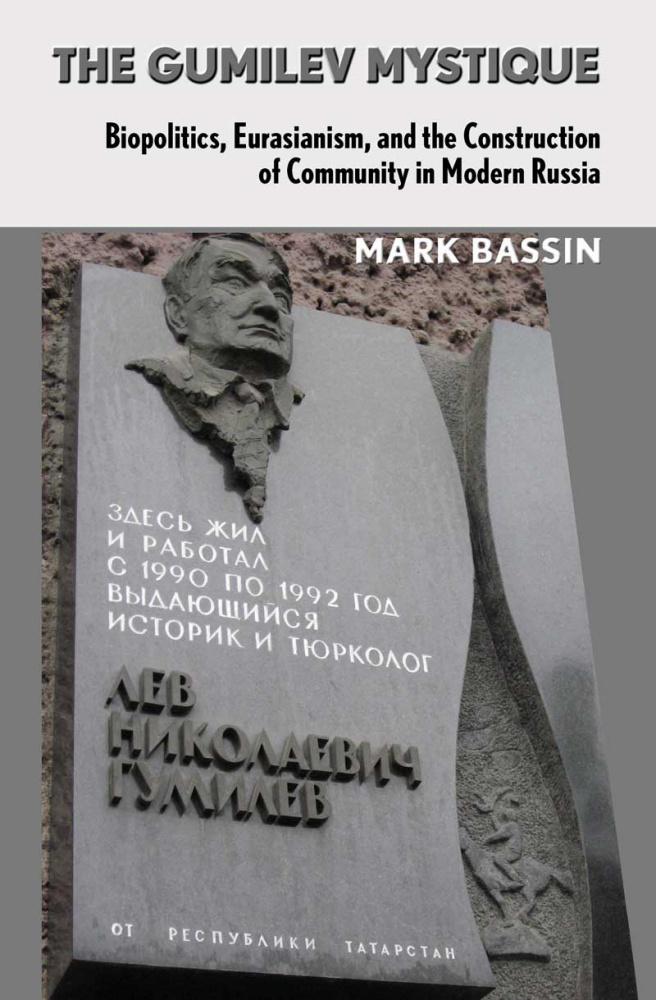
Since the collapse of the Soviet Union, the legacy of the historian, ethnographer, and geographer Lev Nikolaevich Gumilev (1912–1992) has attracted extraordinary interest in Russia and beyond. The son of two of modern Russia's greatest poets, Nikolai Gumilev and Anna Akhmatova, Gumilev spent thirteen years in Stalinist prison camps, and after his release in 1956 remained officially outcast and professionally shunned. Out of the tumult of perestroika, however, his writings began to attract attention and he himself became a well-known and popular figure. Despite his highly controversial (and often contradictory) views about the meaning of Russian history, the nature of ethnicity, and the dynamics of interethnic relations, Gumilev now enjoys a degree of admiration and adulation matched by few if any other public intellectual figures in the former Soviet Union. He is freely compared to Albert Einstein and Karl Marx, and his works today sell millions of copies and have been adopted as official textbooks in Russian high schools. Universities and mountain peaks alike are named in his honor, and a statue of him adorns a prominent thoroughfare in a major city. Leading politicians, President Vladimir Putin very much included, are unstinting in their deep appreciation for his legacy, and one of the most important foreign-policy projects of the Russian government today is clearly inspired by his particular vision of how the Eurasian peoples formed a historical community.
In The Gumilev Mystique, Mark Bassin presents an analysis of this remarkable phenomenon. He investigates the complex structure of Gumilev's theories, revealing how they reflected and helped shape a variety of academic as well as political and social discourses in the USSR, and he traces how his authority has grown yet greater across the former Soviet Union. The themes he highlights while untangling Gumilev's complicated web of influence are critical to understanding the political, intellectual, and ethno-national dynamics of Russian society from the age of Stalin to the present day.
Before Memmo my notes were scattered across PDFs. Now a workspace pulls everything into one place — I see exactly what's still left to study.
Memmo's summaries are gold before exams. I don't have to re-read 800 pages two weeks before — just the important parts.
The AI chat has saved me the night before an exam more than once. I just keep asking until I get it — no waiting on a study group to reply.
The quizzes hit exactly what I need to know. Memmo tracks what I get stuck on — so I only practice what's worth it.
Flashcards with spaced repetition are magic. Memmo knows when I'm about to forget something and brings it back.
The AI podcasts are my favorite. I listen on my way to school and get a recap without sitting at a computer.

Handbok i kvalitativa metoder
281 kr

Hållbar utveckling: en introduktion för ingenjörer och andra problemlösare
334 kr

Brymans Samhällsvetenskapliga metoder
390 kr

Projektledning
491 kr

Den orättvisa hälsan: om socioekonomiska skillnader i hälsa och livslängd
326 kr

Vetenskapsteori för nybörjare
196 kr

Organizational Leadership
429 kr

På väg mot läraryrket
172 kr

Det sociala livet i skolan: Socialpsykologiska perspektiv
253 kr

Betygsättningens didaktik
151 kr

Personality
402 kr

Studying Leadership
404 kr

Managing Innovation
477 kr

Introduktion till samhällsvetenskaplig metod
347 kr

The Psychology of Sex and Gender
698 kr

Evidens och kunskap för socialt arbete
207 kr

Introduction to Leadership
605 kr