
Before Memmo my notes were scattered across PDFs. Now a workspace pulls everything into one place — I see exactly what's still left to study.
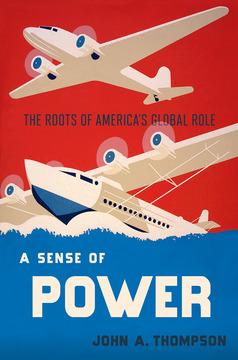
Why has the United States assumed so extensive and costly a role in world affairs over the last hundred years? The two most common answers to this question are "because it could" and "because it had to." Neither answer will do, according to this challenging re-assessment of the way that America came to assume its global role. The country's vast economic resources gave it the capacity to exercise great influence abroad, but Americans were long reluctant to meet the costs of wielding that power. Neither the country's safety from foreign attack nor its economic well-being required the achievement of ambitious foreign policy objectives.
In A Sense of Power, John A. Thompson takes a long view of America's dramatic rise as a world power, from the late nineteenth century into the post–World War II era. How, and more importantly why, has America come to play such a dominant role in world affairs? There is, he argues, no simple answer. Thompson challenges conventional explanations of America's involvement in World War I and World War II, seeing neither the requirements of national security nor economic interests as determining. He shows how American leaders from Wilson to Truman developed an ever more capacious understanding of the national interest, and why by the 1940s most Americans came to support the price tag, in blood and treasure, attached to strenuous efforts to shape the world. The beliefs and emotions that led them to do so reflected distinctive aspects of U.S. culture, not least the strength of ties to Europe. Consciousness of the nation's unique power fostered feelings of responsibility, entitlement, and aspiration among the people and leaders of the United States.
This original analysis challenges some widely held beliefs about the determinants of United States foreign policy and will bring new insight to contemporary debates about whether the nation should—or must—play so active a part in world politics.
Before Memmo my notes were scattered across PDFs. Now a workspace pulls everything into one place — I see exactly what's still left to study.
Memmo's summaries are gold before exams. I don't have to re-read 800 pages two weeks before — just the important parts.
The AI chat has saved me the night before an exam more than once. I just keep asking until I get it — no waiting on a study group to reply.
The quizzes hit exactly what I need to know. Memmo tracks what I get stuck on — so I only practice what's worth it.
Flashcards with spaced repetition are magic. Memmo knows when I'm about to forget something and brings it back.
The AI podcasts are my favorite. I listen on my way to school and get a recap without sitting at a computer.

Handbok i kvalitativa metoder
281 kr

Hållbar utveckling: en introduktion för ingenjörer och andra problemlösare
334 kr

Brymans Samhällsvetenskapliga metoder
390 kr

Projektledning
491 kr

Den orättvisa hälsan: om socioekonomiska skillnader i hälsa och livslängd
326 kr

Vetenskapsteori för nybörjare
196 kr

Organizational Leadership
429 kr

På väg mot läraryrket
172 kr

Det sociala livet i skolan: Socialpsykologiska perspektiv
253 kr

Betygsättningens didaktik
151 kr

Personality
402 kr

Studying Leadership
404 kr

Managing Innovation
477 kr

Introduktion till samhällsvetenskaplig metod
347 kr

The Psychology of Sex and Gender
698 kr

Evidens och kunskap för socialt arbete
207 kr

Introduction to Leadership
605 kr