
Before Memmo my notes were scattered across PDFs. Now a workspace pulls everything into one place — I see exactly what's still left to study.
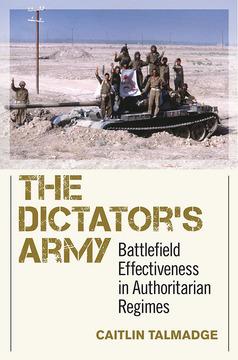
In The Dictator's Army, Caitlin Talmadge presents a compelling new argument to help us understand why authoritarian militaries sometimes fight very well—and sometimes very poorly. Talmadge's framework for understanding battlefield effectiveness focuses on four key sets of military organizational practices: promotion patterns, training regimens, command arrangements, and information management. Different regimes face different domestic and international threat environments, leading their militaries to adopt different policies in these key areas of organizational behavior.
Authoritarian regimes facing significant coup threats are likely to adopt practices that squander the state's military power, while regimes lacking such threats and possessing ambitious foreign policy goals are likely to adopt the effective practices often associated with democracies. Talmadge shows the importance of threat conditions and military organizational practices for battlefield performance in two paired comparisons of states at war: North and South Vietnam (1963–1975) and Iran and Iraq (1980–1988). Drawing on extensive documentary sources, her analysis demonstrates that threats and practices can vary not only between authoritarian regimes but also within them, either over time or across different military units. The result is a persuasive explanation of otherwise puzzling behavior by authoritarian militaries. The Dictator's Army offers a vital practical tool for those seeking to assess the likely course, costs, and outcomes of future conflicts involving nondemocratic adversaries, allies, or coalition partners.
Before Memmo my notes were scattered across PDFs. Now a workspace pulls everything into one place — I see exactly what's still left to study.
Memmo's summaries are gold before exams. I don't have to re-read 800 pages two weeks before — just the important parts.
The AI chat has saved me the night before an exam more than once. I just keep asking until I get it — no waiting on a study group to reply.
The quizzes hit exactly what I need to know. Memmo tracks what I get stuck on — so I only practice what's worth it.
Flashcards with spaced repetition are magic. Memmo knows when I'm about to forget something and brings it back.
The AI podcasts are my favorite. I listen on my way to school and get a recap without sitting at a computer.

Handbok i kvalitativa metoder
281 kr

Hållbar utveckling: en introduktion för ingenjörer och andra problemlösare
334 kr

Brymans Samhällsvetenskapliga metoder
390 kr

Projektledning
491 kr

Den orättvisa hälsan: om socioekonomiska skillnader i hälsa och livslängd
326 kr

Organizational Leadership
429 kr

Vetenskapsteori för nybörjare
196 kr

På väg mot läraryrket
172 kr

Det sociala livet i skolan: Socialpsykologiska perspektiv
253 kr

Betygsättningens didaktik
151 kr

Personality
402 kr

Studying Leadership
404 kr

Managing Innovation
477 kr

Introduktion till samhällsvetenskaplig metod
347 kr

The Psychology of Sex and Gender
698 kr

Evidens och kunskap för socialt arbete
207 kr

Introduction to Leadership
605 kr