
Before Memmo my notes were scattered across PDFs. Now a workspace pulls everything into one place — I see exactly what's still left to study.
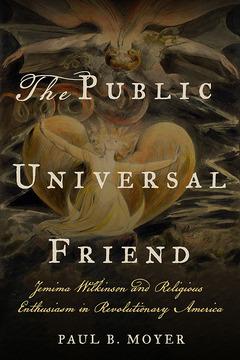
Amid political innovation and social transformation, Revolutionary America was also fertile ground for religious upheaval, as self-proclaimed visionaries and prophets established new religious sects throughout the emerging nation. Among the most influential and controversial of these figures was Jemima Wilkinson. Born in 1752 and raised in a Quaker household in Cumberland, Rhode Island, Wilkinson began her ministry dramatically in 1776 when, in the midst of an illness, she announced her own death and reincarnation as the Public Universal Friend, a heaven-sent prophet who was neither female nor male. In The Public Universal Friend, Paul B. Moyer tells the story of Wilkinson and her remarkable church, the Society of Universal Friends.
Wilkinson's message was a simple one: humankind stood on the brink of the Apocalypse, but salvation was available to all who accepted God's grace and the authority of his prophet: the Public Universal Friend. Wilkinson preached widely in southern New England and Pennsylvania, attracted hundreds of devoted followers, formed them into a religious sect, and, by the late 1780s, had led her converts to the backcountry of the newly formed United States, where they established a religious community near present-day Penn Yan, New York. Even this remote spot did not provide a safe haven for Wilkinson and her followers as they awaited the Millennium. Disputes from within and without dogged the sect, and many disciples drifted away or turned against the Friend. After Wilkinson's "second" and final death in 1819, the Society rapidly fell into decline and, by the mid-nineteenth century, ceased to exist. The prophet's ministry spanned the American Revolution and shaped the nation's religious landscape during the unquiet interlude between the first and second Great Awakenings.
The life of the Public Universal Friend and the Friend's church offer important insights about changes to religious life, gender, and society during this formative period. The Public Universal Friend is an elegantly written and comprehensive history of an important and too little known figure in the spiritual landscape of early America.
Before Memmo my notes were scattered across PDFs. Now a workspace pulls everything into one place — I see exactly what's still left to study.
Memmo's summaries are gold before exams. I don't have to re-read 800 pages two weeks before — just the important parts.
The AI chat has saved me the night before an exam more than once. I just keep asking until I get it — no waiting on a study group to reply.
The quizzes hit exactly what I need to know. Memmo tracks what I get stuck on — so I only practice what's worth it.
Flashcards with spaced repetition are magic. Memmo knows when I'm about to forget something and brings it back.
The AI podcasts are my favorite. I listen on my way to school and get a recap without sitting at a computer.

Handbok i kvalitativa metoder
281 kr

Hållbar utveckling: en introduktion för ingenjörer och andra problemlösare
334 kr

Brymans Samhällsvetenskapliga metoder
390 kr

Projektledning
491 kr

Den orättvisa hälsan: om socioekonomiska skillnader i hälsa och livslängd
326 kr

Vetenskapsteori för nybörjare
196 kr

Organizational Leadership
429 kr

På väg mot läraryrket
172 kr

Det sociala livet i skolan: Socialpsykologiska perspektiv
253 kr

Betygsättningens didaktik
151 kr

Personality
402 kr

Studying Leadership
404 kr

Managing Innovation
477 kr

Introduktion till samhällsvetenskaplig metod
347 kr

The Psychology of Sex and Gender
698 kr

Evidens och kunskap för socialt arbete
207 kr

Introduction to Leadership
605 kr