
Before Memmo my notes were scattered across PDFs. Now a workspace pulls everything into one place — I see exactly what's still left to study.
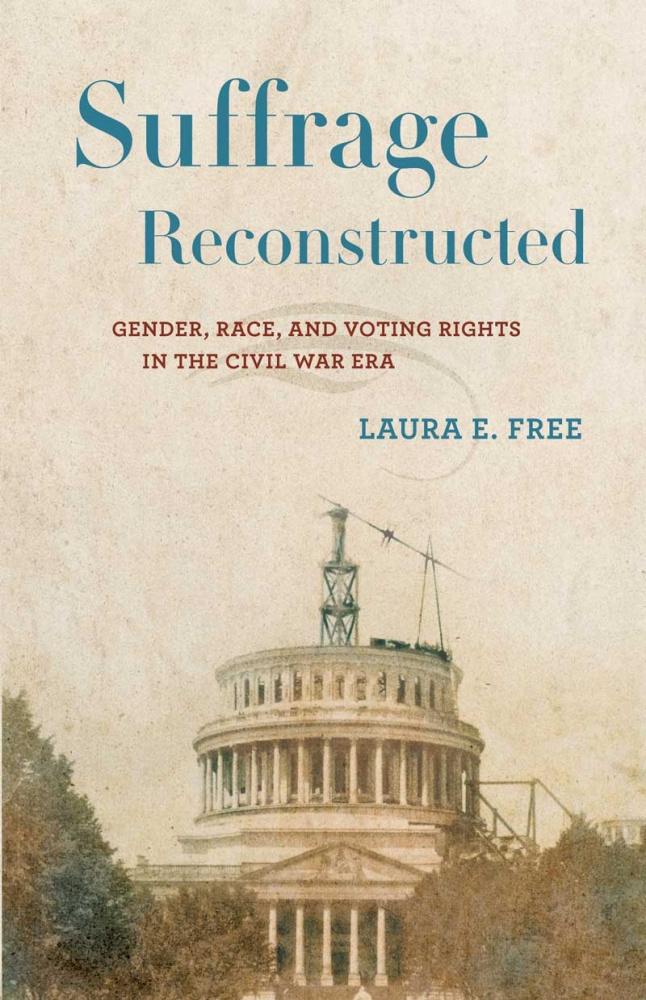
The Fourteenth Amendment, ratified on July 9, 1868, identified all legitimate voters as "male." In so doing, it added gender-specific language to the U.S. Constitution for the first time. Suffrage Reconstructed considers how and why the amendment's authors made this decision. Vividly detailing congressional floor bickering and activist campaigning, Laura E. Free takes readers into the pre- and postwar fights over precisely who should have the right to vote. Free demonstrates that all men, black and white, were the ultimate victors of these fights, as gender became the single most important marker of voting rights during Reconstruction.
Free argues that the Fourteenth Amendment's language was shaped by three key groups: African American activists who used ideas about manhood to claim black men's right to the ballot, postwar congressmen who sought to justify enfranchising southern black men, and women's rights advocates who began to petition Congress for the ballot for the first time as the Amendment was being drafted. To prevent women's inadvertent enfranchisement, and to incorporate formerly disfranchised black men into the voting polity, the Fourteenth Amendment's congressional authors turned to gender to define the new American voter. Faced with this exclusion some woman suffragists, most notably Elizabeth Cady Stanton, turned to rhetorical racism in order to mount a campaign against sex as a determinant of one's capacity to vote. Stanton's actions caused a rift with Frederick Douglass and a schism in the fledgling woman suffrage movement. By integrating gender analysis and political history, Suffrage Reconstructed offers a new interpretation of the Civil War–era remaking of American democracy, placing African American activists and women's rights advocates at the heart of nineteenth-century American conversations about public policy, civil rights, and the franchise.
Before Memmo my notes were scattered across PDFs. Now a workspace pulls everything into one place — I see exactly what's still left to study.
Memmo's summaries are gold before exams. I don't have to re-read 800 pages two weeks before — just the important parts.
The AI chat has saved me the night before an exam more than once. I just keep asking until I get it — no waiting on a study group to reply.
The quizzes hit exactly what I need to know. Memmo tracks what I get stuck on — so I only practice what's worth it.
Flashcards with spaced repetition are magic. Memmo knows when I'm about to forget something and brings it back.
The AI podcasts are my favorite. I listen on my way to school and get a recap without sitting at a computer.

Handbok i kvalitativa metoder
281 kr

Hållbar utveckling: en introduktion för ingenjörer och andra problemlösare
334 kr

Brymans Samhällsvetenskapliga metoder
390 kr

Projektledning
491 kr

Den orättvisa hälsan: om socioekonomiska skillnader i hälsa och livslängd
326 kr

Vetenskapsteori för nybörjare
196 kr

Organizational Leadership
429 kr

På väg mot läraryrket
172 kr

Det sociala livet i skolan: Socialpsykologiska perspektiv
253 kr

Betygsättningens didaktik
151 kr

Personality
402 kr

Studying Leadership
404 kr

Managing Innovation
477 kr

Introduktion till samhällsvetenskaplig metod
347 kr

The Psychology of Sex and Gender
698 kr

Evidens och kunskap för socialt arbete
207 kr

Introduction to Leadership
605 kr