
Before Memmo my notes were scattered across PDFs. Now a workspace pulls everything into one place — I see exactly what's still left to study.
Charts the development of progressive Christianity’s engagement with modern science, historical criticism, and liberal humanism
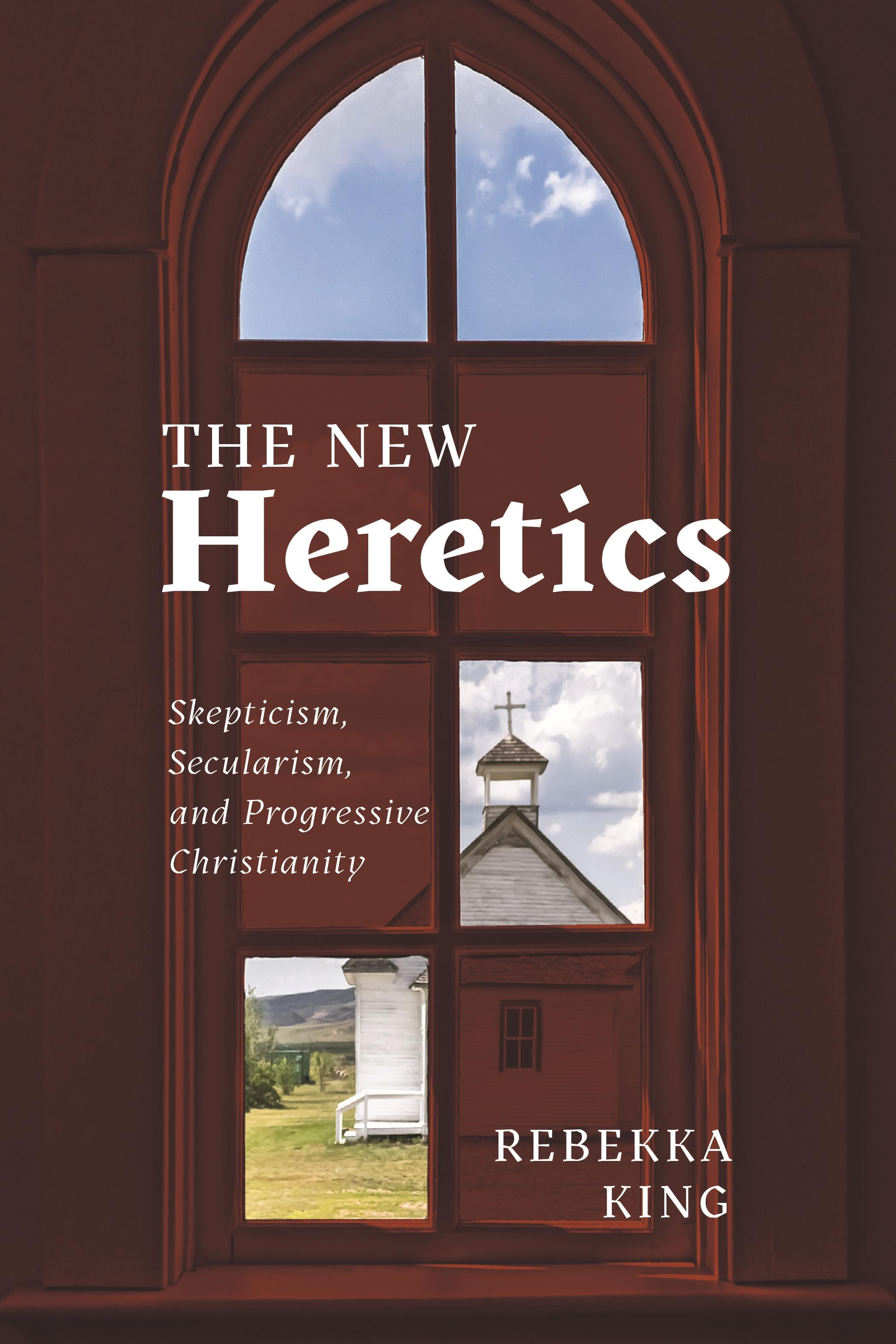
Christians who have doubts about the existence of God? Who do not believe in the divinity of Jesus? Who reject the accuracy of the Bible? The New Heretics explores the development of progressive Christianity, a movement of Christians who do not reject their identity as Christians, but who believe Christianity must be updated for today’s times and take into consideration modern science, historical criticism, and liberal humanism.
Drawing on three years of ethnographic fieldwork in North America, Rebekka King focuses on testimonies of deconversion, collective reading practices, and the ways in which religious beliefs and practices are adapted to fit secular lives. King introduces the concept of “lived secularity” as a category with which to examine the ways in which religiosity often is entangled with and subsumed by secular identities over and against religious ones. This theoretical framework provides insight into the study of religious and cultural hybridity, new emerging groups such as “the nones,” atheism, religious apostasy, and multi-religious identities.
The New Heretics pays close attention to the ways that progressive Christians understand themselves vis-à-vis a conservative or fundamentalist Christian “other,” providing context concerning the presumed divide between the religious right and the religious left. King shows that while it might be tempting to think of progressive Christians as atheists, there are religious and moral dimensions to their disbelief. For progressive Christians the act of questioning and rejecting God—alongside other theological tenets—is framed as a moral activity. Ultimately, the book showcases the importance of engaging with the ethics of belief in understanding contemporary Christianity.
Before Memmo my notes were scattered across PDFs. Now a workspace pulls everything into one place — I see exactly what's still left to study.
Memmo's summaries are gold before exams. I don't have to re-read 800 pages two weeks before — just the important parts.
The AI chat has saved me the night before an exam more than once. I just keep asking until I get it — no waiting on a study group to reply.
The quizzes hit exactly what I need to know. Memmo tracks what I get stuck on — so I only practice what's worth it.
Flashcards with spaced repetition are magic. Memmo knows when I'm about to forget something and brings it back.
The AI podcasts are my favorite. I listen on my way to school and get a recap without sitting at a computer.

Handbok i kvalitativa metoder
281 kr

Hållbar utveckling: en introduktion för ingenjörer och andra problemlösare
334 kr

Brymans Samhällsvetenskapliga metoder
390 kr

Projektledning
491 kr

Den orättvisa hälsan: om socioekonomiska skillnader i hälsa och livslängd
326 kr

Vetenskapsteori för nybörjare
196 kr

Organizational Leadership
429 kr

På väg mot läraryrket
172 kr

Det sociala livet i skolan: Socialpsykologiska perspektiv
253 kr

Betygsättningens didaktik
151 kr

Personality
402 kr

Studying Leadership
404 kr

Managing Innovation
477 kr

Introduktion till samhällsvetenskaplig metod
347 kr

The Psychology of Sex and Gender
698 kr

Evidens och kunskap för socialt arbete
207 kr

Introduction to Leadership
605 kr