
Before Memmo my notes were scattered across PDFs. Now a workspace pulls everything into one place — I see exactly what's still left to study.
The role of formal and informal institutional forces in changing three areas of U.S. public policy: privacy rights, civil rights and climate policy
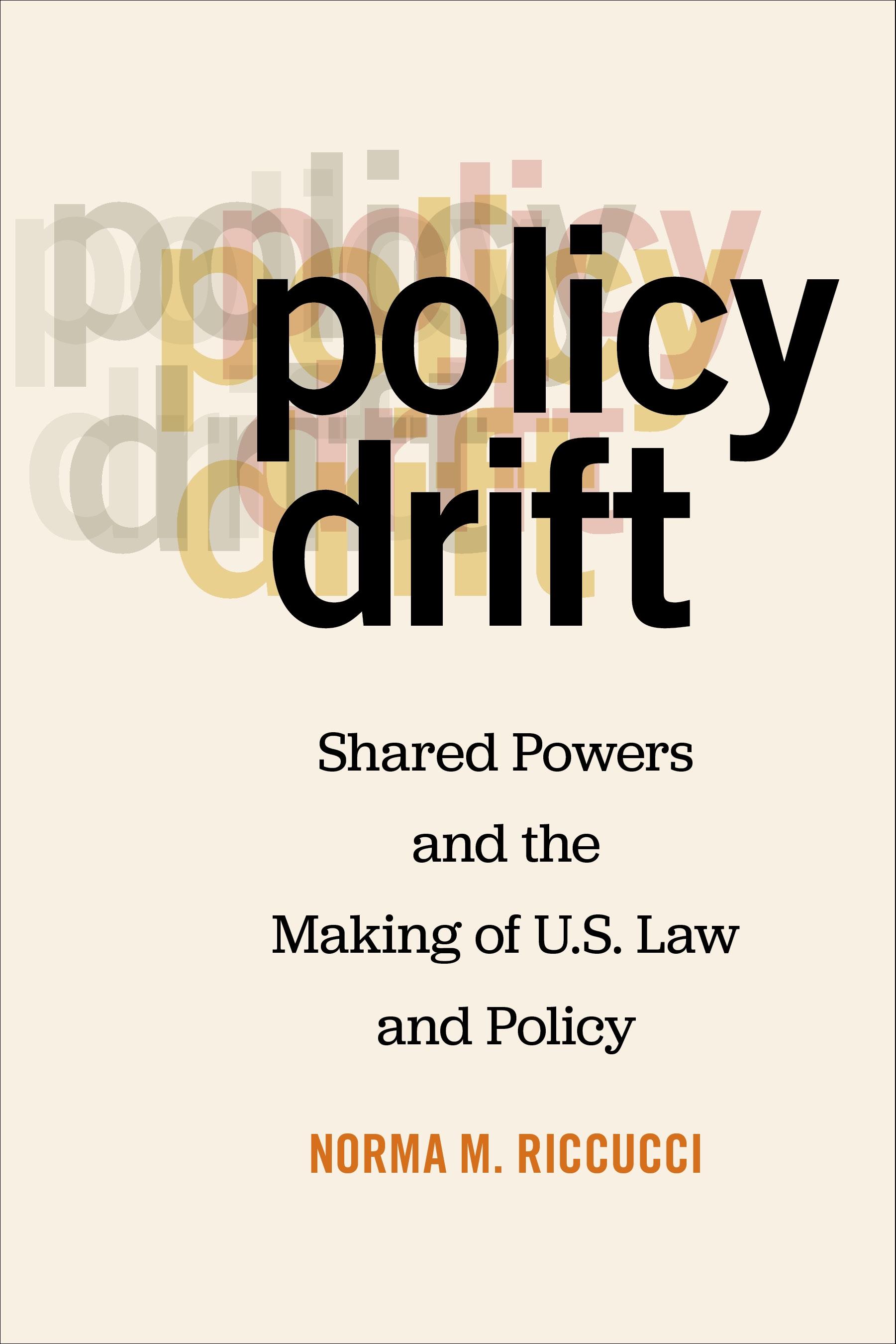
There is no finality to the public policy process. Although it’s often assumed that once a law is enacted it is implemented faithfully, even policies believed to be stable can change or drift in unexpected directions. The Fourth Amendment, for example, guarantees Americans’ privacy rights, but the 9/11 terrorist attacks set off one of the worst cases of government-sponsored espionage. Policy changes instituted by the National Security Agency led to widespread warrantless surveillance, a drift in public policy that led to lawsuits challenging the constitutionality of wiretapping the American people.
Much of the research in recent decades ignores the impact of large-scale, slow-moving, secular forces in political, social, and economic environments on public policy. In Policy Drift, Norma Riccucci sheds light on how institutional forces collectively contributed to major change in three key areas of U.S. policy (privacy rights, civil rights, and climate policy) without any new policy explicitly being written. Formal levers of change—U.S. Supreme Court decisions; inaction by Congress; Presidential executive orders—stimulated by social, political or economic forces, organized permutations which ultimately shaped and defined contemporary public policy.
Invariably, implementations of new policies are embedded within a political landscape. Political actors, motivated by social and economic factors, may explicitly employ strategies to shift the direction of existing public polices or derail them altogether. Some segments of the population will benefit from this process, while others will not; thus, “policy drifts” carry significant consequences for social and economic change.
A comprehensive account of inadvertent changes to privacy rights, civil rights, and climate policy, Policy Drift demonstrates how unanticipated levers of change can modify the status quo in public policy.
Before Memmo my notes were scattered across PDFs. Now a workspace pulls everything into one place — I see exactly what's still left to study.
Memmo's summaries are gold before exams. I don't have to re-read 800 pages two weeks before — just the important parts.
The AI chat has saved me the night before an exam more than once. I just keep asking until I get it — no waiting on a study group to reply.
The quizzes hit exactly what I need to know. Memmo tracks what I get stuck on — so I only practice what's worth it.
Flashcards with spaced repetition are magic. Memmo knows when I'm about to forget something and brings it back.
The AI podcasts are my favorite. I listen on my way to school and get a recap without sitting at a computer.

Handbok i kvalitativa metoder
281 kr

Hållbar utveckling: en introduktion för ingenjörer och andra problemlösare
334 kr

Brymans Samhällsvetenskapliga metoder
390 kr

Projektledning
491 kr

Den orättvisa hälsan: om socioekonomiska skillnader i hälsa och livslängd
326 kr

Vetenskapsteori för nybörjare
196 kr

Organizational Leadership
429 kr

På väg mot läraryrket
172 kr

Det sociala livet i skolan: Socialpsykologiska perspektiv
253 kr

Betygsättningens didaktik
151 kr

Personality
402 kr

Studying Leadership
404 kr

Managing Innovation
477 kr

Introduktion till samhällsvetenskaplig metod
347 kr

The Psychology of Sex and Gender
698 kr

Evidens och kunskap för socialt arbete
207 kr

Introduction to Leadership
605 kr