
Before Memmo my notes were scattered across PDFs. Now a workspace pulls everything into one place — I see exactly what's still left to study.
Honorable Mention, 2019 Saul Viener Book Prize, given by the American Jewish Historical Society
A vivid history of the American Jewish merchants who concentrated in the nation’s most important economic sector
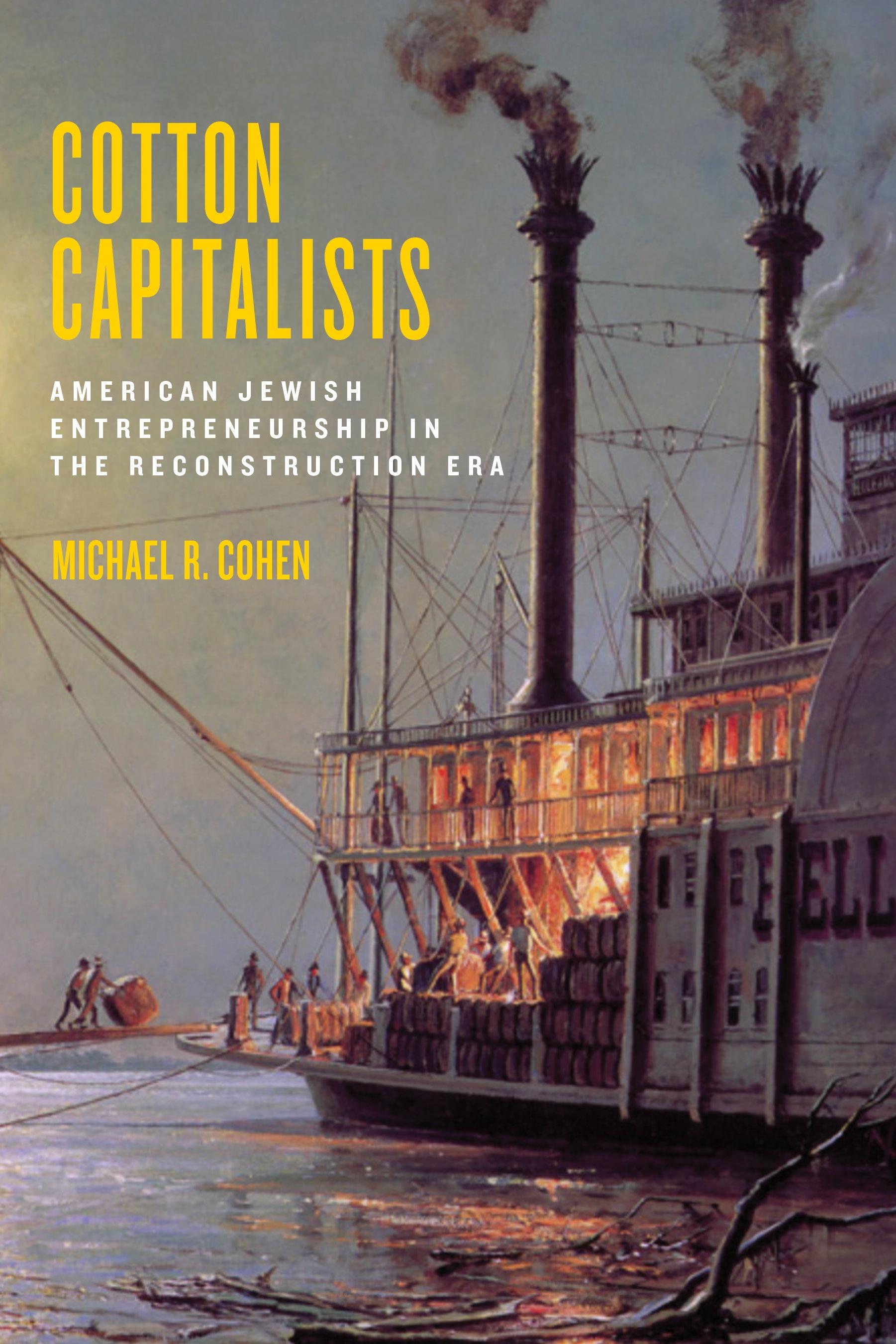
In the nineteenth century, Jewish merchants created a thriving niche economy in the United States’ most important industry—cotton—positioning themselves at the forefront of expansion during the Reconstruction Era. Jewish success in the cotton industry was transformative for both Jewish communities and their development, and for the broader economic restructuring of the South. Cotton Capitalists analyzes this niche economy and reveals its origins. Michael R. Cohen argues that Jewish merchants’ status as a minority fueled their success by fostering ethnic networks of trust. Trust in the nineteenth century was the cornerstone of economic transactions, and this trust was largely fostered by ethnicity. Much as money flowed along ethnic lines between Anglo-American banks, Jewish merchants in the Gulf South used their own ethnic ties with other Jewish-owned firms in New York, as well as Jewish investors across the globe, to capitalize their businesses. They relied on these family connections to direct Northern credit and goods to the war-torn South, avoiding the constraints of the anti-Jewish prejudices which had previously denied them access to credit, allowing them to survive economic downturns.
These American Jewish merchants reveal that ethnicity matters in the development of global capitalism. Ethnic minorities are and have frequently been at the forefront of entrepreneurship, finding innovative ways to expand narrow sectors of the economy. While this was certainly the case for Jews, it has also been true for other immigrant groups more broadly. The story of Jews in the American cotton trade is far more than the story of American Jewish success and integration—it is the story of the role of ethnicity in the development of global capitalism.
Before Memmo my notes were scattered across PDFs. Now a workspace pulls everything into one place — I see exactly what's still left to study.
Memmo's summaries are gold before exams. I don't have to re-read 800 pages two weeks before — just the important parts.
The AI chat has saved me the night before an exam more than once. I just keep asking until I get it — no waiting on a study group to reply.
The quizzes hit exactly what I need to know. Memmo tracks what I get stuck on — so I only practice what's worth it.
Flashcards with spaced repetition are magic. Memmo knows when I'm about to forget something and brings it back.
The AI podcasts are my favorite. I listen on my way to school and get a recap without sitting at a computer.

Handbok i kvalitativa metoder
281 kr

Hållbar utveckling: en introduktion för ingenjörer och andra problemlösare
334 kr

Brymans Samhällsvetenskapliga metoder
390 kr

Projektledning
491 kr

Den orättvisa hälsan: om socioekonomiska skillnader i hälsa och livslängd
326 kr

Organizational Leadership
429 kr

Vetenskapsteori för nybörjare
196 kr

På väg mot läraryrket
172 kr

Det sociala livet i skolan: Socialpsykologiska perspektiv
253 kr

Betygsättningens didaktik
151 kr

Personality
402 kr

Studying Leadership
404 kr

Managing Innovation
477 kr

Introduktion till samhällsvetenskaplig metod
347 kr

The Psychology of Sex and Gender
698 kr

Evidens och kunskap för socialt arbete
207 kr

Introduction to Leadership
605 kr