
Before Memmo my notes were scattered across PDFs. Now a workspace pulls everything into one place — I see exactly what's still left to study.
Winner, 2019 Saul Viener Book Prize, given by the American Jewish Historical Society
A groundbreaking history of the practice of Jewish name changing in the 20th century, showcasing just how much is in a name
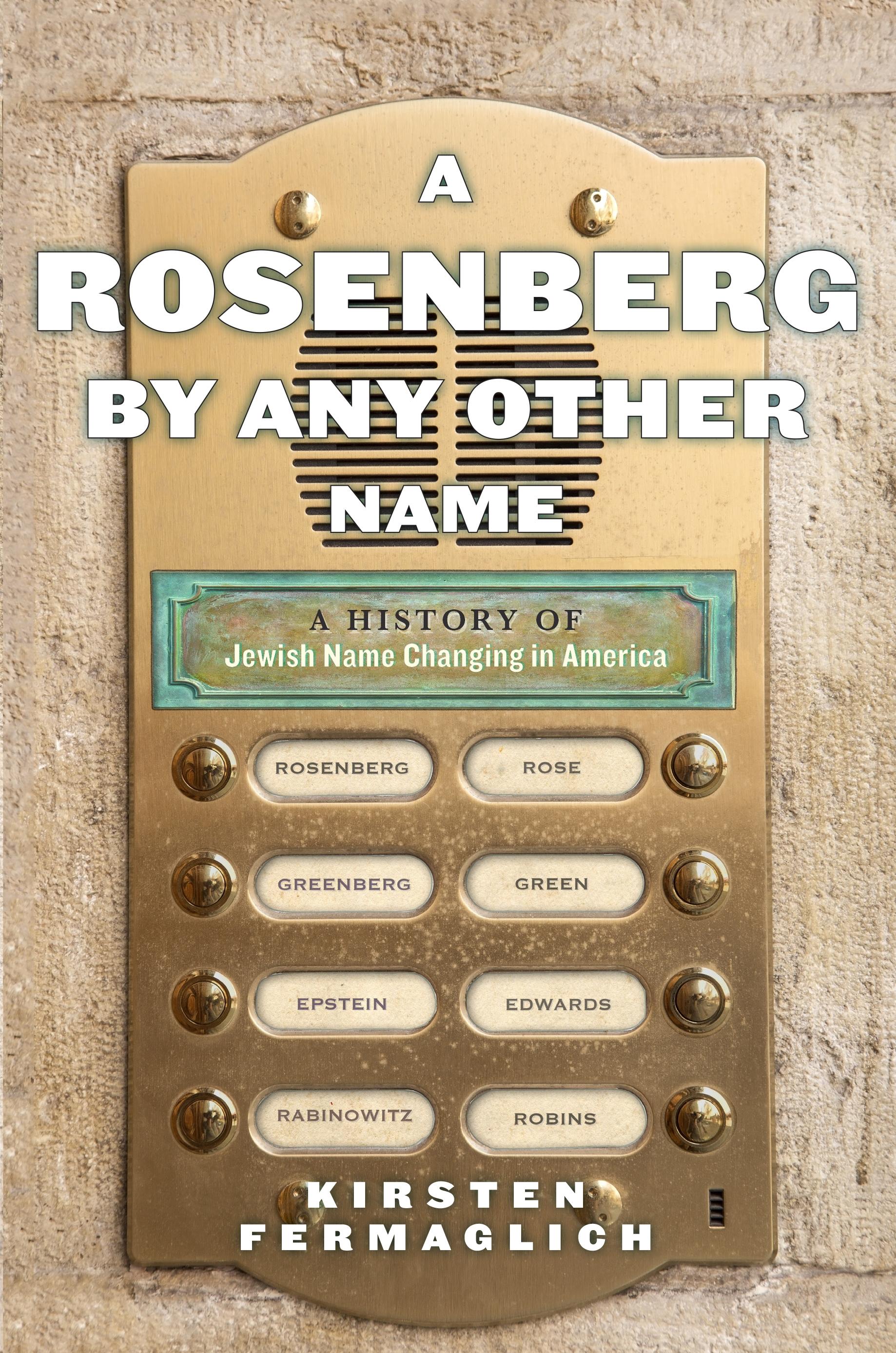
Our thinking about Jewish name changing tends to focus on clichés: ambitious movie stars who adopted glamorous new names or insensitive Ellis Island officials who changed immigrants’ names for them. But as Kirsten Fermaglich elegantly reveals, the real story is much more profound. Scratching below the surface, Fermaglich examines previously unexplored name change petitions to upend the clichés, revealing that in twentieth-century New York City, Jewish name changing was actually a broad-based and voluntary behavior: thousands of ordinary Jewish men, women, and children legally changed their names in order to respond to an upsurge of antisemitism. Rather than trying to escape their heritage or “pass” as non-Jewish, most name-changers remained active members of the Jewish community. While name changing allowed Jewish families to avoid antisemitism and achieve white middle-class status, the practice also created pain within families and became a stigmatized, forgotten aspect of American Jewish culture.
This first history of name changing in the United States offers a previously unexplored window into American Jewish life throughout the twentieth century. A Rosenberg by Any Other Name demonstrates how historical debates about immigration, antisemitism and race, class mobility, gender and family, the boundaries of the Jewish community, and the power of government are reshaped when name changing becomes part of the conversation.
Mining court documents, oral histories, archival records, and contemporary literature, Fermaglich argues convincingly that name changing had a lasting impact on American Jewish culture. Ordinary Jews were forced to consider changing their names as they saw their friends, family, classmates, co-workers, and neighbors do so. Jewish communal leaders and civil rights activists needed to consider name changers as part of the Jewish community, making name changing a pivotal part of early civil rights legislation. And Jewish artists created critical portraits of name changers that lasted for decades in American Jewish culture. This book ends with the disturbing realization that the prosperity Jews found by changing their names is not as accessible for the Chinese, Latino, and Muslim immigrants who wish to exercise that right today.
Before Memmo my notes were scattered across PDFs. Now a workspace pulls everything into one place — I see exactly what's still left to study.
Memmo's summaries are gold before exams. I don't have to re-read 800 pages two weeks before — just the important parts.
The AI chat has saved me the night before an exam more than once. I just keep asking until I get it — no waiting on a study group to reply.
The quizzes hit exactly what I need to know. Memmo tracks what I get stuck on — so I only practice what's worth it.
Flashcards with spaced repetition are magic. Memmo knows when I'm about to forget something and brings it back.
The AI podcasts are my favorite. I listen on my way to school and get a recap without sitting at a computer.

Handbok i kvalitativa metoder
281 kr

Hållbar utveckling: en introduktion för ingenjörer och andra problemlösare
334 kr

Brymans Samhällsvetenskapliga metoder
390 kr

Projektledning
491 kr

Den orättvisa hälsan: om socioekonomiska skillnader i hälsa och livslängd
326 kr

Vetenskapsteori för nybörjare
196 kr

Organizational Leadership
429 kr

På väg mot läraryrket
172 kr

Det sociala livet i skolan: Socialpsykologiska perspektiv
253 kr

Betygsättningens didaktik
151 kr

Personality
402 kr

Studying Leadership
404 kr

Managing Innovation
477 kr

Introduktion till samhällsvetenskaplig metod
347 kr

The Psychology of Sex and Gender
698 kr

Evidens och kunskap för socialt arbete
207 kr

Introduction to Leadership
605 kr