
Before Memmo my notes were scattered across PDFs. Now a workspace pulls everything into one place — I see exactly what's still left to study.
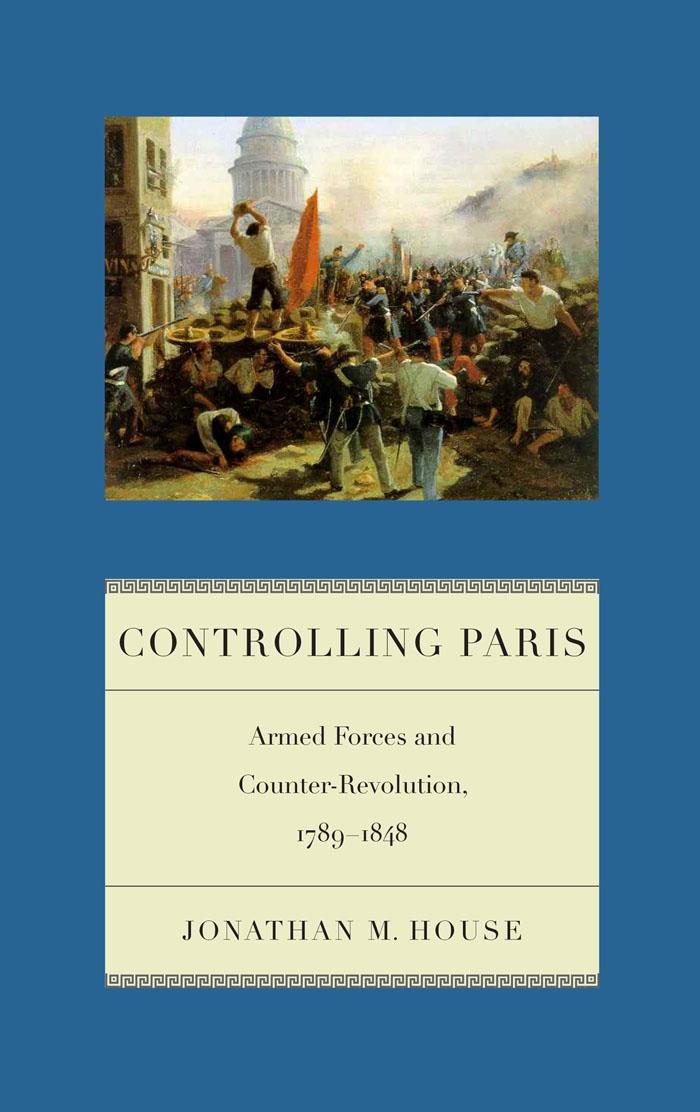
When not at war, armies are often used to control civil disorders, especially in eras of rapid social change and unrest. But in nineteenth century Europe, without the technological advances of modern armies and police forces, an army’s only advantages were discipline and organization—and in the face of popular opposition to the regime in power, both could rapidly deteriorate. Such was the case in France after the Napoleonic Wars, where a cumulative recent history of failure weakened an already fragile army’s ability to keep the peace.
After the February 1848 overthrow of the last king of France, the new republican government proved remarkably resilient, retaining power while pursuing moderate social policies despite the concerted efforts of a variety of radical and socialist groups. These efforts took numerous forms, ranging from demonstrations to attempted coups to full-scale urban combat, and culminated in the crisis of the June Days. At stake was the future of French government and the social and economic policy of France at large.
In Controlling Paris, Jonathan M. House offers us a study of revolution from the viewpoint of the government rather than the revolutionary. It is not focused on military tactics so much as on the broader issues involved in controlling civil disorders: relations between the government and its military leaders, causes and social issues of public disorder, political loyalty of troops in crisis, and excessive use of force to control civil disorders. Yet somehow, despite all these disadvantages, the French police and armed forces prevented regime change far more often than they failed to do so.
Before Memmo my notes were scattered across PDFs. Now a workspace pulls everything into one place — I see exactly what's still left to study.
Memmo's summaries are gold before exams. I don't have to re-read 800 pages two weeks before — just the important parts.
The AI chat has saved me the night before an exam more than once. I just keep asking until I get it — no waiting on a study group to reply.
The quizzes hit exactly what I need to know. Memmo tracks what I get stuck on — so I only practice what's worth it.
Flashcards with spaced repetition are magic. Memmo knows when I'm about to forget something and brings it back.
The AI podcasts are my favorite. I listen on my way to school and get a recap without sitting at a computer.

Handbok i kvalitativa metoder
281 kr

Hållbar utveckling: en introduktion för ingenjörer och andra problemlösare
334 kr

Brymans Samhällsvetenskapliga metoder
390 kr

Projektledning
491 kr

Den orättvisa hälsan: om socioekonomiska skillnader i hälsa och livslängd
326 kr

Vetenskapsteori för nybörjare
196 kr

Organizational Leadership
429 kr

På väg mot läraryrket
172 kr

Det sociala livet i skolan: Socialpsykologiska perspektiv
253 kr

Betygsättningens didaktik
151 kr

Personality
402 kr

Studying Leadership
404 kr

Managing Innovation
477 kr

Introduktion till samhällsvetenskaplig metod
347 kr

The Psychology of Sex and Gender
698 kr

Evidens och kunskap för socialt arbete
207 kr

Introduction to Leadership
605 kr