
Before Memmo my notes were scattered across PDFs. Now a workspace pulls everything into one place — I see exactly what's still left to study.
2025 CHOICE Outstanding Academic Title
Shortlist, 2025 Élise Marienstras – RéDEHJA Prize
How children helped abolish slavery
During the antebellum period, several abolitionist figures, including William Lloyd Garrison, the editor of the Liberator; Susan Paul, an African American primary school teacher; Henry Clarke Wright, a white reformer; and Frederick Douglass, the internationally renowned activist, consistently appealed to the sympathies of children against slavery. In 1835, Garrison proclaimed, “If . . . we desire to see our land delivered from the curse of PREJUDICE and SLAVERY, we must direct our efforts chiefly to the rising generation.” This rallying cry found a receptive audience and ignited action.
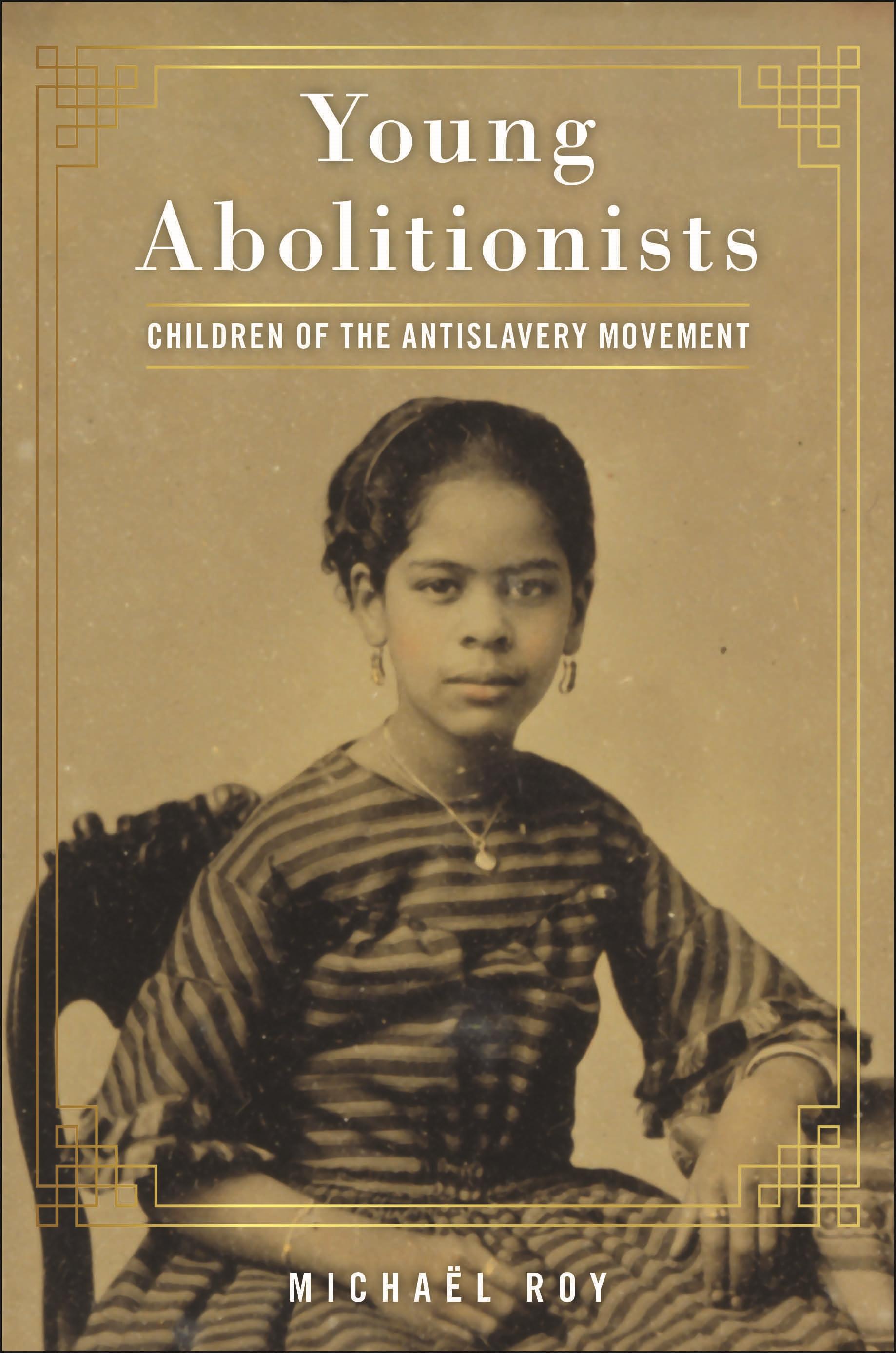
Despite their limited scholarly exploration, children occupied a crucial position within the US abolition movement. Through a reexamination of archival materials including antislavery newspapers, correspondence, and autobiographies, Young Abolitionists is the first book to center children’s participation in the campaign to eradicate slavery in the United States.
Michaël Roy uncovers how young advocates—Black and white alike—confidently delivered antislavery speeches within their schools, enrolled in juvenile antislavery societies, and contributed to the editorial process of antislavery newspapers. They aided fugitive slaves, attended antislavery fairs, and engaged in activities commemorating John Brown’s legacy. They even affixed their signatures to antislavery petitions, thus challenging the boundaries of their own citizenship.
Abolitionists saw childhood as a force for social change. With the help of parents and teachers, children acted in concrete ways against slavery and made a meaningful contribution toward its demise. Young Abolitionists honors their contributions and reminds us that children can—and must—be included in the fight for a better world.
Before Memmo my notes were scattered across PDFs. Now a workspace pulls everything into one place — I see exactly what's still left to study.
Memmo's summaries are gold before exams. I don't have to re-read 800 pages two weeks before — just the important parts.
The AI chat has saved me the night before an exam more than once. I just keep asking until I get it — no waiting on a study group to reply.
The quizzes hit exactly what I need to know. Memmo tracks what I get stuck on — so I only practice what's worth it.
Flashcards with spaced repetition are magic. Memmo knows when I'm about to forget something and brings it back.
The AI podcasts are my favorite. I listen on my way to school and get a recap without sitting at a computer.

Handbok i kvalitativa metoder
281 kr

Hållbar utveckling: en introduktion för ingenjörer och andra problemlösare
334 kr

Brymans Samhällsvetenskapliga metoder
390 kr

Projektledning
491 kr

Den orättvisa hälsan: om socioekonomiska skillnader i hälsa och livslängd
326 kr

Organizational Leadership
429 kr

Vetenskapsteori för nybörjare
196 kr

På väg mot läraryrket
172 kr

Det sociala livet i skolan: Socialpsykologiska perspektiv
253 kr

Betygsättningens didaktik
151 kr

Personality
402 kr

Studying Leadership
404 kr

Managing Innovation
477 kr

Introduktion till samhällsvetenskaplig metod
347 kr

The Psychology of Sex and Gender
698 kr

Evidens och kunskap för socialt arbete
207 kr

Introduction to Leadership
605 kr