
Before Memmo my notes were scattered across PDFs. Now a workspace pulls everything into one place — I see exactly what's still left to study.
How worldwide plant circulation and new botanical ideas enabled Americans to radically re-envision politics and society
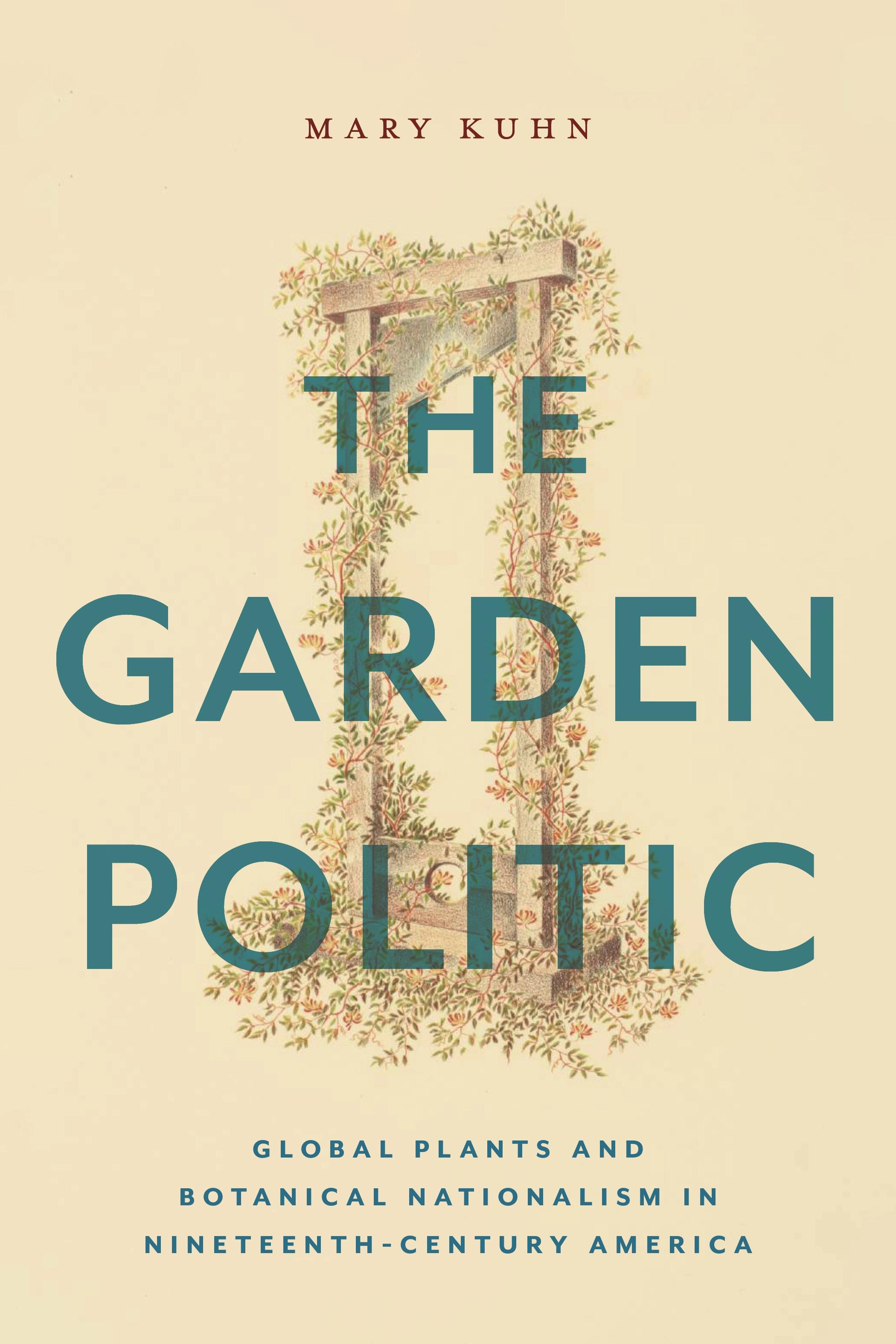
The Garden Politic argues that botanical practices and discourses helped nineteenth-century Americans engage pressing questions of race, gender, settler colonialism, and liberal subjectivity. In the early republic, ideas of biotic distinctiveness helped fuel narratives of American exceptionalism. By the nineteenth century, however, these ideas and narratives were unsettled by the unprecedented scale at which the United States and European empires prospected for valuable plants and exchanged them across the globe. Drawing on ecocriticism, New Materialism, environmental history, and the history of science—and crossing disciplinary and national boundaries—The Garden Politic shows how new ideas about cultivation and plant life could be mobilized to divergent political and social ends.
Reading the work of influential nineteenth-century authors from a botanical perspective, Mary Kuhn recovers how domestic political issues were entangled with the global circulation and science of plants. The diversity of Harriet Beecher Stowe’s own gardens contributed to the evolution of her racial politics and abolitionist strategies. Nathaniel Hawthorne’s struggles in his garden inspired him to write stories in which plants defy human efforts to impose order. Radical scientific ideas about plant intelligence and sociality prompted Emily Dickinson to imagine a human polity that embraces kinship with the natural world. Yet other writers, including Frederick Douglass, cautioned that the most prominent political context for plants remained plantation slavery.
The Garden Politic reveals how the nineteenth century’s extractive political economy of plants contains both the roots of our contemporary environmental crisis and the seeds of alternative political visions.
Before Memmo my notes were scattered across PDFs. Now a workspace pulls everything into one place — I see exactly what's still left to study.
Memmo's summaries are gold before exams. I don't have to re-read 800 pages two weeks before — just the important parts.
The AI chat has saved me the night before an exam more than once. I just keep asking until I get it — no waiting on a study group to reply.
The quizzes hit exactly what I need to know. Memmo tracks what I get stuck on — so I only practice what's worth it.
Flashcards with spaced repetition are magic. Memmo knows when I'm about to forget something and brings it back.
The AI podcasts are my favorite. I listen on my way to school and get a recap without sitting at a computer.

Handbok i kvalitativa metoder
281 kr

Hållbar utveckling: en introduktion för ingenjörer och andra problemlösare
334 kr

Brymans Samhällsvetenskapliga metoder
390 kr

Projektledning
491 kr

Den orättvisa hälsan: om socioekonomiska skillnader i hälsa och livslängd
326 kr

Vetenskapsteori för nybörjare
196 kr

Organizational Leadership
429 kr

På väg mot läraryrket
172 kr

Det sociala livet i skolan: Socialpsykologiska perspektiv
253 kr

Betygsättningens didaktik
151 kr

Personality
402 kr

Studying Leadership
404 kr

Managing Innovation
477 kr

Introduktion till samhällsvetenskaplig metod
347 kr

The Psychology of Sex and Gender
698 kr

Evidens och kunskap för socialt arbete
207 kr

Introduction to Leadership
605 kr