
Before Memmo my notes were scattered across PDFs. Now a workspace pulls everything into one place — I see exactly what's still left to study.
2015 Choice Outstanding Academic Title Winner of the Anna Julia Cooper/CLR James Award for Outstanding Book in Africana Studies presented by the National Council for Black Studies
Demonstrates how Harlemite’s dynamic fight for their rights and neighborhood raised the black community’s racial consciousness and established Harlem’s legendary political culture
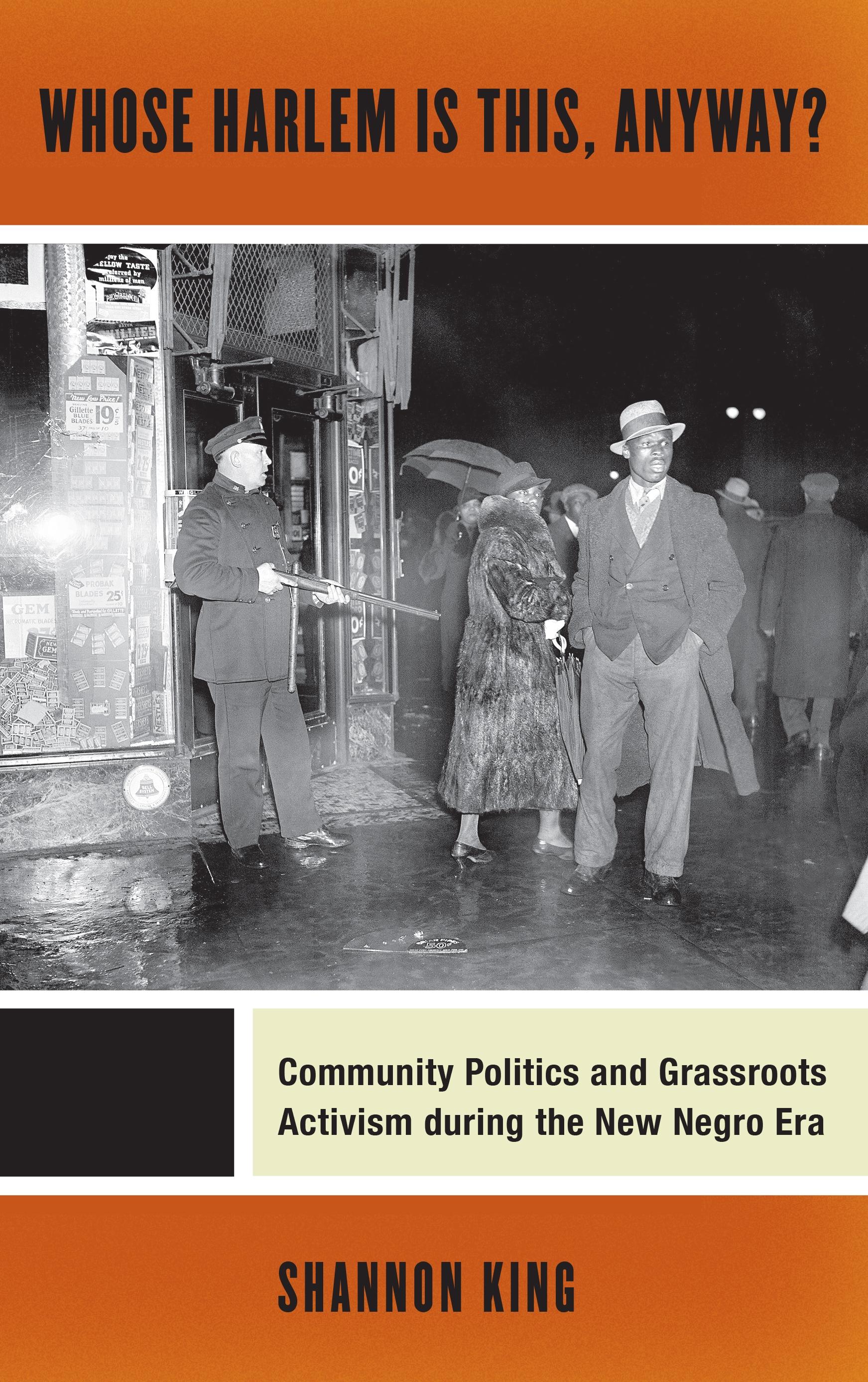
In Whose Harlem Is This, Anyway?, Shannon King vividly uncovers early twentieth century Harlem as an intersection between the black intellectuals and artists who created the New Negro Renaissance and the working class who found fought daily to combat institutionalized racism and gender discrimination in both Harlem and across the city.
New Negro activists, such as Hubert Harrison and Frank Crosswaith, challenged local forms of economic and racial inequality in attempts to breakdown the structural manifestations that upheld them. Insurgent stay-at-home black mothers took negligent landlords to court, complaining to magistrates about the absence of hot water and heat in their apartment buildings. Black men and women, propelling dishes, bricks, and other makeshift weapons from their apartment windows and their rooftops, retaliated against hostile policemen harassing blacks on the streets of Harlem. From the turn of the twentieth century to the Great Depression, black Harlemites mobilized around local issues—such as high rents, jobs, leisure, and police brutality—to make their neighborhood an autonomous black community.
In Whose Harlem Is This, Anyway?, Shannon King demonstrates how, against all odds, the Harlemite’s dynamic fight for their rights and neighborhood raised the black community’s racial consciousness and established Harlem’s legendary political culture. By the end of the 1920s, Harlem had experience a labor strike, a tenant campaign for affordable rents, and its first race riot. These public forms of protest and discontent represented the dress rehearsal for black mass mobilization in the 1930s and 1940s. By studying blacks' immense investment in community politics, King makes visible the hidden stirrings of a social movement deeply invested in a Black Harlem. Whose Harlem Is This, Anyway? is a vibrant story of the shaping of a community during a pivotal time in American History.
Before Memmo my notes were scattered across PDFs. Now a workspace pulls everything into one place — I see exactly what's still left to study.
Memmo's summaries are gold before exams. I don't have to re-read 800 pages two weeks before — just the important parts.
The AI chat has saved me the night before an exam more than once. I just keep asking until I get it — no waiting on a study group to reply.
The quizzes hit exactly what I need to know. Memmo tracks what I get stuck on — so I only practice what's worth it.
Flashcards with spaced repetition are magic. Memmo knows when I'm about to forget something and brings it back.
The AI podcasts are my favorite. I listen on my way to school and get a recap without sitting at a computer.

Handbok i kvalitativa metoder
281 kr

Hållbar utveckling: en introduktion för ingenjörer och andra problemlösare
334 kr

Brymans Samhällsvetenskapliga metoder
390 kr

Projektledning
491 kr

Den orättvisa hälsan: om socioekonomiska skillnader i hälsa och livslängd
326 kr

Vetenskapsteori för nybörjare
196 kr

Organizational Leadership
429 kr

På väg mot läraryrket
172 kr

Det sociala livet i skolan: Socialpsykologiska perspektiv
253 kr

Betygsättningens didaktik
151 kr

Personality
402 kr

Studying Leadership
404 kr

Managing Innovation
477 kr

Introduktion till samhällsvetenskaplig metod
347 kr

The Psychology of Sex and Gender
698 kr

Evidens och kunskap för socialt arbete
207 kr

Introduction to Leadership
605 kr