
Before Memmo my notes were scattered across PDFs. Now a workspace pulls everything into one place — I see exactly what's still left to study.
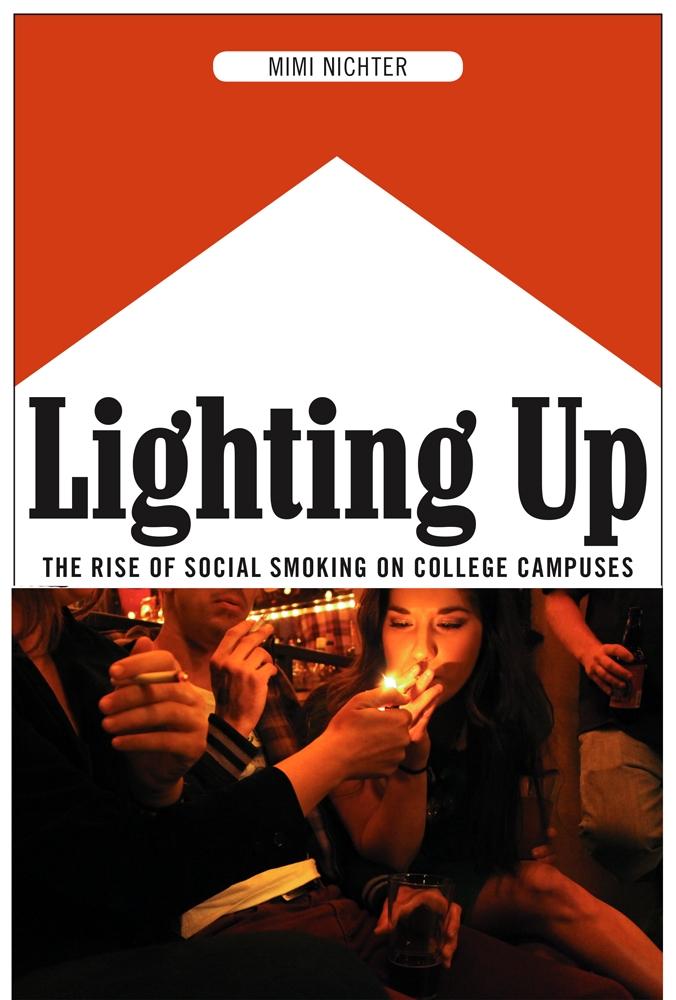
While the past 40 years have seen significant declines in adult smoking, this is not the case among young adults, who have the highest prevalence of smoking of all other age groups. At a time when just about everyone knows that smoking is bad for you, why do so many college students smoke? Is it a short lived phase or do they continue throughout the college years? And what happens after college, when they enter the “real world”? Drawing on interviews and focus groups with hundreds of young adults, Lighting Up takes the reader into their everyday lives to explore social smoking.
Mimi Nichter argues that we must understand more about the meaning of social and low level smoking to youth, the social contexts that cause them to take up (or not take up) the habit, and the way that smoking plays a large role in students’ social lives. Nichter examines how smoking facilitates social interaction, helps young people express and explore their identity, and serves as a means for communicating emotional states. Most college students who smoked socially were confident that “this was no big deal.” After all, they were “not really smokers” and they would only be smoking for a short time. But, as graduation neared, they expressed ambivalence or reluctance to quit. As many grads today step into an uncertain future, where the prospect of finding a good job in a timely manner is unlikely, their 20s may be a time of great stress and instability. For those who have come to depend on the comfort of cigarettes during college, this array of life stressors may make cutting back or quitting more difficult, despite one’s intentions and understandings of the harms of tobacco. And emerging products on the market, like e-cigarettes, offer an opportunity to move from smoking to vaping. Lighting Up considers how smoking fits into the lives of young adults and how uncertain times may lead to uncertain smoking trajectories that reach into adulthood.
Before Memmo my notes were scattered across PDFs. Now a workspace pulls everything into one place — I see exactly what's still left to study.
Memmo's summaries are gold before exams. I don't have to re-read 800 pages two weeks before — just the important parts.
The AI chat has saved me the night before an exam more than once. I just keep asking until I get it — no waiting on a study group to reply.
The quizzes hit exactly what I need to know. Memmo tracks what I get stuck on — so I only practice what's worth it.
Flashcards with spaced repetition are magic. Memmo knows when I'm about to forget something and brings it back.
The AI podcasts are my favorite. I listen on my way to school and get a recap without sitting at a computer.

Handbok i kvalitativa metoder
281 kr

Hållbar utveckling: en introduktion för ingenjörer och andra problemlösare
334 kr

Brymans Samhällsvetenskapliga metoder
390 kr

Projektledning
491 kr

Den orättvisa hälsan: om socioekonomiska skillnader i hälsa och livslängd
326 kr

Vetenskapsteori för nybörjare
196 kr

Organizational Leadership
429 kr

På väg mot läraryrket
172 kr

Det sociala livet i skolan: Socialpsykologiska perspektiv
253 kr

Betygsättningens didaktik
151 kr

Personality
402 kr

Studying Leadership
404 kr

Managing Innovation
477 kr

Introduktion till samhällsvetenskaplig metod
347 kr

The Psychology of Sex and Gender
698 kr

Evidens och kunskap för socialt arbete
207 kr

Introduction to Leadership
605 kr