
Before Memmo my notes were scattered across PDFs. Now a workspace pulls everything into one place — I see exactly what's still left to study.
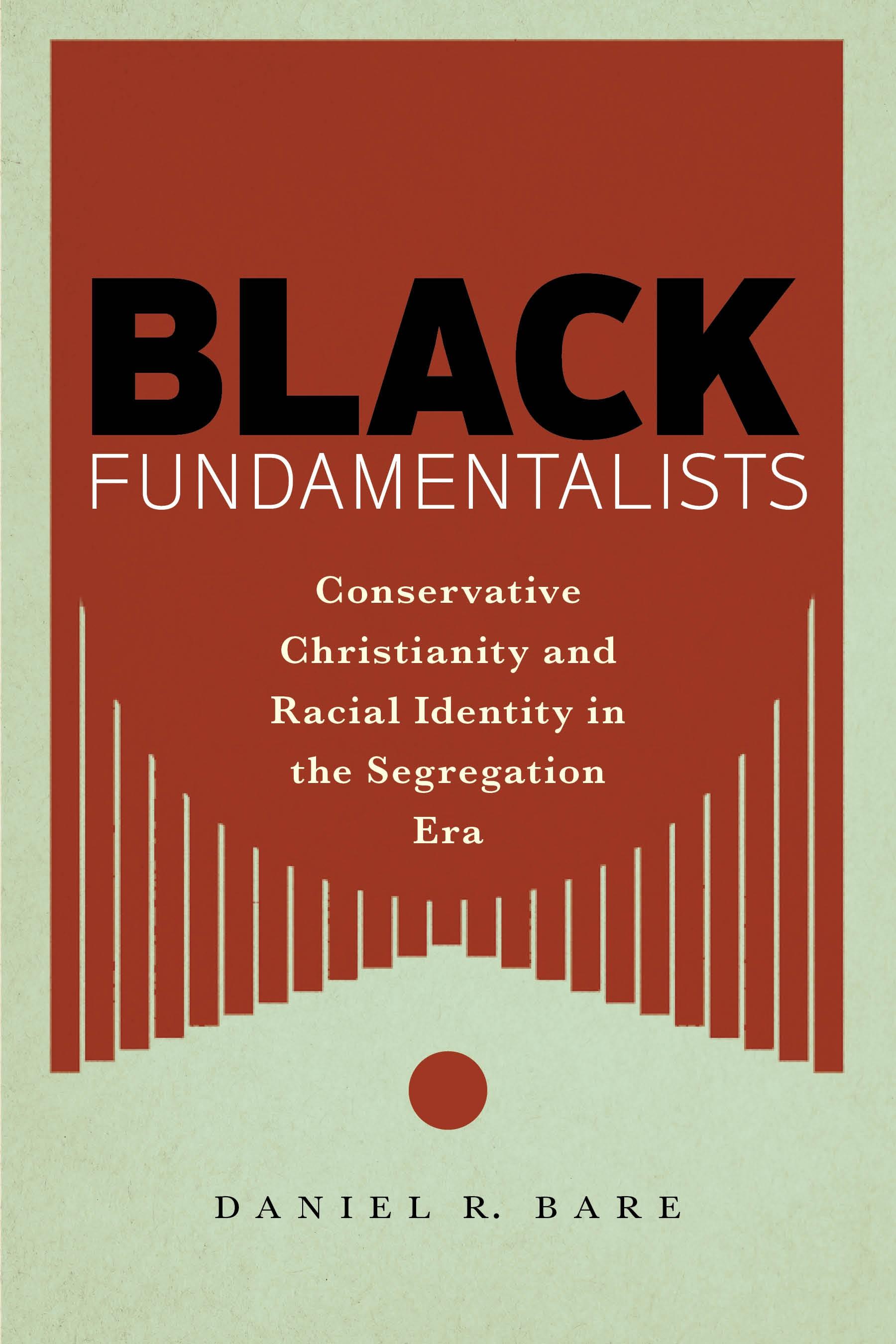
Reveals the history of Black Fundamentalists during the early part of the twentieth century
As the modernist-fundamentalist controversy came to a head in the early twentieth century, an image of the “fighting fundamentalist” was imprinted on the American cultural consciousness. To this day, the word “fundamentalist” often conjures the image of a fire-breathing preacher—strident, unyielding in conviction . . . and almost always white. But did this major religious perspective really stop cold in its tracks at the color line?
Black Fundamentalists challenges the idea that fundamentalism was an exclusively white phenomenon. The volume uncovers voices from the Black community that embraced the doctrinal tenets of the movement and, in many cases, explicitly self-identified as fundamentalists. Fundamentalists of the early twentieth century felt the pressing need to defend the “fundamental” doctrines of their conservative Christian faith—doctrines like biblical inerrancy, the divinity of Christ, and the virgin birth—against what they saw as the predations of modernists who represented a threat to true Christianity. Such concerns, attitudes, and arguments emerged among Black Christians as well as white, even as the oppressive hand of Jim Crow excluded African Americans from the most prominent white-controlled fundamentalist institutions and social crusades, rendering them largely invisible to scholars examining such movements.
Black fundamentalists aligned closely with their white counterparts on the theological particulars of “the fundamentals.” Yet they often applied their conservative theology in more progressive, racially contextualized ways. While white fundamentalists were focused on battling the teaching of evolution, Black fundamentalists were tying their conservative faith to advocacy for reforms in public education, voting rights, and the overturning of legal bans on intermarriage. Beyond the narrow confines of the fundamentalist movement, Daniel R. Bare shows how these historical dynamics illuminate larger themes, still applicable today, about how racial context influences religious expression.
Before Memmo my notes were scattered across PDFs. Now a workspace pulls everything into one place — I see exactly what's still left to study.
Memmo's summaries are gold before exams. I don't have to re-read 800 pages two weeks before — just the important parts.
The AI chat has saved me the night before an exam more than once. I just keep asking until I get it — no waiting on a study group to reply.
The quizzes hit exactly what I need to know. Memmo tracks what I get stuck on — so I only practice what's worth it.
Flashcards with spaced repetition are magic. Memmo knows when I'm about to forget something and brings it back.
The AI podcasts are my favorite. I listen on my way to school and get a recap without sitting at a computer.

Handbok i kvalitativa metoder
281 kr

Hållbar utveckling: en introduktion för ingenjörer och andra problemlösare
334 kr

Brymans Samhällsvetenskapliga metoder
390 kr

Projektledning
491 kr

Den orättvisa hälsan: om socioekonomiska skillnader i hälsa och livslängd
326 kr

Vetenskapsteori för nybörjare
196 kr

Organizational Leadership
429 kr

På väg mot läraryrket
172 kr

Det sociala livet i skolan: Socialpsykologiska perspektiv
253 kr

Betygsättningens didaktik
151 kr

Personality
402 kr

Studying Leadership
404 kr

Managing Innovation
477 kr

Introduktion till samhällsvetenskaplig metod
347 kr

The Psychology of Sex and Gender
698 kr

Evidens och kunskap för socialt arbete
207 kr

Introduction to Leadership
605 kr