
Before Memmo my notes were scattered across PDFs. Now a workspace pulls everything into one place — I see exactly what's still left to study.
**FINALIST, 2022 PROSE Award in Theology & Religious Studies**
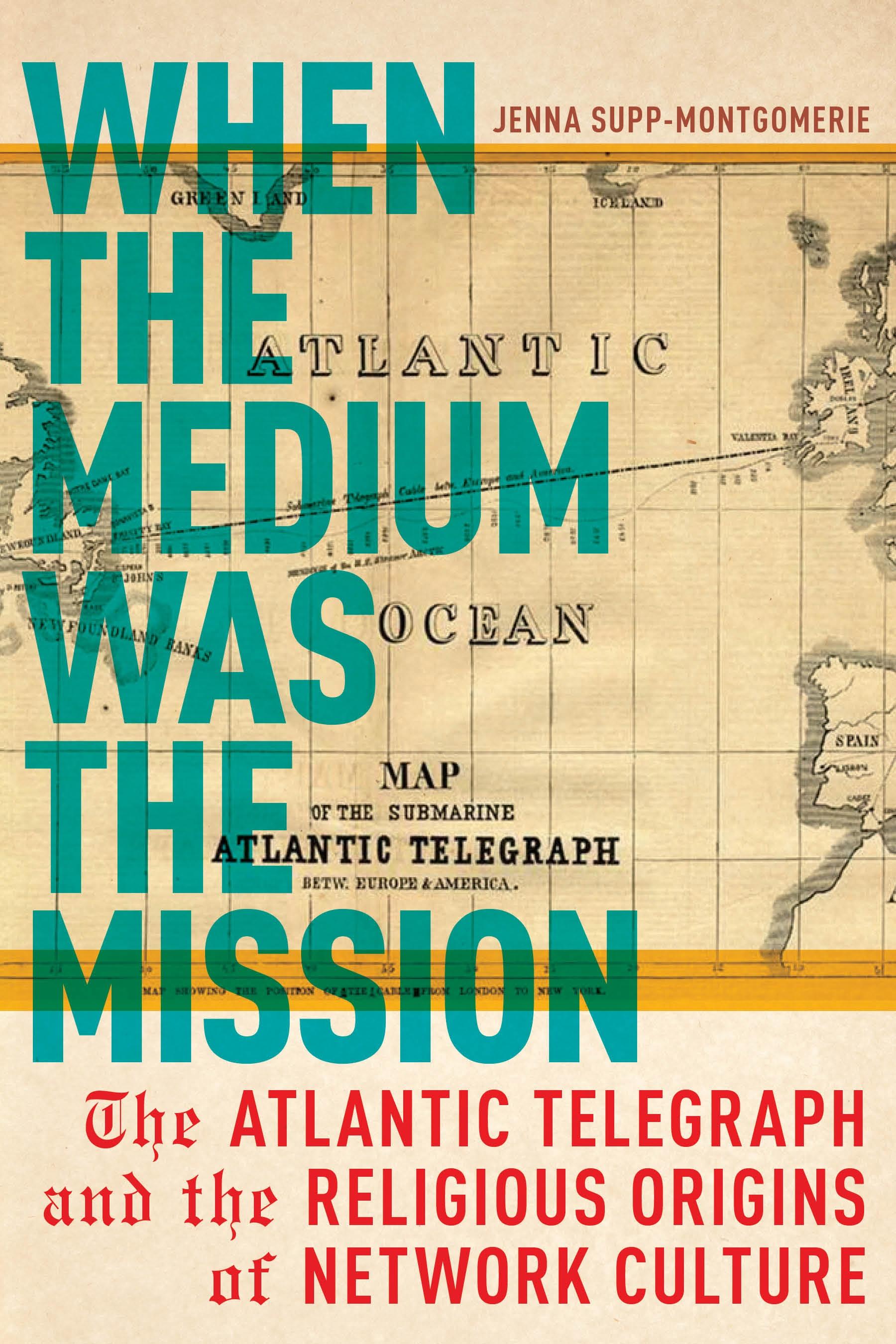
An innovative exploration of religion's influence on communication networks
When Samuel Morse sent the words “what hath God wrought” from the US Supreme Court to Baltimore in mere minutes, it was the first public demonstration of words travelling faster than human beings and farther than a line of sight in the US. This strange confluence of media, religion, technology, and US nationhood lies at the foundation of global networks.
The advent of a telegraph cable crossing the Atlantic Ocean was viewed much the way the internet is today, to herald a coming world-wide unification. President Buchanan declared that the Atlantic Telegraph would be “an instrument destined by divine providence to diffuse religion, civilization, liberty, and law throughout the world” through which “the nations of Christendom [would] spontaneously unite.” Evangelical Protestantism embraced the new technology as indicating God’s support for their work to Christianize the globe. Public figures in the US imagined this new communication technology in primarily religious terms as offering the means to unite the world and inspire peaceful relations among nations. Religious utopianists saw the telegraph as the dawn of a perfect future.
Religious framing thus dominated the interpretation of the technology’s possibilities, forging an imaginary of networks as connective, so much so that connection is now fundamental to the idea of networks. In reality, however, networks are marked, at core, by disconnection. With lively historical sources and an accessible engagement with critical theory, When the Medium was the Mission tells the story of how connection was made into the fundamental promise of networks, illuminating the power of public Protestantism in the first network imaginaries, which continue to resonate today in false expectations of connection.
Before Memmo my notes were scattered across PDFs. Now a workspace pulls everything into one place — I see exactly what's still left to study.
Memmo's summaries are gold before exams. I don't have to re-read 800 pages two weeks before — just the important parts.
The AI chat has saved me the night before an exam more than once. I just keep asking until I get it — no waiting on a study group to reply.
The quizzes hit exactly what I need to know. Memmo tracks what I get stuck on — so I only practice what's worth it.
Flashcards with spaced repetition are magic. Memmo knows when I'm about to forget something and brings it back.
The AI podcasts are my favorite. I listen on my way to school and get a recap without sitting at a computer.

Handbok i kvalitativa metoder
281 kr

Hållbar utveckling: en introduktion för ingenjörer och andra problemlösare
334 kr

Brymans Samhällsvetenskapliga metoder
390 kr

Projektledning
491 kr

Den orättvisa hälsan: om socioekonomiska skillnader i hälsa och livslängd
326 kr

Vetenskapsteori för nybörjare
196 kr

Organizational Leadership
429 kr

På väg mot läraryrket
172 kr

Det sociala livet i skolan: Socialpsykologiska perspektiv
253 kr

Betygsättningens didaktik
151 kr

Personality
402 kr

Studying Leadership
404 kr

Managing Innovation
477 kr

Introduktion till samhällsvetenskaplig metod
347 kr

The Psychology of Sex and Gender
698 kr

Evidens och kunskap för socialt arbete
207 kr

Introduction to Leadership
605 kr