
Before Memmo my notes were scattered across PDFs. Now a workspace pulls everything into one place — I see exactly what's still left to study.
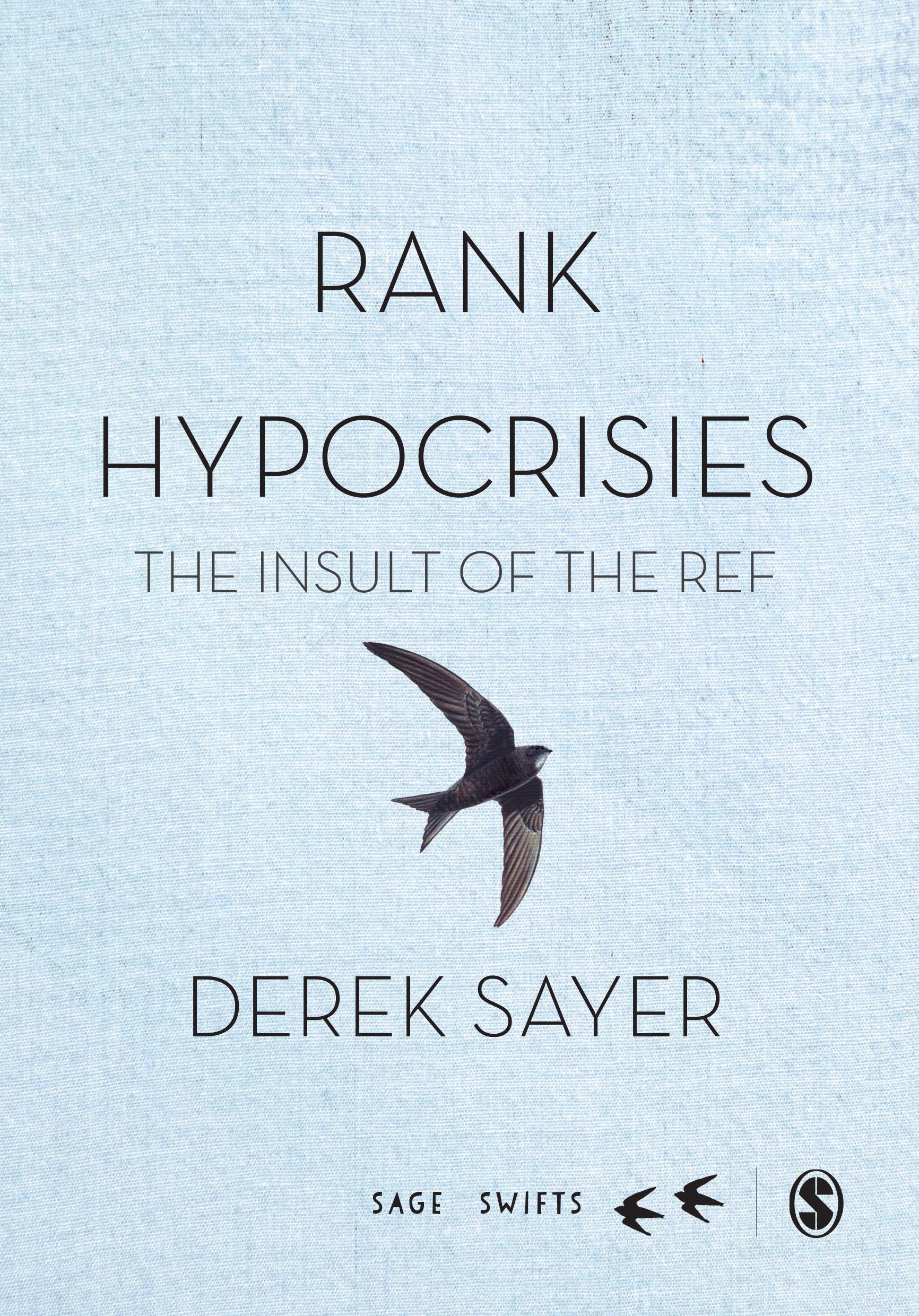
"In crystalline text steeped in cold rage, Sayer takes aim at the REF’s central claim, that it is a legitimate process of expert peer review. He critiques university and national-level REF processes against actual practices of scholarly review as found in academic journals, university presses, and North American tenure procedures. His analysis is damning. If the REF fails as scholarly review, how can academics and universities continue to participate? And how can government use its rankings as a basis for public policy?"
- Tarak Barkawi, London School of Economics
"Sayer makes a compelling argument that the Research Excellence Framework is not only expensive and divisive, but is also deeply flawed as an evaluation exercise. Rank Hypocrisies is a rigorous and scholarly evaluation of the REF, yet written in a lively and engaging style that makes it highly readable."
- Dorothy Bishop, University of Oxford
Few decisions are as consequential for the funding and reputation of Britain′s universities as those of REF panels. Not only do REF rankings determine the levels of research funding universities receive from the state. They equally affect institutions′ ability to attract external grants, top-flight faculty, and graduate students.
Whatever benefit the UK′s periodic research assessment exercises may have brought to research productivity, the REF has been widely criticized for its enormous costs in taxpayers′ money and academics′ time, its discouragement of innovative (and especially interdisciplinary) research, and its negative effects on collegiality and staff morale.
Derek Sayer extends these arguments, notably through his discussion of the questionable staff selection processes used in REF2014 within his own university. Where Rank Hypocrisies goes beyond previous critiques is in its open challenge to the REF′s claim to provide ′expert review of the outputs′ - the very heart of its legitimacy.
Examining the composition and operation of REF disciplinary subpanels in forensic detail, Sayer paints a picture in which overburdened assessors assign vaguely defined grades in fields that are frequently not their own while ignoring all external indicators of the academic influence of the publications they are appraising, and then shred all records of their deliberations.
Judged against international norms of peer review, the REF is an elaborate charade - and an insult to the core values of the academy.
Before Memmo my notes were scattered across PDFs. Now a workspace pulls everything into one place — I see exactly what's still left to study.
Memmo's summaries are gold before exams. I don't have to re-read 800 pages two weeks before — just the important parts.
The AI chat has saved me the night before an exam more than once. I just keep asking until I get it — no waiting on a study group to reply.
The quizzes hit exactly what I need to know. Memmo tracks what I get stuck on — so I only practice what's worth it.
Flashcards with spaced repetition are magic. Memmo knows when I'm about to forget something and brings it back.
The AI podcasts are my favorite. I listen on my way to school and get a recap without sitting at a computer.

Handbok i kvalitativa metoder
281 kr

Hållbar utveckling: en introduktion för ingenjörer och andra problemlösare
334 kr

Brymans Samhällsvetenskapliga metoder
390 kr

Projektledning
491 kr

Den orättvisa hälsan: om socioekonomiska skillnader i hälsa och livslängd
326 kr

Organizational Leadership
429 kr

Vetenskapsteori för nybörjare
196 kr

På väg mot läraryrket
172 kr

Det sociala livet i skolan: Socialpsykologiska perspektiv
253 kr

Betygsättningens didaktik
151 kr

Personality
402 kr

Studying Leadership
404 kr

Managing Innovation
477 kr

Introduktion till samhällsvetenskaplig metod
347 kr

The Psychology of Sex and Gender
698 kr

Evidens och kunskap för socialt arbete
207 kr

Introduction to Leadership
605 kr