
Before Memmo my notes were scattered across PDFs. Now a workspace pulls everything into one place — I see exactly what's still left to study.
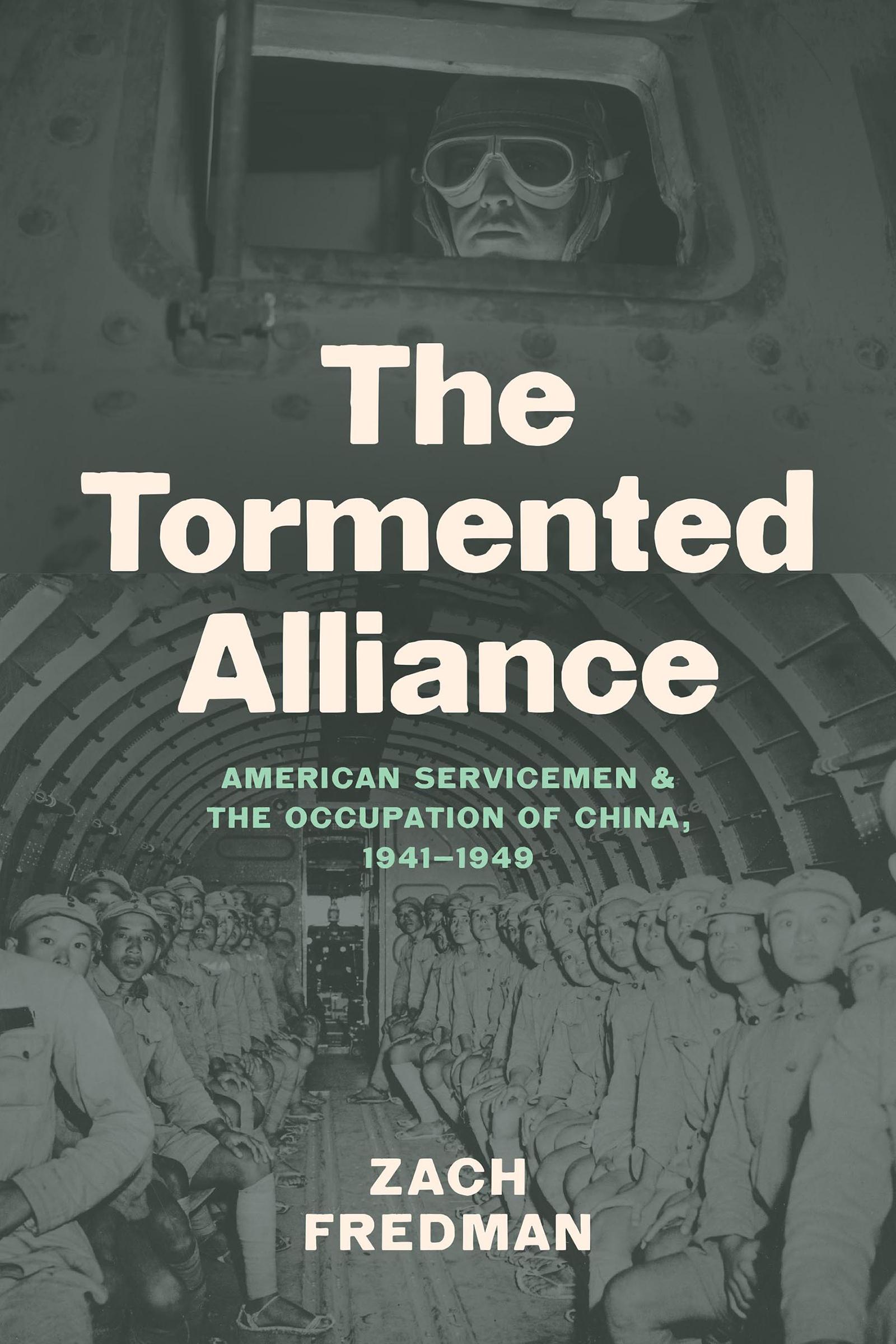
After Japan’s attack on Pearl Harbor, leaders in China and the United States had high hopes of a lasting partnership between the two countries. More than 120,000 U.S. servicemen deployed to China, where Chiang Kai-shek’s government carried out massive programs to provide them with housing, food, and interpreters. But, as Zach Fredman uncovers in The Tormented Alliance, a military alliance with the United States means a military occupation by the United States. The first book to draw on archives from all of the areas in China where U.S. forces deployed during the 1940s, it examines the formation, evolution, and undoing of the alliance between the United States and the Republic of China during World War II and the Chinese Civil War.
Fredman reveals how each side brought to the alliance expectations that the other side was simply unable to meet, resulting in a tormented relationship across all levels of Sino-American engagement. Entangled in larger struggles over race, gender, and nation, the U.S. military in China transformed itself into a widely loathed occupation force: an aggressive, resentful, emasculating source of physical danger and compromised sovereignty. After Japan’s surrender and the spring 1946 withdrawal of Soviet forces from Manchuria, the U.S. occupation became the chief obstacle to consigning foreign imperialism in China irrevocably to the past. Chinese leader Chiang Kai-shek lost his country in 1949, and the U.S. military presence contributed to his defeat. The occupation of China also cast a long shadow, establishing patterns that have followed the U.S. military elsewhere in Asia up to the present.
Before Memmo my notes were scattered across PDFs. Now a workspace pulls everything into one place — I see exactly what's still left to study.
Memmo's summaries are gold before exams. I don't have to re-read 800 pages two weeks before — just the important parts.
The AI chat has saved me the night before an exam more than once. I just keep asking until I get it — no waiting on a study group to reply.
The quizzes hit exactly what I need to know. Memmo tracks what I get stuck on — so I only practice what's worth it.
Flashcards with spaced repetition are magic. Memmo knows when I'm about to forget something and brings it back.
The AI podcasts are my favorite. I listen on my way to school and get a recap without sitting at a computer.

Handbok i kvalitativa metoder
281 kr

Hållbar utveckling: en introduktion för ingenjörer och andra problemlösare
334 kr

Brymans Samhällsvetenskapliga metoder
390 kr

Projektledning
491 kr

Den orättvisa hälsan: om socioekonomiska skillnader i hälsa och livslängd
326 kr

Organizational Leadership
429 kr

Vetenskapsteori för nybörjare
196 kr

På väg mot läraryrket
172 kr

Det sociala livet i skolan: Socialpsykologiska perspektiv
253 kr

Betygsättningens didaktik
151 kr

Personality
402 kr

Studying Leadership
404 kr

Managing Innovation
477 kr

Introduktion till samhällsvetenskaplig metod
347 kr

The Psychology of Sex and Gender
698 kr

Evidens och kunskap för socialt arbete
207 kr

Introduction to Leadership
605 kr