
Before Memmo my notes were scattered across PDFs. Now a workspace pulls everything into one place — I see exactly what's still left to study.
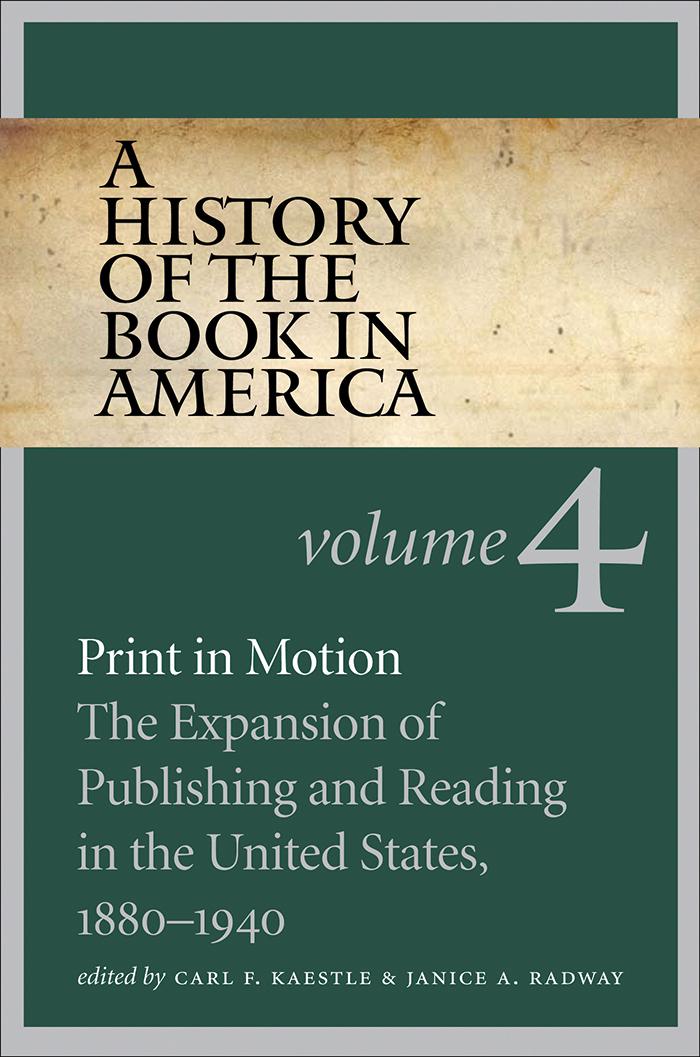
In a period characterized by expanding markets, national consolidation, and social upheaval, print culture picked up momentum as the nineteenth century turned into the twentieth. Books, magazines, and newspapers were produced more quickly and more cheaply, reaching ever-increasing numbers of readers. Volume 4 of A History of the Book in America traces the complex, even contradictory consequences of these changes in the production, circulation, and use of print.
Contributors to this volume explain that although mass production encouraged consolidation and standardization, readers increasingly adapted print to serve their own purposes, allowing for increased diversity in the midst of concentration and integration. Considering the book in larger social and cultural networks, essays address the rise of consumer culture, the extension of literacy and reading through schooling, the expansion of secondary and postsecondary education and the growth of the textbook industry, the growing influence of the professions and their dependence on print culture, and the history of relevant technology. As the essays here attest, the expansion of print culture between 1880 and 1940 enabled it to become part of Americans' everyday business, social, political, and religious lives.
Contributors:
Megan Benton, Pacific Lutheran University
Paul S. Boyer, University of Wisconsin-Madison
Una M. Cadegan, University of Dayton
Phyllis Dain, Columbia University
James P. Danky, University of Wisconsin-Madison
Ellen Gruber Garvey, New Jersey City University
Peter Jaszi, American University
Carl F. Kaestle, Brown University
Nicolás Kanellos, University of Houston
Richard L. Kaplan, ABC-Clio Publishing
Marcel Chotkowski LaFollette, Washington, D.C.
Elizabeth Long, Rice University
Elizabeth McHenry, New York University
Sally M. Miller, University of the Pacific
Richard Ohmann, Wesleyan University
Janice A. Radway, Duke University
Joan Shelley Rubin, University of Rochester
Jonathan D. Sarna, Brandeis University
Charles A. Seavey, University of Missouri, Columbia
Michael Schudson, University of California, San Diego
William Vance Trollinger Jr., University of Dayton
Richard L. Venezky (1938–2004)
James L. W. West III, Pennsylvania State University
Wayne A. Wiegand, Florida State University
Michael Winship, University of Texas at Austin
Martha Woodmansee, Case Western Reserve University
Before Memmo my notes were scattered across PDFs. Now a workspace pulls everything into one place — I see exactly what's still left to study.
Memmo's summaries are gold before exams. I don't have to re-read 800 pages two weeks before — just the important parts.
The AI chat has saved me the night before an exam more than once. I just keep asking until I get it — no waiting on a study group to reply.
The quizzes hit exactly what I need to know. Memmo tracks what I get stuck on — so I only practice what's worth it.
Flashcards with spaced repetition are magic. Memmo knows when I'm about to forget something and brings it back.
The AI podcasts are my favorite. I listen on my way to school and get a recap without sitting at a computer.

Handbok i kvalitativa metoder
281 kr

Hållbar utveckling: en introduktion för ingenjörer och andra problemlösare
334 kr

Brymans Samhällsvetenskapliga metoder
390 kr

Projektledning
491 kr

Den orättvisa hälsan: om socioekonomiska skillnader i hälsa och livslängd
326 kr

Vetenskapsteori för nybörjare
196 kr

Organizational Leadership
429 kr

På väg mot läraryrket
172 kr

Det sociala livet i skolan: Socialpsykologiska perspektiv
253 kr

Betygsättningens didaktik
151 kr

Personality
402 kr

Studying Leadership
404 kr

Managing Innovation
477 kr

Introduktion till samhällsvetenskaplig metod
347 kr

The Psychology of Sex and Gender
698 kr

Evidens och kunskap för socialt arbete
207 kr

Introduction to Leadership
605 kr