
Before Memmo my notes were scattered across PDFs. Now a workspace pulls everything into one place — I see exactly what's still left to study.
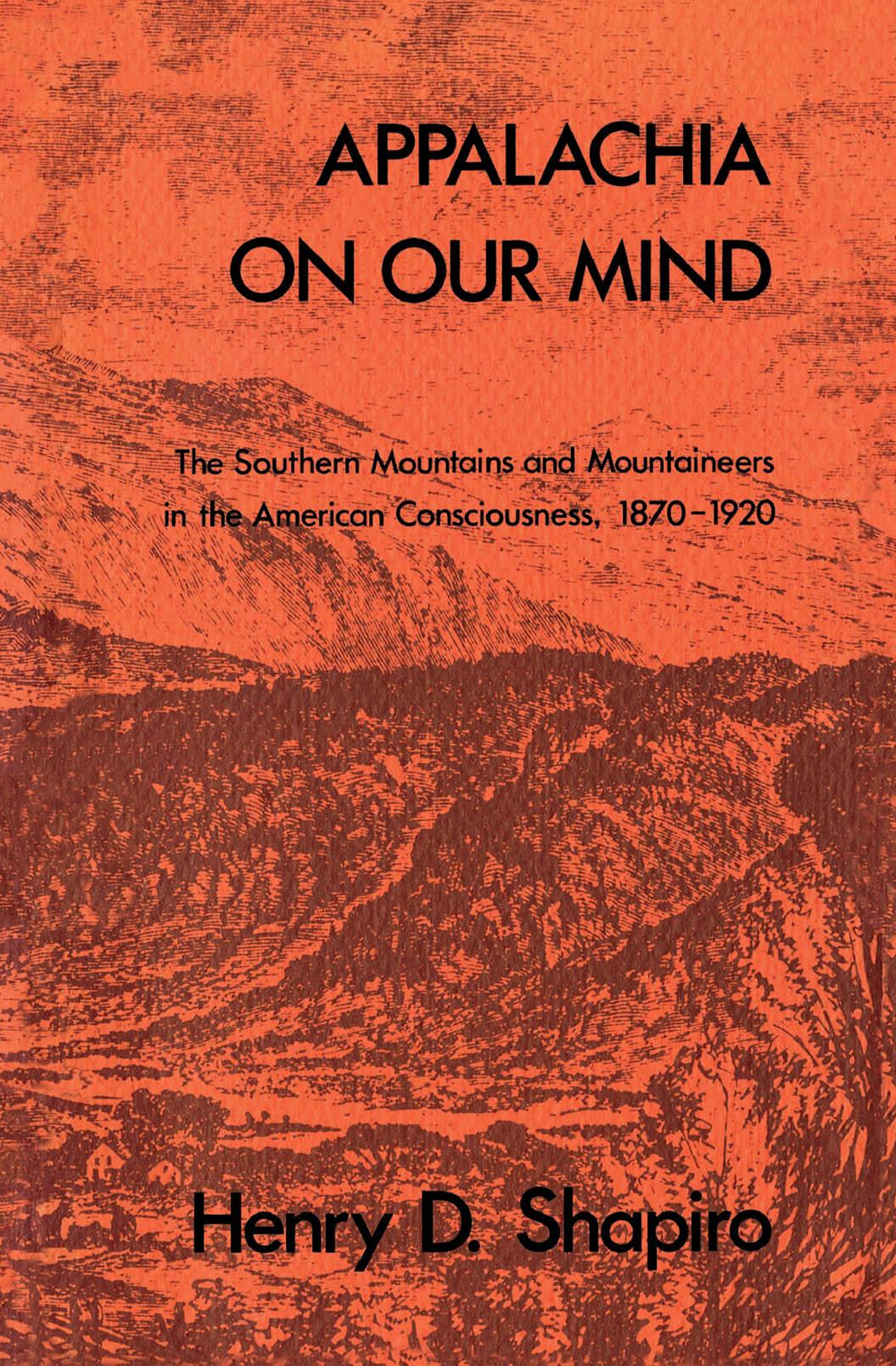
Appalachia on Our Mind is not a history of Appalachia. It is rather a history of the American idea of Appalachia. The author argues that the emergence of this idea has little to do with the realities of mountain life but was the result of a need to reconcile the “otherness” of Appalachia, as decribed by local-color writers, tourists, and home missionaries, with assumptions about the nature of America and American civilization.
Between 1870 and 1900, it became clear that the existence of the “strange land and peculiar people” of the southern mountains challenged dominant notions about the basic homogeneity of the American people and the progress of the United States toward achiving a uniform national civilization. Some people attempted to explain Appalachian otherness as normal and natural — no exception to the rule of progress. Others attempted the practical integration of Appalachia into America through philanthropic work. In the twentieth century, however, still other people began questioning their assumptions about the characteristics of American civilization itself, ultimately defining Appalachia as a region in a nation of regions and the mountaineers as a people in a nation of peoples.
In his skillful examination of the “invention” of the idea of Appalachia and its impact on American thought and action during the early twentieth century, Mr. Shapiro analyzes the following: the “discovery” of Appalachia as a field for fiction by the local-color writers and as a field for benevolent work by the home missionaries of the northern Protestant churches; the emergence of the “problem” of Appalachia and attempts to solve it through explanation and social action; the articulation of a regionalist definition of Appalachia and the establishment of instituions that reinforced that definition; the impact of that regionalistic definition of Appalachia on the conduct of systematic benevolence, expecially in the context of the debate over child-labor restriction and the transformation of philanthropy into community work; and the attempt to discover the bases for an indigenous mountain culture in handicrafts, folksong, and folkdance.
Before Memmo my notes were scattered across PDFs. Now a workspace pulls everything into one place — I see exactly what's still left to study.
Memmo's summaries are gold before exams. I don't have to re-read 800 pages two weeks before — just the important parts.
The AI chat has saved me the night before an exam more than once. I just keep asking until I get it — no waiting on a study group to reply.
The quizzes hit exactly what I need to know. Memmo tracks what I get stuck on — so I only practice what's worth it.
Flashcards with spaced repetition are magic. Memmo knows when I'm about to forget something and brings it back.
The AI podcasts are my favorite. I listen on my way to school and get a recap without sitting at a computer.

Handbok i kvalitativa metoder
281 kr

Hållbar utveckling: en introduktion för ingenjörer och andra problemlösare
334 kr

Brymans Samhällsvetenskapliga metoder
390 kr

Projektledning
491 kr

Den orättvisa hälsan: om socioekonomiska skillnader i hälsa och livslängd
326 kr

Organizational Leadership
429 kr

Vetenskapsteori för nybörjare
196 kr

På väg mot läraryrket
172 kr

Det sociala livet i skolan: Socialpsykologiska perspektiv
253 kr

Betygsättningens didaktik
151 kr

Personality
402 kr

Studying Leadership
404 kr

Managing Innovation
477 kr

Introduktion till samhällsvetenskaplig metod
347 kr

The Psychology of Sex and Gender
698 kr

Evidens och kunskap för socialt arbete
207 kr

Introduction to Leadership
605 kr