
Before Memmo my notes were scattered across PDFs. Now a workspace pulls everything into one place — I see exactly what's still left to study.
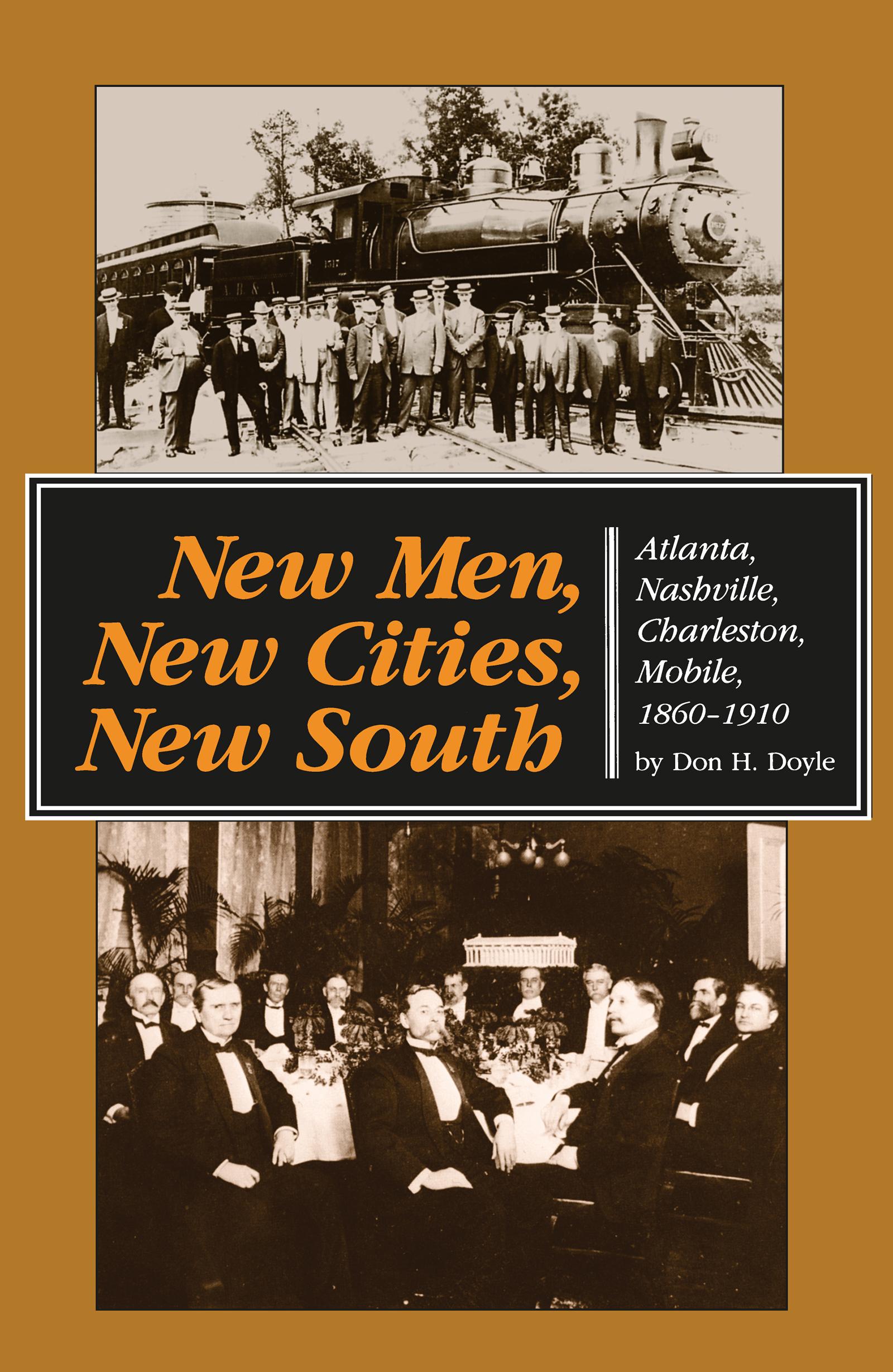
Cities were the core of a changing economy and culture that penetrated the rural hinterland and remade the South in the decades following the Civil War. In New Men, New Cities, New South, Don Doyle argues that if the plantation was the world the slaveholders made, the urban centers of the New South formed the world made by merchants, manufacturers, and financiers. The book’s title evokes the exuberant rhetoric of New South boosterism, which continually extolled the “new men” who dominated the city-building process, but Doyle also explores the key role of women in defining the urban upper class.
Doyle uses four cities as case studies to represent the diversity of the region and to illuminate the responses businessmen made to the challenges and opportunities of the postbellum South. Two interior railroad centers, Atlanta and Nashville, displayed the most vibrant commercial and industrial energy of the region, and both cities fostered a dynamic class of entrepreneurs. These business leaders' collective efforts to develop their cities and to establish formal associations that served their common interests forged them into a coherent and durable urban upper class by the late nineteenth century. The rising business class also helped establish a new pattern of race relations shaped by a commitment to economic progress through the development of the South’s human resources, including the black labor force. But the “new men” of the cities then used legal segregation to control competition between the races.
Charleston and Mobile, old seaports that had served the antebellum plantation economy with great success, stagnated when their status as trade centers declined after the war. Although individual entrepreneurs thrived in both cities, their efforts at community enterprise were unsuccessful, and in many instances they remained outside the social elite. As a result, conservative ways became more firmly entrenched, including a system of race relations based on the antebellum combination of paternalism and neglect rather than segregation. Talent, energy, and investment capital tended to drain away to more vital cities.
In many respects, as Doyle shows, the business class of the New South failed in its quest for economic development and social reform. Nevertheless, its legacy of railroads, factories, urban growth, and changes in the character of race relations shaped the world most southerners live in today.
Before Memmo my notes were scattered across PDFs. Now a workspace pulls everything into one place — I see exactly what's still left to study.
Memmo's summaries are gold before exams. I don't have to re-read 800 pages two weeks before — just the important parts.
The AI chat has saved me the night before an exam more than once. I just keep asking until I get it — no waiting on a study group to reply.
The quizzes hit exactly what I need to know. Memmo tracks what I get stuck on — so I only practice what's worth it.
Flashcards with spaced repetition are magic. Memmo knows when I'm about to forget something and brings it back.
The AI podcasts are my favorite. I listen on my way to school and get a recap without sitting at a computer.

Handbok i kvalitativa metoder
281 kr

Hållbar utveckling: en introduktion för ingenjörer och andra problemlösare
334 kr

Brymans Samhällsvetenskapliga metoder
390 kr

Projektledning
491 kr

Den orättvisa hälsan: om socioekonomiska skillnader i hälsa och livslängd
326 kr

Vetenskapsteori för nybörjare
196 kr

Organizational Leadership
429 kr

På väg mot läraryrket
172 kr

Det sociala livet i skolan: Socialpsykologiska perspektiv
253 kr

Betygsättningens didaktik
151 kr

Personality
402 kr

Studying Leadership
404 kr

Managing Innovation
477 kr

Introduktion till samhällsvetenskaplig metod
347 kr

The Psychology of Sex and Gender
698 kr

Evidens och kunskap för socialt arbete
207 kr

Introduction to Leadership
605 kr