
Before Memmo my notes were scattered across PDFs. Now a workspace pulls everything into one place — I see exactly what's still left to study.
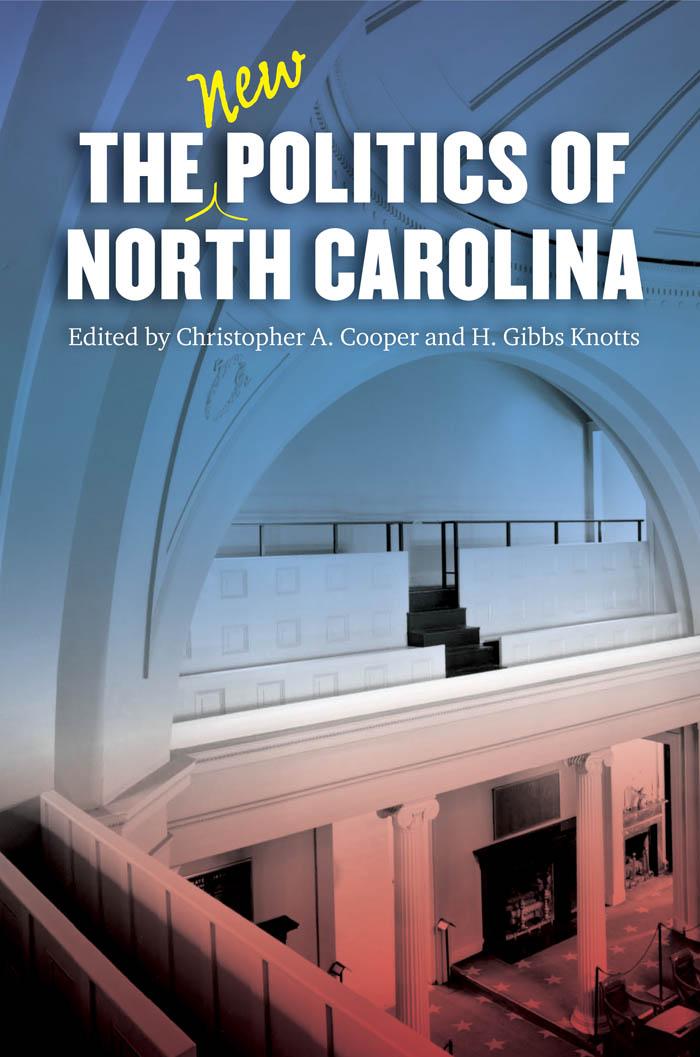
Political scientist V. O. Key in 1949 described North Carolina as a “progressive plutocracy.” He argued that in the areas of industrial development, public education, and race relations, North Carolina appeared progressive when compared to other southern states. Reconsidering Key’s evaluation nearly sixty years later, contributors to this volume find North Carolina losing ground as a progressive leader in the South. The “new politics” of the state involves a combination of new and old: new opportunities and challenges have forced the state to change, but the old culture still remains a powerful force.
In the eleven essays collected here, leading scholars of North Carolina politics offer a systematic analysis of North Carolina’s politics and policy, placed in the context of its own history as well as the politics and policies of other states. Topics discussed include the evolution of politics and political institutions; the roles of governors, the judicial branch, interest groups, and party systems; and the part played by economic development and environmental policy. Contributors also address how geography affects politics within the state, region, and nation. Designed with students and interested citizens in mind, this collection provides an excellent introduction to contemporary North Carolina politics and government.
Contributors:
Hunter Bacot, Elon University
Christopher A. Cooper, Western Carolina University
Thomas F. Eamon, East Carolina University
Jack D. Fleer, Wake Forest University
Dennis O. Grady, Appalachian State University
Ferrel Guillory, University of North Carolina at Chapel Hill
Sean Hildebrand, Western Carolina University
Jonathan Kanipe, Town Manager, Catawba, North Carolina
H. Gibbs Knotts, Western Carolina University
Adam J. Newmark, Appalachian State University
Charles Prysby, University of North Carolina at Greensboro
Ruth Ann Strickland, Appalachian State University
James H. Svara, Arizona State University
Timothy Vercellotti, Rutgers University
Before Memmo my notes were scattered across PDFs. Now a workspace pulls everything into one place — I see exactly what's still left to study.
Memmo's summaries are gold before exams. I don't have to re-read 800 pages two weeks before — just the important parts.
The AI chat has saved me the night before an exam more than once. I just keep asking until I get it — no waiting on a study group to reply.
The quizzes hit exactly what I need to know. Memmo tracks what I get stuck on — so I only practice what's worth it.
Flashcards with spaced repetition are magic. Memmo knows when I'm about to forget something and brings it back.
The AI podcasts are my favorite. I listen on my way to school and get a recap without sitting at a computer.

Handbok i kvalitativa metoder
281 kr

Hållbar utveckling: en introduktion för ingenjörer och andra problemlösare
334 kr

Brymans Samhällsvetenskapliga metoder
390 kr

Projektledning
491 kr

Den orättvisa hälsan: om socioekonomiska skillnader i hälsa och livslängd
326 kr

Vetenskapsteori för nybörjare
196 kr

Organizational Leadership
429 kr

På väg mot läraryrket
172 kr

Det sociala livet i skolan: Socialpsykologiska perspektiv
253 kr

Betygsättningens didaktik
151 kr

Personality
402 kr

Studying Leadership
404 kr

Managing Innovation
477 kr

Introduktion till samhällsvetenskaplig metod
347 kr

The Psychology of Sex and Gender
698 kr

Evidens och kunskap för socialt arbete
207 kr

Introduction to Leadership
605 kr