
Before Memmo my notes were scattered across PDFs. Now a workspace pulls everything into one place — I see exactly what's still left to study.
′In Case Study 5 (a grassroots ′Children′s Mathematics Network group′) the initiative supported the participants in their professional change by giving them a space for the detailed and joint consideration of children′s mathematical thinking. Another significant feature of this initiative is its focus on careful consideration and analysis of children′s mathematics, and the ways in which professionals can support and encourage the children′s mathematical thinking and reasoning… The standard of the mathematical understanding, thinking and reasoning that the displays revealed was far higher than the specified curriculum objectives for children of this age…′ - Researching Effective CPD in Mathematics Education (RECME) project: (NCETM, 2009)
′The review also plays great score by play-based learning of a mathematical nature, and makes specific recommendations regarding early mark-making as a precursor to abstract mathematical symbolism′. Section 115 features children′s mathematical graphics and emphasises: ′The role of mark-making in children′s cognitive development is set out in the taxonomy (Carruthers and Worthington, 2006)′. The report recommends that ′local authorities, leaders, managers and head teachers should provide a culture with a significant focus on mathematical mark-making′ and ′a learning environment that encourages children to choose to use their own mathematical graphics to support their mathematical thinking and processes′ - The Williams Maths Review: (DCSF, 2008)
`At the very heart of the success of the book is the authors′ ability to see mathematics through young children′s eyes by listening to and reflecting on the constant efforts made by children to make sense of their world. This is a liberating book which proposes that the teaching of mathematics could and should be a highly creative and enjoyable proceess′ - Branwen Llewelyn Jones, Early Years Consultant at PACE Ltd / TACTYC
′Ground breaking... To single out any one chapter would be unfair because there is something thought-provoking and inspirational throughout. If you want to expand your understanding upwards and outwards then get a copy soon′ - Times Educational Supplement
′I first read Children′s Mathematics, Making Marks, Making Meaning a couple of years ago and it had an immediate impact on my own thinking and teaching, and the work I do with trainee teachers. I′m sure you will find it compelling reading too. I think it has the potential to change, in a fundamental way, how we think about early mathematical development′ - Lynne McClure, Editor, Math Co-ordiator′s File, Mathematics Association
′In their exceptionally readable and informative book, Children′s Mathematics, Making Marks, Making Meaning Carruthers and Worthington (2006) draw attention to one of the main goals of early years teaching, that is, to help children make links between the mathematics they have already encountered (and continue to engage with) at home and the more abstract mathematics of the school. These authors suggest that by encouraging children to represent mathematical ideas in their own ways and, crucially, by talking to the pupils about the marks they have made, we are given a "window" onto their thinking that may otherwise be inaccessible′ - Liz Pumphrey, NRICH
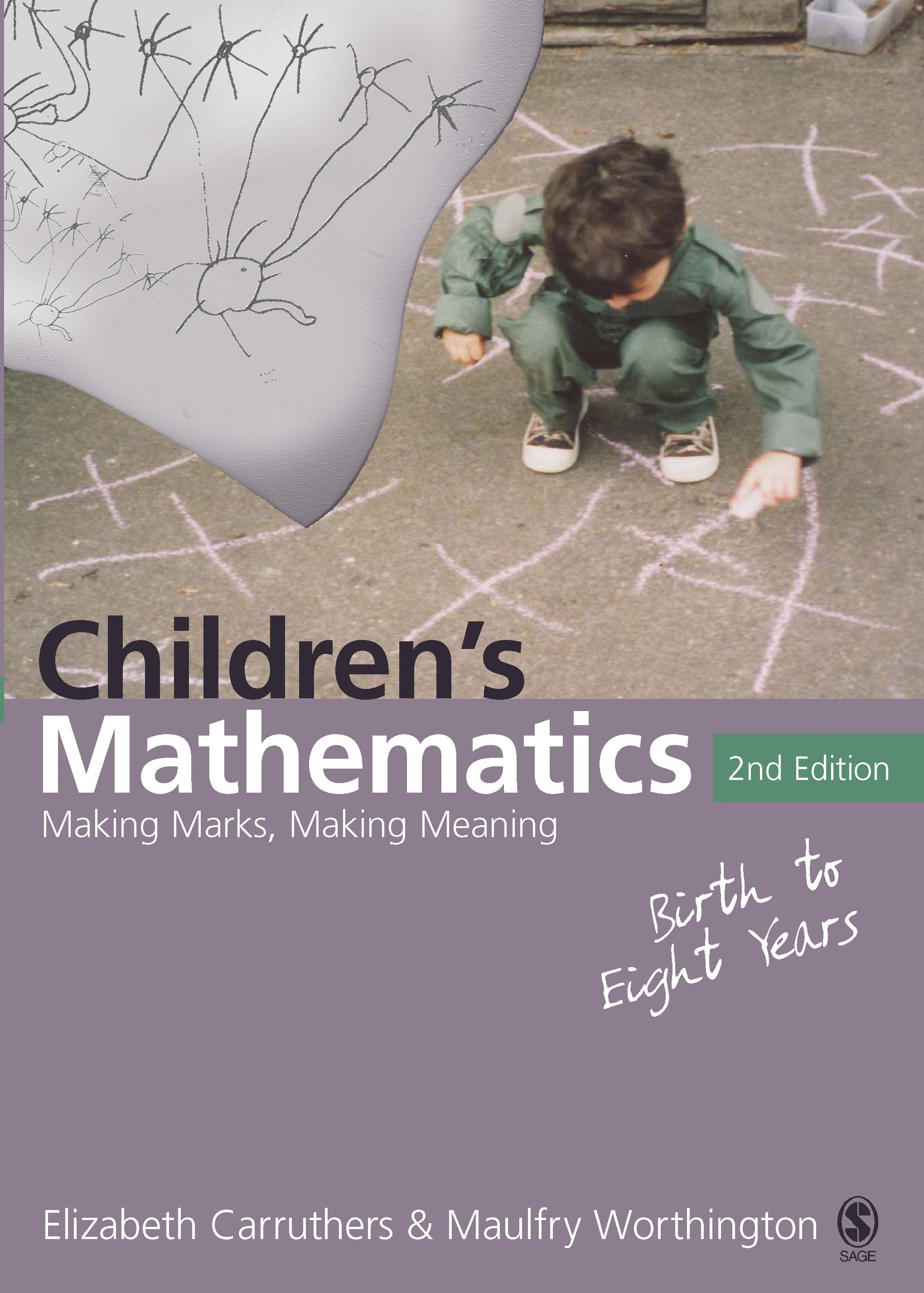
This book draws on the authors′ many years of teaching children aged three to eight years and also on their extensive research with children in the home, nursery and school. The authors explain the development and range of young children′s mathematical marks and visual representations, showing how children make mental connections between their own early marks and subsequent abstract mathematical symbolism, and go on to develop their own written methods.
Combining theory and practice, this acclaimed book demonstrates how children′s own mathematical graphics are highly creative and show deep levels of thinking. The authors show how this is the key to success in school mathematics and to higher levels of achievement.
The authors are winners of TACTYC′s (2003) Jenefer Joseph Award for the Creative Arts (3 - 8) - awarded for their innovative work with children on mathematical graphics.
Before Memmo my notes were scattered across PDFs. Now a workspace pulls everything into one place — I see exactly what's still left to study.
Memmo's summaries are gold before exams. I don't have to re-read 800 pages two weeks before — just the important parts.
The AI chat has saved me the night before an exam more than once. I just keep asking until I get it — no waiting on a study group to reply.
The quizzes hit exactly what I need to know. Memmo tracks what I get stuck on — so I only practice what's worth it.
Flashcards with spaced repetition are magic. Memmo knows when I'm about to forget something and brings it back.
The AI podcasts are my favorite. I listen on my way to school and get a recap without sitting at a computer.

Handbok i kvalitativa metoder
281 kr

Hållbar utveckling: en introduktion för ingenjörer och andra problemlösare
334 kr

Brymans Samhällsvetenskapliga metoder
390 kr

Projektledning
491 kr

Den orättvisa hälsan: om socioekonomiska skillnader i hälsa och livslängd
326 kr

Organizational Leadership
429 kr

Vetenskapsteori för nybörjare
196 kr

På väg mot läraryrket
172 kr

Det sociala livet i skolan: Socialpsykologiska perspektiv
253 kr

Betygsättningens didaktik
151 kr

Personality
402 kr

Studying Leadership
404 kr

Managing Innovation
477 kr

Introduktion till samhällsvetenskaplig metod
347 kr

The Psychology of Sex and Gender
698 kr

Evidens och kunskap för socialt arbete
207 kr

Introduction to Leadership
605 kr