
Before Memmo my notes were scattered across PDFs. Now a workspace pulls everything into one place — I see exactly what's still left to study.
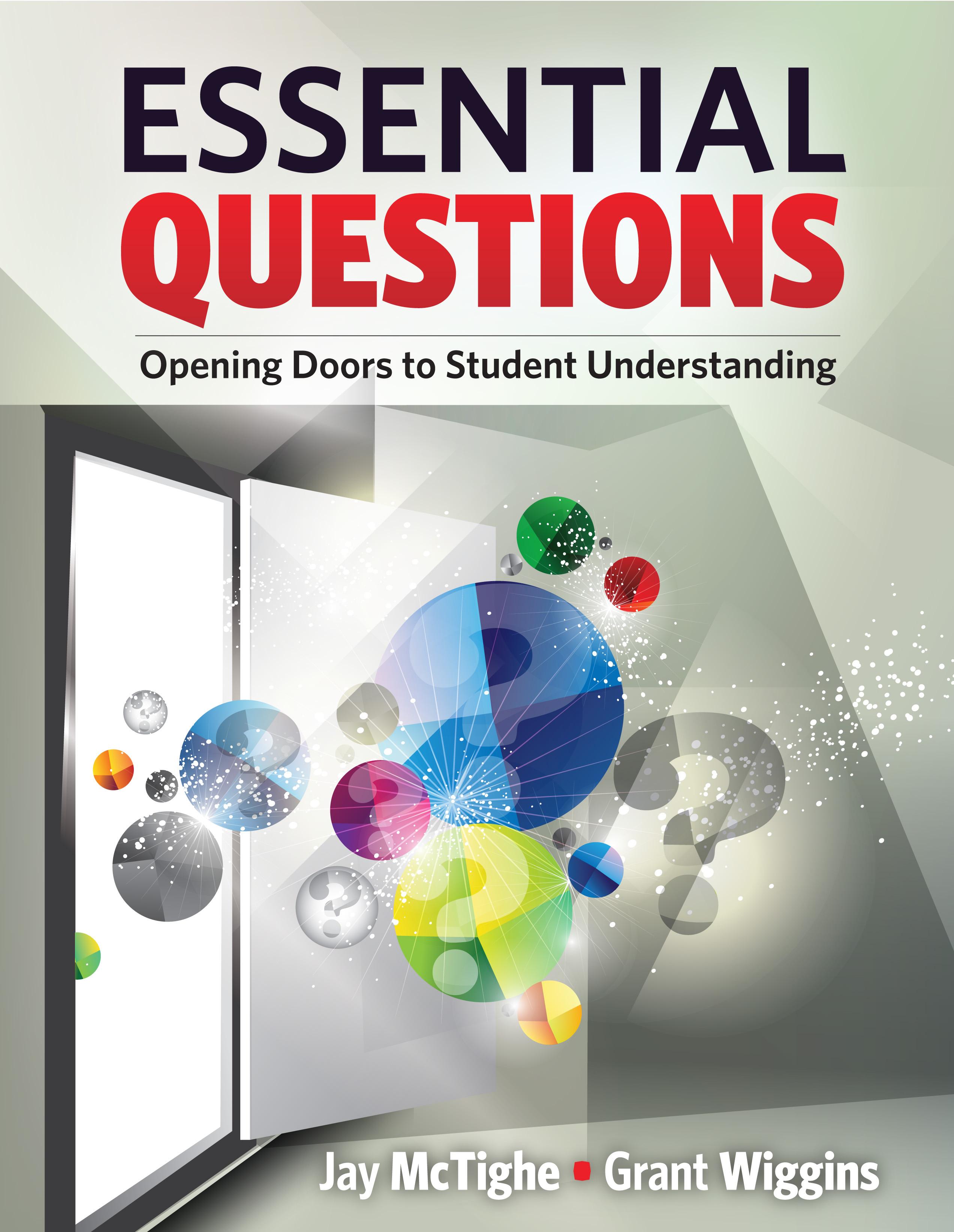
What are "essential questions," and how do they differ from other kinds of questions? What's so great about them? Why should you design and use essential questions in your classroom?
Essential questions (EQs) help target standards as you organize curriculum content into coherent units that yield focused and thoughtful learning. In the classroom, EQs are used to stimulate students' discussions and promote a deeper understanding of the content.
Whether you are an Understanding by Design (UbD) devotee or are searching for ways to address standards—local or Common Core State Standards—in an engaging way, Jay McTighe and Grant Wiggins provide practical guidance on how to design, initiate, and embed inquiry-based teaching and learning in your classroom.
Offering dozens of examples, the authors explore the usefulness of EQs in all K-12 content areas, including skill-based areas such as math, PE, language instruction, and arts education. As an important element of their backward design approach to designing curriculum, instruction, and assessment, the authors
*Give a comprehensive explanation of why EQs are so important;
*Explore seven defining characteristics of EQs;
*Distinguish between topical and overarching questions and their uses;
*Outline the rationale for using EQs as the focal point in creating units of study; and
*Show how to create effective EQs, working from sources including standards, desired understandings, and student misconceptions.
Using essential questions can be challenging—for both teachers and students—and this book provides guidance through practical and proven processes, as well as suggested "response strategies" to encourage student engagement. Finally, you will learn how to create a culture of inquiry so that all members of the educational community—students, teachers, and administrators—benefit from the increased rigor and deepened understanding that emerge when essential questions become a guiding force for learners of all ages.
Before Memmo my notes were scattered across PDFs. Now a workspace pulls everything into one place — I see exactly what's still left to study.
Memmo's summaries are gold before exams. I don't have to re-read 800 pages two weeks before — just the important parts.
The AI chat has saved me the night before an exam more than once. I just keep asking until I get it — no waiting on a study group to reply.
The quizzes hit exactly what I need to know. Memmo tracks what I get stuck on — so I only practice what's worth it.
Flashcards with spaced repetition are magic. Memmo knows when I'm about to forget something and brings it back.
The AI podcasts are my favorite. I listen on my way to school and get a recap without sitting at a computer.

Handbok i kvalitativa metoder
281 kr

Hållbar utveckling: en introduktion för ingenjörer och andra problemlösare
334 kr

Brymans Samhällsvetenskapliga metoder
390 kr

Projektledning
491 kr

Den orättvisa hälsan: om socioekonomiska skillnader i hälsa och livslängd
326 kr

Vetenskapsteori för nybörjare
196 kr

Organizational Leadership
429 kr

På väg mot läraryrket
172 kr

Det sociala livet i skolan: Socialpsykologiska perspektiv
253 kr

Betygsättningens didaktik
151 kr

Personality
402 kr

Studying Leadership
404 kr

Managing Innovation
477 kr

Introduktion till samhällsvetenskaplig metod
347 kr

The Psychology of Sex and Gender
698 kr

Evidens och kunskap för socialt arbete
207 kr

Introduction to Leadership
605 kr