
Before Memmo my notes were scattered across PDFs. Now a workspace pulls everything into one place — I see exactly what's still left to study.
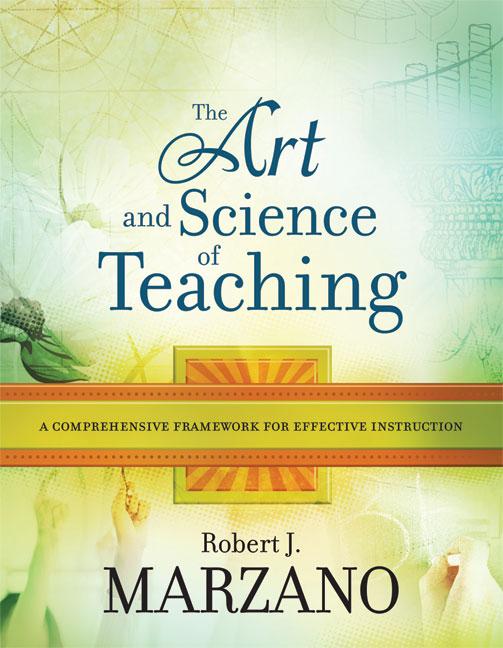
Though classroom instructional strategies should clearly be based on sound science and research, knowing when to use them and with whom is more of an art. In The Art and Science of Teaching: A Comprehensive Framework for Effective Instruction, author Robert J. Marzano presents a model for ensuring quality teaching that balances the necessity of research-based data with the equally vital need to understand the strengths and weaknesses of individual students. He articulates his framework in the form of 10 questions that represent a logical planning sequence for successful instructional design:
1. What will I do to establish and communicate learning goals, track student progress, and celebrate success?
2. What will I do to help students effectively interact with new knowledge?
3. What will I do to help students practice and deepen their understanding of new knowledge?
4. What will I do to help students generate and test hypotheses about new knowledge?
5. What will I do to engage students?
6. What will I do to establish or maintain classroom rules and procedures?
7. What will I do to recognize and acknowledge adherence and lack of adherence to classroom rules and procedures?
8. What will I do to establish and maintain effective relationships with students?
9. What will I do to communicate high expectations for all students?
10. What will I do to develop effective lessons organized into a cohesive unit?
For classroom lessons to be truly effective, educators must examine every component of the teaching process with equal resolve. Filled with charts, rubrics, and organizers, this methodical, user-friendly guide will help teachers examine and develop their knowledge and skills, so they can achieve that dynamic fusion of art and science that results in exceptional teaching and outstanding student achievement.
Before Memmo my notes were scattered across PDFs. Now a workspace pulls everything into one place — I see exactly what's still left to study.
Memmo's summaries are gold before exams. I don't have to re-read 800 pages two weeks before — just the important parts.
The AI chat has saved me the night before an exam more than once. I just keep asking until I get it — no waiting on a study group to reply.
The quizzes hit exactly what I need to know. Memmo tracks what I get stuck on — so I only practice what's worth it.
Flashcards with spaced repetition are magic. Memmo knows when I'm about to forget something and brings it back.
The AI podcasts are my favorite. I listen on my way to school and get a recap without sitting at a computer.

Handbok i kvalitativa metoder
281 kr

Hållbar utveckling: en introduktion för ingenjörer och andra problemlösare
334 kr

Brymans Samhällsvetenskapliga metoder
390 kr

Projektledning
491 kr

Den orättvisa hälsan: om socioekonomiska skillnader i hälsa och livslängd
326 kr

Vetenskapsteori för nybörjare
196 kr

Organizational Leadership
429 kr

På väg mot läraryrket
172 kr

Det sociala livet i skolan: Socialpsykologiska perspektiv
253 kr

Betygsättningens didaktik
151 kr

Personality
402 kr

Studying Leadership
404 kr

Managing Innovation
477 kr

Introduktion till samhällsvetenskaplig metod
347 kr

The Psychology of Sex and Gender
698 kr

Evidens och kunskap för socialt arbete
207 kr

Introduction to Leadership
605 kr