
Before Memmo my notes were scattered across PDFs. Now a workspace pulls everything into one place — I see exactly what's still left to study.
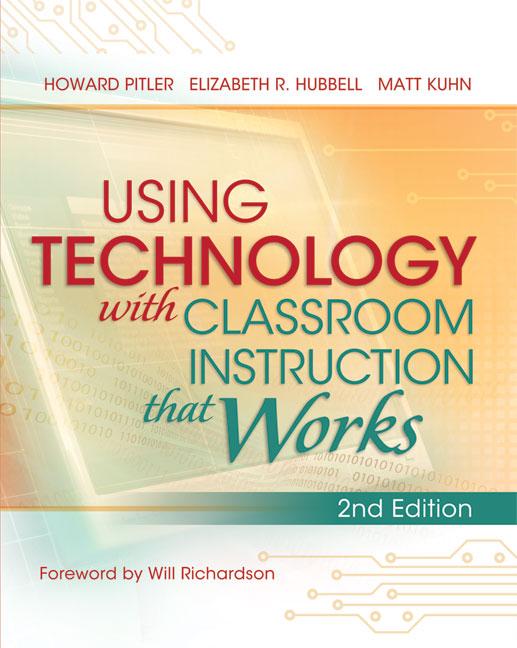
Technology is ubiquitous, and its potential to transform learning is immense. The first edition of Using Technology with Classroom Instruction That Works answered some vital questions about 21st century teaching and learning: What are the best ways to incorporate technology into the curriculum? What kinds of technology will best support particular learning tasks and objectives? How does a teacher ensure that technology use will enhance instruction rather than distract from it?
This revised and updated second edition of that best-selling book provides fresh answers to these critical questions, taking into account the enormous technological advances that have occurred since the first edition was published, including the proliferation of social networks, mobile devices, and web-based multimedia tools. It also builds on the up-to-date research and instructional planning framework featured in the new edition of Classroom Instruction That Works, outlining the most appropriate technology applications and resources for all nine categories of effective instructional strategies:
* Setting objectives and providing feedback
* Reinforcing effort and providing recognition
* Cooperative learning
* Cues, questions, and advance organizers
* Nonlinguistic representations
* Summarizing and note taking
* Assigning homework and providing practice
* Identifying similarities and differences
* Generating and testing hypotheses
Each strategy-focused chapter features examples—across grade levels and subject areas, and drawn from real-life lesson plans and projects—of teachers integrating relevant technology in the classroom in ways that are engaging and inspiring to students. The authors also recommend dozens of word processing applications, spreadsheet generators, educational games, data collection tools, and online resources that can help make lessons more fun, more challenging, and—most of all—more effective.
Before Memmo my notes were scattered across PDFs. Now a workspace pulls everything into one place — I see exactly what's still left to study.
Memmo's summaries are gold before exams. I don't have to re-read 800 pages two weeks before — just the important parts.
The AI chat has saved me the night before an exam more than once. I just keep asking until I get it — no waiting on a study group to reply.
The quizzes hit exactly what I need to know. Memmo tracks what I get stuck on — so I only practice what's worth it.
Flashcards with spaced repetition are magic. Memmo knows when I'm about to forget something and brings it back.
The AI podcasts are my favorite. I listen on my way to school and get a recap without sitting at a computer.

Handbok i kvalitativa metoder
281 kr

Hållbar utveckling: en introduktion för ingenjörer och andra problemlösare
334 kr

Brymans Samhällsvetenskapliga metoder
390 kr

Projektledning
491 kr

Den orättvisa hälsan: om socioekonomiska skillnader i hälsa och livslängd
326 kr

Organizational Leadership
429 kr

Vetenskapsteori för nybörjare
196 kr

På väg mot läraryrket
172 kr

Det sociala livet i skolan: Socialpsykologiska perspektiv
253 kr

Betygsättningens didaktik
151 kr

Personality
402 kr

Studying Leadership
404 kr

Managing Innovation
477 kr

Introduktion till samhällsvetenskaplig metod
347 kr

The Psychology of Sex and Gender
698 kr

Evidens och kunskap för socialt arbete
207 kr

Introduction to Leadership
605 kr