
Before Memmo my notes were scattered across PDFs. Now a workspace pulls everything into one place — I see exactly what's still left to study.
In the 20th century, the United States was the world leader in education—the first country to achieve universal secondary education and the first to expand higher education beyond the elite class. Now other countries are catching up and leaping ahead—in high school graduation rates, in the quality and equity of their K-12 education systems, and in the proportion of students graduating from college. It is not that American education has gotten worse so much that education in other parts of the world has gotten so much better, so fast.
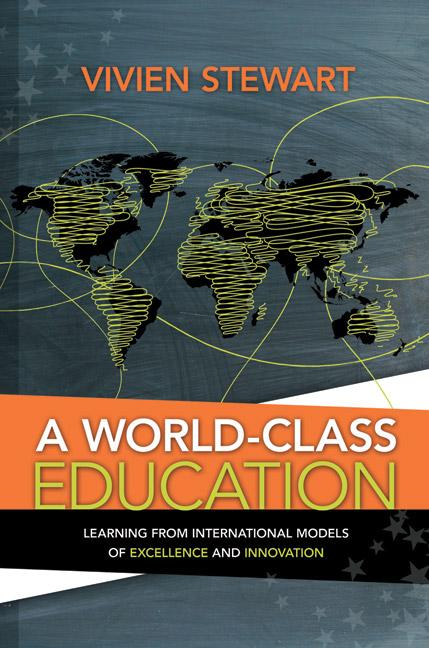
Designed to promote conversation about how to educate students for a rapidly changing and increasingly borderless and innovation-based world, this comprehensive and illuminating book from international education expert Vivien Stewart is not about casting blame; it is about understanding what the best school systems in the world are doing right for the purpose of identifying what U.S. schools—at the national, state, and local level—might do differently and better. Here, you'll consider
* How the U.S. education system fares against emerging international standards of excellence.
* The policies, practices, and priorities of the world's best-performing systems, along with specific ideas for adapting these approaches for U.S. schools.
* The common factors characteristic of high-performing and rapidly improving systems.
* New models of 21st century teaching and leadership and ways to modernize curriculum, instruction, and assessment.
* How technology and international exchange can help the United States close performance gaps and reach new levels of excellence and equity.
Learning goes both ways, Stewart writes. Other countries have learned a great deal from the United States, and now it is time for American educators to open their eyes to other nations' globally-minded and future-focused practices, leverage existing assets, and create a truly world-class education system for this generation of students and generations to come.
Before Memmo my notes were scattered across PDFs. Now a workspace pulls everything into one place — I see exactly what's still left to study.
Memmo's summaries are gold before exams. I don't have to re-read 800 pages two weeks before — just the important parts.
The AI chat has saved me the night before an exam more than once. I just keep asking until I get it — no waiting on a study group to reply.
The quizzes hit exactly what I need to know. Memmo tracks what I get stuck on — so I only practice what's worth it.
Flashcards with spaced repetition are magic. Memmo knows when I'm about to forget something and brings it back.
The AI podcasts are my favorite. I listen on my way to school and get a recap without sitting at a computer.

Handbok i kvalitativa metoder
281 kr

Hållbar utveckling: en introduktion för ingenjörer och andra problemlösare
334 kr

Brymans Samhällsvetenskapliga metoder
390 kr

Projektledning
491 kr

Den orättvisa hälsan: om socioekonomiska skillnader i hälsa och livslängd
326 kr

Vetenskapsteori för nybörjare
196 kr

Organizational Leadership
429 kr

På väg mot läraryrket
172 kr

Det sociala livet i skolan: Socialpsykologiska perspektiv
253 kr

Betygsättningens didaktik
151 kr

Personality
402 kr

Studying Leadership
404 kr

Managing Innovation
477 kr

Introduktion till samhällsvetenskaplig metod
347 kr

The Psychology of Sex and Gender
698 kr

Evidens och kunskap för socialt arbete
207 kr

Introduction to Leadership
605 kr